If you’ve ever looked at a rushing river, you might have wondered whether it’s better to jump into a big inflatable raft or dive right into the waves with a small foam board. On the surface, rafting and hydrospeed seem pretty similar, since both let you experience the wild energy of nature under the watchful eye of a professional guide.
Behind the splashes, though, they are completely different worlds when it comes to the gear you wear, the muscle power you need, and how close you actually get to the water. We are going to look at both activities side-by-side, mapping out the practical differences so you can easily pick the one that matches your vibe for your next outdoor escape.
What is rafting?
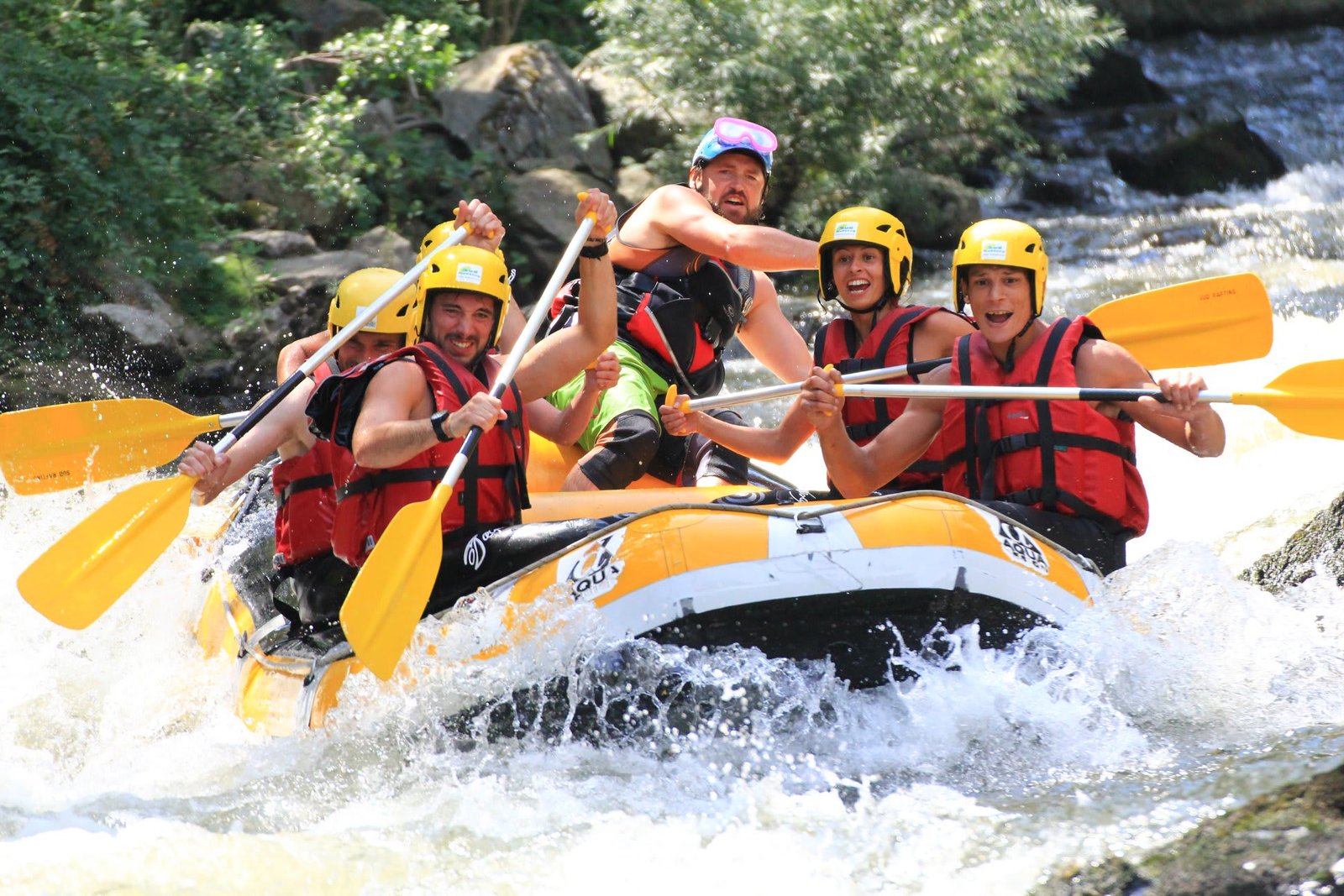
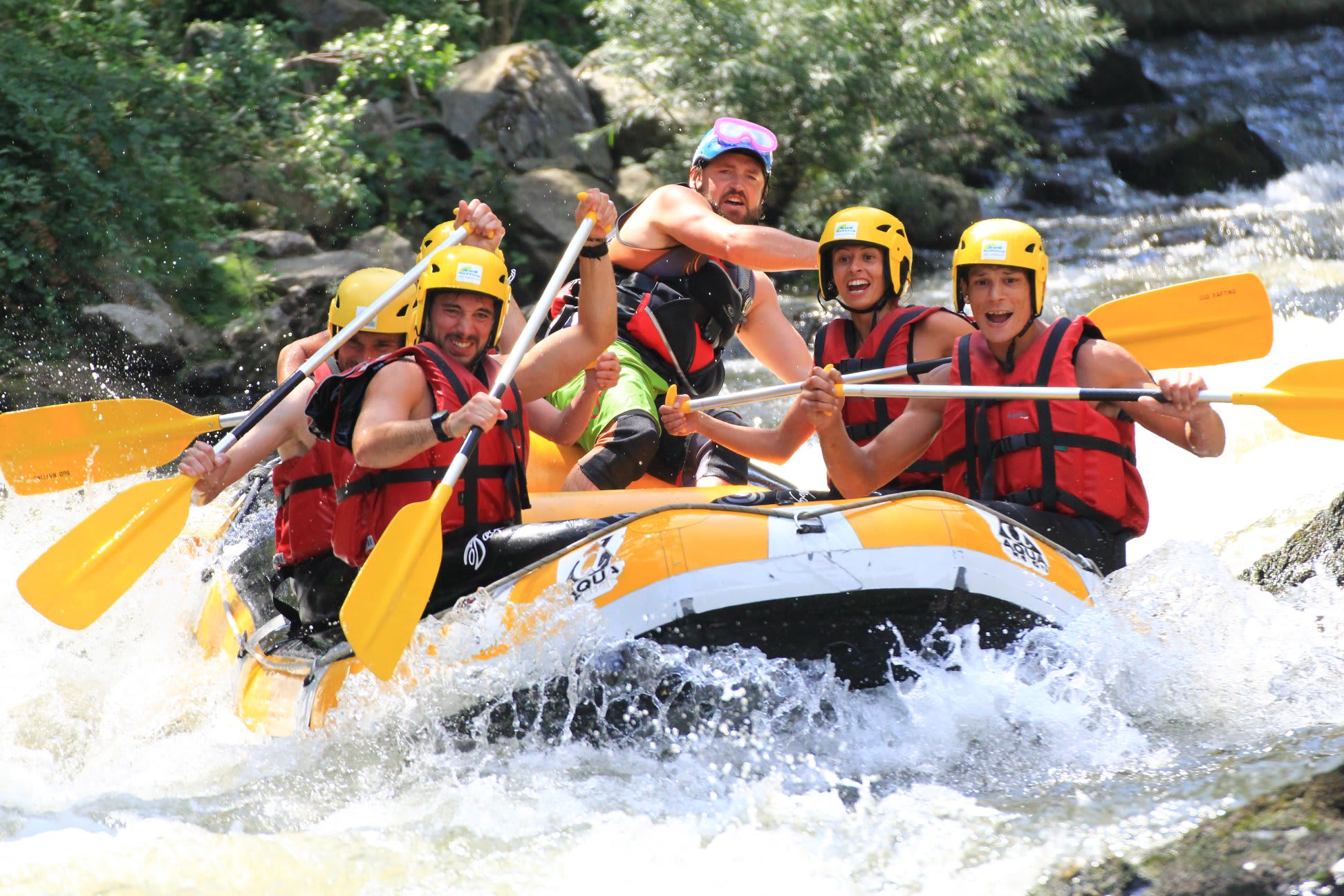
At its core, rafting is the ultimate team sport on water. You and a crew of anywhere from 4 to 8 people sit along the sides of a specialized, heavy-duty inflatable boat, working together to paddle through churning rapids. An experienced, professional guide always sits at the back to steer the boat and shout out commands like “forward paddle!” or “lean right!” It is an incredibly social, high-energy activity where success depends entirely on everyone syncing their movements to keep the raft on line.
While humans have used basic wooden rafts for transport since ancient times, modern recreational rafting really exploded in the 1970s. It grew out of a counter-culture desire to connect deeply with nature, eventually evolving into a professional, safety-focused sport by the 1980s. Today, it’s loved worldwide because it makes wild rivers accessible to almost anyone. If you want to dive deeper into what to expect on your first rafting trip, be sure to check out the complete guide to rafting.
What is hydrospeed?
Also known as riverboarding or whitewater sledging, hydrospeed drops you right into the water face-first. You lie flat on a sturdy foam board that protects your upper body, holding onto built-in handles while wearing swimming fins on your feet to steer and propel yourself through the currents like a human torpedo. The sport was born in the French Alps in the late 1970s when white-water guides looked for a more intense, direct way to experience the rapids, eventually patenting the first purpose-built float in 1978. Today, it’s the ultimate solo thrill for anyone who wants a deeply immersive, high-intensity relationship with the river. If you want a complete breakdown of the gear and essential safety tips, take a look at the complete guide to hydrospeed.
Key differences
1) Equipment
Sud Rafting
While both sports require standard whitewater safety gear — like a certified helmet and a high-float life jacket — the specialized equipment you use completely changes how you interact with the river. Here is a look at what you will be wearing and holding for each adventure.
For rafting, your primary piece of equipment is a large, multi-chambered inflatable boat built to bounce off rocks and handle heavy rapids. Aside from the boat itself, every passenger gets a single-blade T-grip paddle used to propel and steer the craft under the guide’s direction. You will also wear a standard neoprene wetsuit and water shoes to keep you warm and protected from the elements while sitting up in the boat.
For hydrospeed, your gear is much more personal and serves as your armor since your body is directly in the water. You will hold onto a lightweight, hydrodynamic foam float with built-in handles to protect your chest and face, while wearing open-heel fins on your feet for propulsion and steering. Because of constant contact with rocks and cold water, you will also wear a specialized, extra-thick wetsuit reinforced with protective padding on the knees, shins, and elbows.
2) Team Dynamics
How you navigate the river changes depending on whether you prefer sharing the load or making your own split-second choices. Your relationship with the water is defined by who is riding alongside you.
- Rafting is the ultimate collaborative team sport where success depends on coordination. You are packed into a boat with four to eight other people, all acting as a single unit to execute commands called out by your guide. It is highly social, full of shared laughs, and perfect for groups who want to conquer the rapids together.
- Hydrospeed is a pure solo adventure where you enjoy complete autonomy in the current. While you still travel down the river in a group led by professional guides, you are entirely responsible for picking your own line, steering your board, and navigating individual waves. It is just you, your fins, and the river.
3) Physical Demand & Swimming Skills
The amount of muscle power and water confidence you need varies dramatically between these two experiences. Rafting requires a basic level of fitness; you need enough upper-body strength to paddle through intense stretches, but the raft itself provides a buoyant safety net, and you only need to know how to swim in case of an accidental spill. Hydrospeed, on the other hand, is a demanding full-body workout. Because your legs are your only motor, you need good stamina for continuous fin-kicking, solid core strength to steer the board, and a sufficient level of swimming confidence, as you will be swimming actively inside the river’s currents for the entire duration of the trip.
4) Age & Weight Limits
Sud Rafting; Hakuna Matata Rafting
Because safety is the absolute priority on the water, both activities have guidelines regarding who can participate, though one is naturally much more flexible than the other.
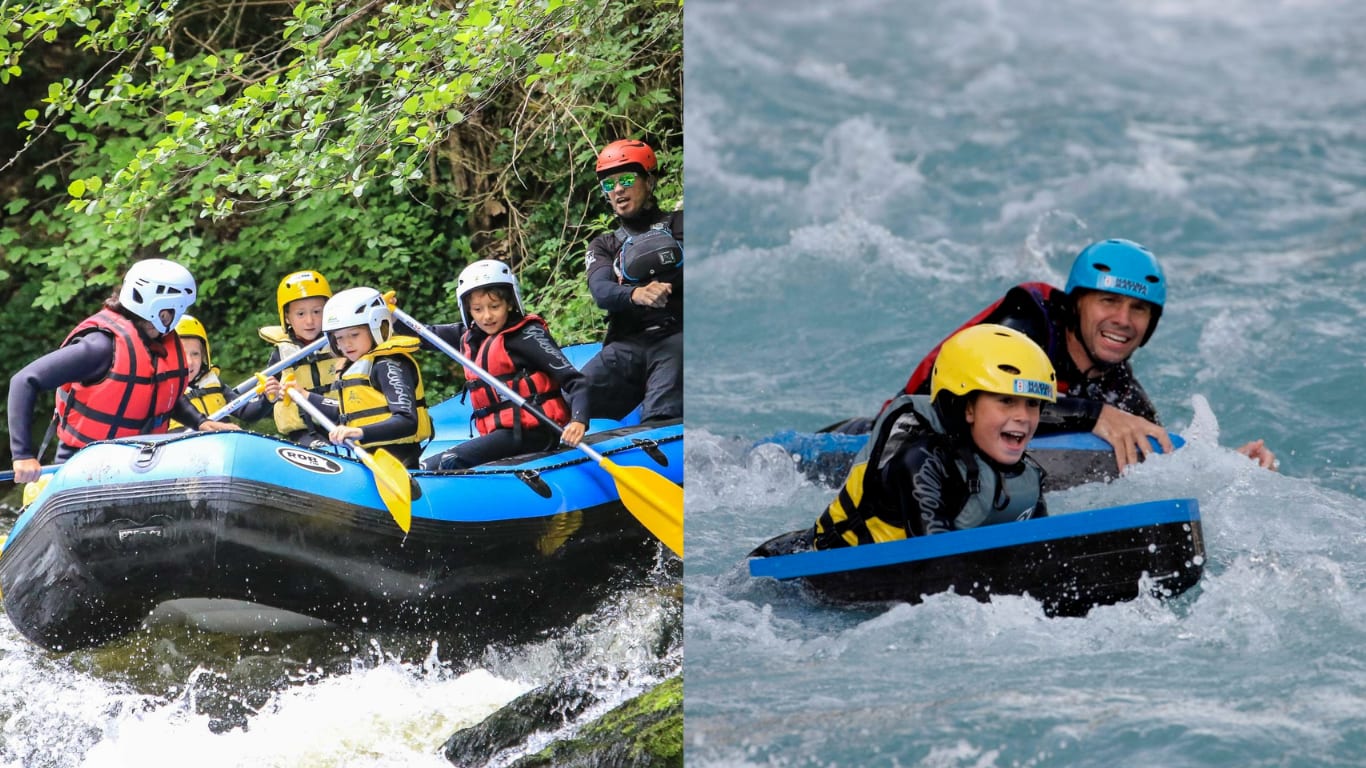
- Rafting is an incredibly accessible, family-friendly sport. On beginner-level routes, the minimum age can be as young as 6 to 8 years old (with a minimum weight requirement of around 20–25 kg / 50 lbs to ensure a secure fit in a youth life jacket). There is generally no strict upper weight limit for rafting; what matters most is your general mobility, your ability to swim, and your capacity to comfortably fit into the tour operator’s standard safety gear and life jackets. With an expert guide inside the boat to handle navigation and guide you through obstacles, it is the perfect entry point for absolute beginners and mixed-generation groups.
- Hydrospeed, by contrast, comes with tighter restrictions due to its highly physical nature. Depending on the specific river and current flow, the minimum age can range from 8 to 14 years old. Minors are usually required to prove they can swim at least 25 meters and can comfortably submerge their head underwater without panicking, and anyone under 18 will need a parent or guardian’s presence or written permission. Weight limits are also much more defined here: because you must rely on your own physical stamina to stay afloat and steer, most operators enforce a strict maximum weight limit—typically between 100 kg and 120 kg (220–260 lbs)—to ensure the foam boards remain buoyant and manageable in fast-moving currents.
5) Direct Sensation
The way you physically feel the river is where these two sports truly drift apart. In rafting, you experience the river from an elevated viewpoint, riding on top of the water inside a massive, bouncy shield. You get to watch the scenery roll by, feel the roller-coaster drop of the boat plunging into large wave holes, and catch heavy sprays of water directly to the face—all while enjoying a sense of stability. Hydrospeed, on the other hand, strips away that buffer completely. Because you are floating face-first at eye level with the water line, every single ripple feels like a massive wall of water and every minor current actively pulls at your body. It is an intensely raw, sensory explosion where you feel the absolute speed, temperature, and unyielding pulse of the river rushing directly against your chest.
6) Safety & Guidance
Trace Aventures
In rafting, your guide sits right inside the boat with you, acting as the captain of your ship. They read the river ahead in real-time, steer the heavy craft, and tell your crew exactly when and how hard to paddle. If anyone slips out of the boat, the team is right there to pull them back on board immediately, making it a highly secure, supervised environment.
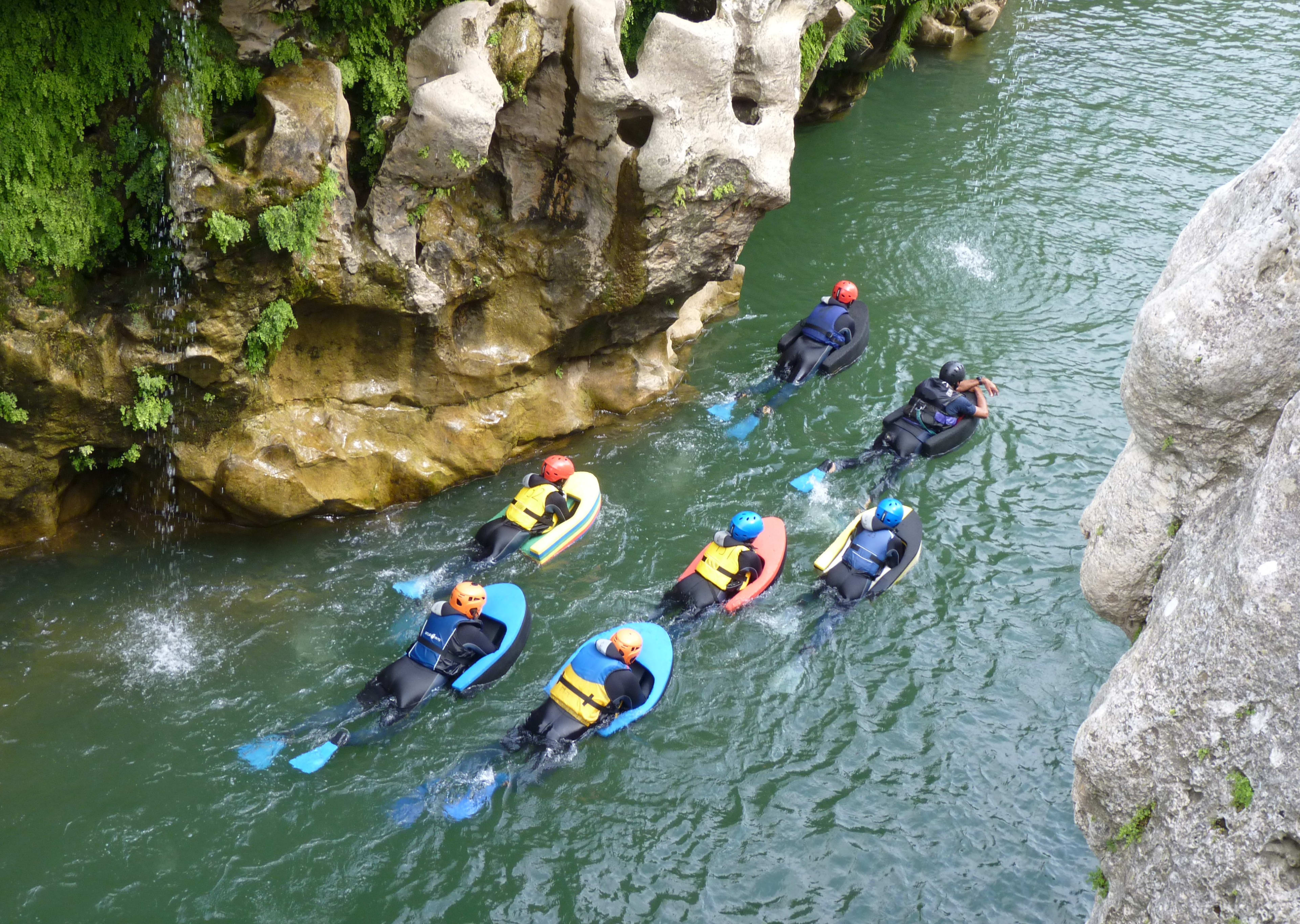
In hydrospeed, your guides supervise you from a distance, typically paddling alongside the group in agile safety kayaks. Instead of steering for you, they act as river scouts, reading the currents from their kayaks and pointing out the safest paths (or “lines”) for you to target. It is up to you to execute their directions, navigate around obstacles, and use proper white-water swimming techniques if you get separated from your board.
Comparison table
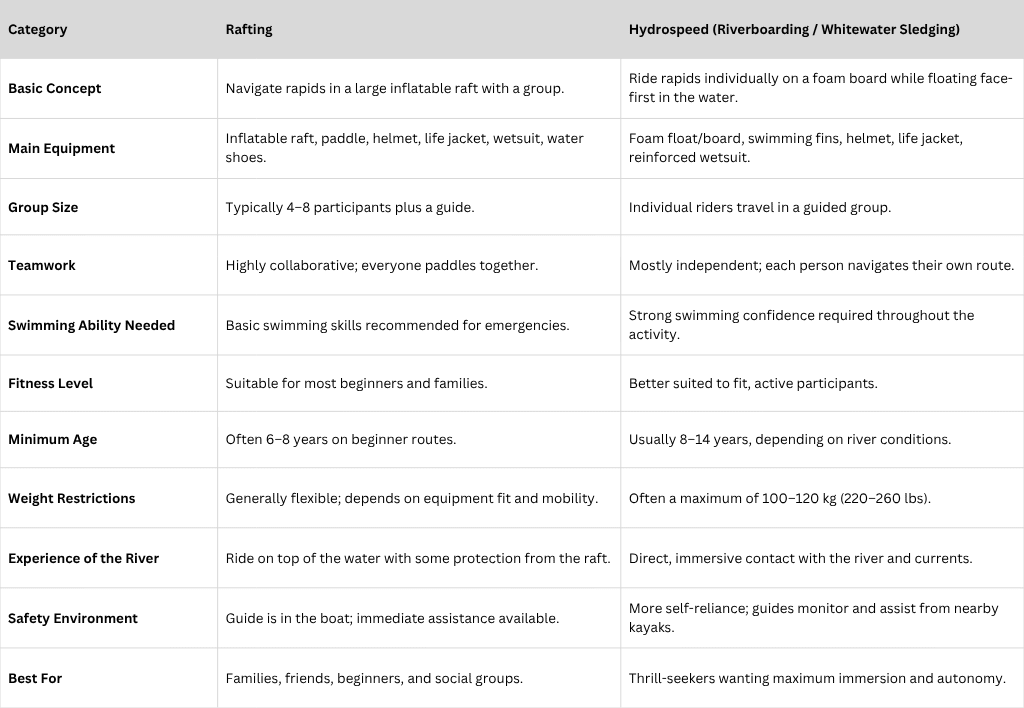
Manawa
Best places to try both activities
Looking for a spot where you can try rafting and hydrospeed? There are some great locations to experience both sports.
Alagna Valsesia, Italy
Centro Canoa Rafting Monrosa
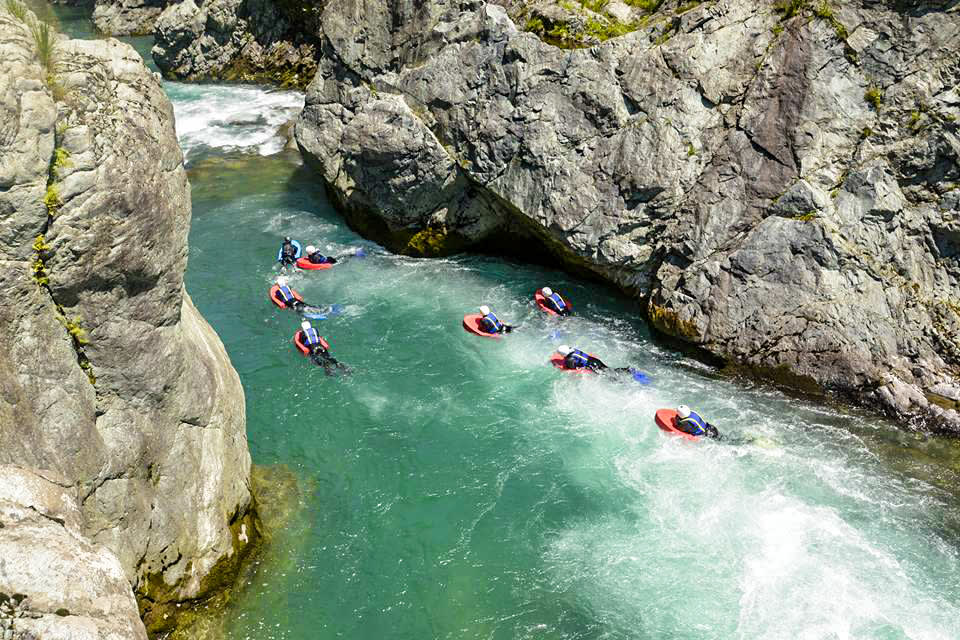
The Sesia River, widely regarded as one of Europe’s premier whitewater rivers, flows for 140 km from the glaciers of the Monte Rosa massif through the spectacular Valsesia Valley in northwestern Italy. Surrounded by alpine peaks, forests, and traditional mountain villages, the river offers a stunning setting for outdoor adventure. Its crystal-clear waters and varied rapids attract paddlers and river enthusiasts from across the continent.
Rafting on the Sesia caters to all experience levels, from gentle family-friendly sections suitable for children aged 8 and above to the powerful rapids of the Sesia Gorges, a dramatic canyon stretch framed by towering rock walls between the villages of Scopa and Balmuccia.
For those seeking a more immersive experience, hydrospeed in Alagna Valsesia allows you to navigate the river on a foam board, experiencing the currents at water level. Guided trips typically cover around 5 km of rapids over two hours. No prior experience is needed — participants must simply be at least 14 years old and confident swimmers.
Thonon-les-Bains, France
AN Rafting Haute Savoie
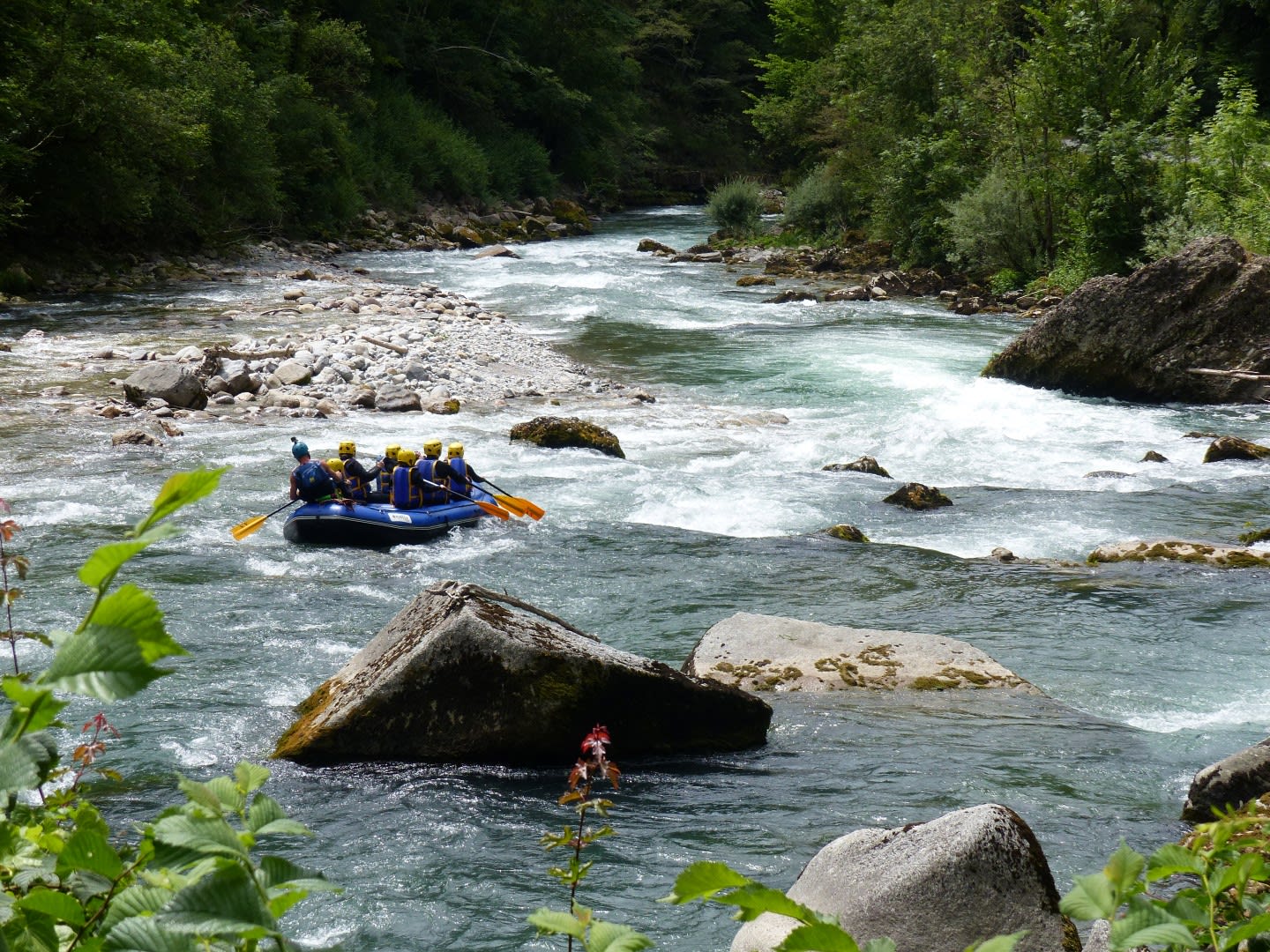
Flowing near Lake Geneva, the Dranse River is one of France’s top whitewater spots, offering over 15 kilometers of thrilling routes through a protected nature reserve. This dynamic river even hosted a Canoe-Kayak World Cup! Thanks to an upstream dam regulating the flow, you can enjoy rafting in Thonon-les-Bains all season long. Fun bonus: despite its mountain origins, the water here stays surprisingly warm.
If you want a bigger challenge, hydrospeeding on the Dranse is a fantastic, athletic step up from rafting. Immersed directly in the current with a foam float, fins, and a reinforced wetsuit, you’ll have complete autonomy to navigate the waves. After a quick briefing, you’ll hit the rapids with your guide in an intimate group limited to just seven people for maximum safety and fun. And if you would like to explore more spots to try this activity in France, check out the list of top French rivers for hydrospeed.
Benasque, Spain
Aguas Blancas
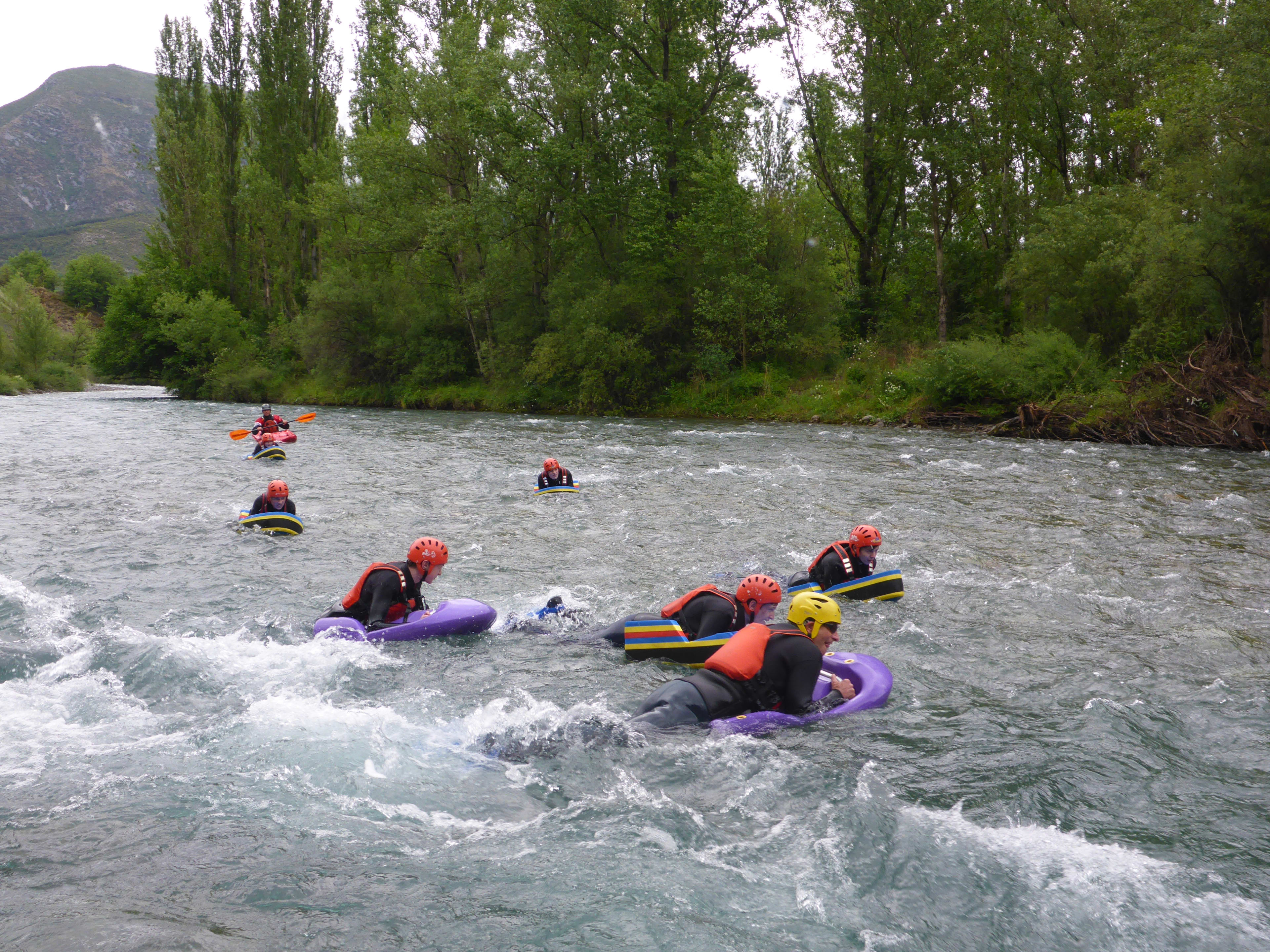
Nestled in the heart of the Spanish Pyrenees, the Ésera River offers one of the region’s most popular whitewater experiences. Flowing through the Province of Huesca between the villages of Campo and Santa Liestra, and located less than 30 minutes from Benasque and Castejón de Sos, the river combines beautiful mountain scenery with rapids suitable for a range of abilities. Families can enjoy beginner-friendly rafting in Benasque for children aged 6 and up, while more adventurous visitors can tackle stronger rapids on routes reserved for participants aged 16 and over.
The Ésera is also an excellent destination for hydrospeed in Benasque. Accompanied by a professional guide, you’ll navigate the river at water level, experiencing its powerful currents up close. The activity takes place on sections featuring exciting Class III and Class IV rapids, making it an ideal choice for thrill-seekers looking for a more intense and immersive whitewater adventure.
Keep exploring water…
Ready to take on the rapids?
Now that you know the key differences between rafting and hydrospeed, all that’s left is to choose your adventure. If you’re looking for a fun, social experience that combines teamwork with plenty of excitement, rafting is hard to beat. But if you’d rather dive straight into the action and feel every twist and surge of the river up close, hydrospeed offers an unforgettable adrenaline rush. And who says you have to pick just one?
If you’re eager to discover more ways to experience whitewater, keep exploring the best rivers in Europe to go whitewater kayaking. Or, for another water-based adventure that combines swimming, climbing, and cliff jumping, check out the complete guide to coasteering. Whatever you choose, get ready for an epic day on the water!