Responding is Jasper Rouget, vice president of sales, North America, Breadcrumb, San Francisco.
Developing a safety program is challenging and time-consuming. Yet, for many construction teams, the program in the site’s office binder doesn’t align with the one actually being implemented on the jobsite.
When this gap exists, it creates exposure for workers and compliance and liability issues. Identifying why the gap developed is the first step to closing it.
Issues start at the top
For many construction teams, the early stages of the gap start with their process.
When teams develop safety programs on paper rather than using a digital tool, it creates an administrative burden for those on the jobsite. This process leads to pre-task plans being completed at the end of the day – or not at all. Sign-in sheets get passed around and go missing. By the time anyone reviews the documentation, the workday is done and the details are already hazy.
The deeper issue is structural. Safety programs are often designed from the top down rather than fully accounting for the realities that the people in the field face each day.
On the jobsite, operational demands often lead workers to develop shortcuts while supervisors prioritize production. The focus on meeting demanding schedules for complex builds leads the crew to deviate from consistent adherence to standard safety procedures.
This gap between program design and day-to-day practice creates a compliance and liability concern.
The challenge becomes more pronounced as construction companies scale. Larger projects, expanded teams and increasingly complex safety programs lead to additional administrative demands. As a result, project teams spend more time tracking and managing paperwork and less time on execution.
Leading construction teams bridge this gap
Construction teams can minimize liability by closing the divide between the safety program designed by offsite personnel and the one implemented in the field. Effectively implemented safety programs are designed around the OSHA-defined competent person onsite, the individual closest to the risk: the subcontractor foreperson.
They check in with the crew, submit pre-task plans and manage compliance documentation for their workers. Most teams have a live accountability check-in, in which each subcontractor foreperson reports. The leading contractors create a safety system that builds on this existing behavior.
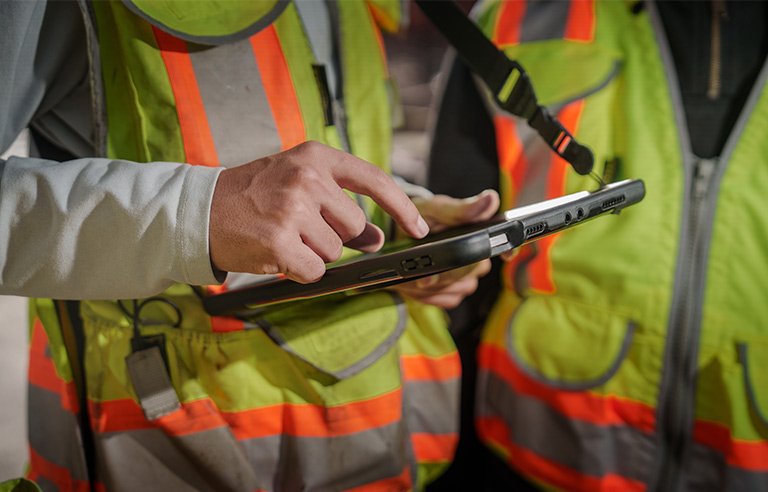
During the daily meeting, each subcontractor foreperson submits employee documentation for their crew with digital safety software. So, the safety program is built around the subcontractor foreperson’s workflow rather than creating an additional responsibility. Plus, key information is available in real time.
Instead of reviewing dated reports and chasing down information, supervisors, safety officers and program managers have instant visibility into crew levels relative to contract requirements, whether all workers onsite have completed required orientations and where compliance gaps exist. This enables industry leaders to address potential issues before they escalate into incidents.
When OSHA audits or insurance reviews arise, documentation is easily secured via the digital tool. The connected, automated record built in real time is far more defensible than piecing a record together after the fact. This is a meaningful point considering a serious OSHA violation carries a penalty exceeding $16,000, while a willful or repeated violation exceeds $165,000.
Build the safety program around the foreperson, and everything downstream improves. Documentation is completed in real time. Supervisors have the visibility to act early. Liability is reduced. The program on paper and the one in practice are the same.