May 21, 2026
Image note: I do not have my own photos from real bear encounters, so some images in this article are AI-generated for educational illustration.
When Bear Rules Break Down
The Problem With Simple Bear Advice
There is a problem with most bear advice. It gets turned into a neat little script. If it is a black bear, do this. If it is a brown bear, do that. If it charges, do this. If it attacks, do that. That kind of advice has value, but only if you understand that bears are illiterate. They did not read the same survival manual you did. They have a general idea because they have heard rumors of people talking about it from books, so they try to act accordingly, but sometimes they go off script.
That is not a joke. Well, it is a little bit of a joke, but the lesson behind it is serious. Wildlife does not always behave the way the chart says it should. A black bear can be brown. A brown bear can be almost black. A defensive bear can suddenly become predatory. A bear that “should” run away may stand its ground. A bear that “should” be stopped by spray may keep coming. A bear that “should” only be guarding cubs may be guarding food, space, a bed, or simply reacting to being surprised at close distance.
Before we talk about how black bears and brown bears behave differently, we have to start with identification. That is where a lot of people get it wrong.

Bears Do Not Follow Color Rules
The biggest mistake people make is using color. A black bear is not always black. Black bears can be cinnamon, blond, chocolate brown, grayish, or white or cream-colored in rare regional cases. A brown bear is not always brown. Brown bears, including grizzlies, can be blond, dark brown, reddish, silver-tipped, or nearly black. Color alone is one of the worst ways to identify a bear. The National Park Service and bear safety groups both teach that color and size can mislead people, and that shape, shoulder structure, face profile, ears, claws, and tracks are better indicators.
A brown bear, especially a mature grizzly, usually has a prominent shoulder hump. That hump is muscle, built for digging. When a brown bear walks, the shoulder area often looks higher than the rump. A black bear usually lacks that big shoulder hump, and its rump may appear higher than its shoulders depending on posture and terrain. Brown bears, especially grizzlies, tend to have a dish-shaped face profile, shorter rounded ears, and longer front claws. Black bears tend to have a straighter face profile, taller more pointed ears, and shorter curved claws that are better suited for climbing.
Tracks help too, but they are not always clean in the real world. In mud, snow, dust, or soft dirt, a brown bear track may show long front claw marks well ahead of the toes. Black bear claw marks are usually shorter and closer to the toes, and sometimes do not show well at all. But tracks can be distorted, partial, old, stepped on, melted out, or placed on uneven ground. So again, do not bet your life on 1 clue. Look at the whole picture.
In North America, when most people say “brown bear” in the lower 48, they are usually talking about a grizzly bear. Grizzlies are a type of brown bear. Coastal brown bears in Alaska and inland grizzlies are closely related, but their size, food sources, and behavior can vary by region. For the purpose of most mountain travelers in Montana, Wyoming, Idaho, Colorado discussions, and the northern Rockies, we are usually talking about grizzlies when we say brown bears.
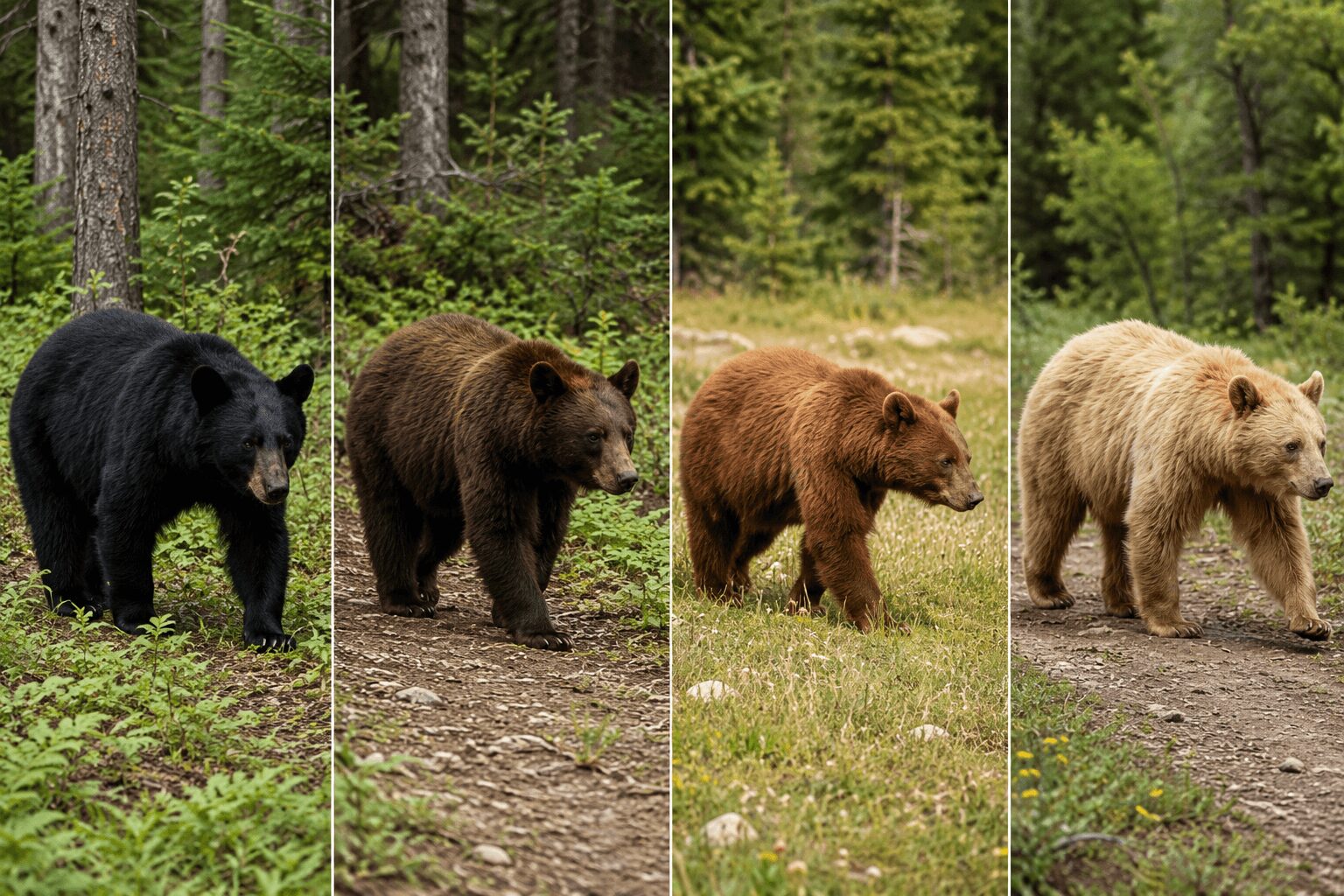
American black bears can have several coat colors, including black, dark brown, cinnamon, and blond. Color alone is not a reliable way to identify a bear.
How Black Bears and Brown Bears Tend to Behave
Once you have a better idea of what kind of bear you are looking at, the next question is behavior. This is where the conversation gets more complicated, because black bears and brown bears often operate from different instincts when they encounter humans. These are patterns, not promises, but the patterns still matter.
Black bears are generally more likely to avoid people. They evolved around larger predators and are built to climb well. Their first move is often to leave, climb, circle away, or bluff. A black bear sow with cubs may send the cubs up a tree and stay nearby. That does not mean she is harmless, but black bear mothers are often less likely than grizzly mothers to immediately hammer a person for simply being in the same area. Still, there are black bear attacks, and when black bears attack humans, especially when they stalk, follow, enter tents, or approach with slow intent, that can become a very dangerous situation.
Brown bears, including grizzlies, tend to be more direct and more explosive than black bears, especially when surprised. That does not mean every brown bear reacts the same way, and it does not mean they cannot climb. Younger brown bears can climb, and even some larger brown bears may climb depending on the tree, the situation, and the animal. But as they get bigger, heavier, and more powerful, they are generally not built around climbing the same way black bears are. They are built to dig, hold ground, defend space, and deal with conflict more directly.
That difference matters. A brown bear does not usually resolve a close surprise encounter the same way a black bear might. It is big, powerful, and equipped to stand its ground. A sow with cubs may treat a sudden close encounter as an immediate threat. She may not be trying to eat you. She may be trying to remove the problem as fast and violently as possible. If you appear suddenly in thick brush, around a bend, near a carcass, in a creek bottom, or with the wind carrying your scent away from the bear instead of toward it, you may have very little time to figure anything out. That is where many bad bear encounters begin.
How the Season Changes Bear Behavior
The season changes everything. In spring, bears are coming out of dens. They may be feeding on fresh vegetation, winter-killed animals, newborn ungulates, ants, roots, and anything calorie-dense they can find. A sow may have cubs. A boar may be moving long distances. Visibility can be poor because trails are not fully opened up, deadfall is everywhere, and people are often moving through areas where bears have had quiet access all winter.
Early season also creates a problem for people. Humans are excited to get back outside. Bears are also back on the landscape. The two meet in places where neither one wants to be surprised. That does not automatically mean every spring bear is starving and looking to eat people. Bear experts have pushed back on the oversimplified idea that bears come out of the den so hungry that they automatically become reckless killers. But food stress, carcasses, cubs, territorial pressure, and surprise can all stack together.
Summer has its own issues. Bears are feeding heavily and moving through berry patches, drainages, shaded timber, meadows, and travel corridors. People are hiking, biking, fishing, camping, and trail running in the same places. Vegetation gets thicker. Water noise can mask your sound. Wind direction can carry your scent away from the bear instead of toward it. A bear that might have moved off if it smelled you from 200 yards away may suddenly find you at 20 feet.
Fall is another level. Bears are trying to put on weight before winter. That late-season feeding period can make bears highly focused on food. Acorns, berries, carcasses, gut piles, hunter kills, camps, coolers, and unsecured food all become part of the equation. A bear feeding hard before denning may not want to leave a food source. A grizzly on a carcass is one of the worst situations to walk into. A black bear guarding food can also become aggressive, especially if it has learned that people mean calories.
Cubs Change the Equation
Cubs change behavior too, but people sometimes misunderstand how. The classic advice says a bear with cubs is dangerous. That is true, but the type of bear and the distance both matter. A black bear sow with cubs may tree the cubs, huff, pop her jaws, swat the ground, bluff charge, or move off. A grizzly sow with cubs is often a much bigger problem, especially if you surprise her at close range. She may not be trying to eat you. She may be trying to remove the threat as fast and violently as possible.
If you see cubs, assume the sow is nearby and watching you, even if you do not see her. Also remember that not every cub looks like a tiny little teddy bear. Bear cubs can stay with their mothers well into their second year, and sometimes longer depending on the species and region. A second-year cub may look taller, lankier, and more like a bear teenager than a baby. Do not let that fool you into thinking it is alone. If it looks young, awkward, leggy, or not fully grown, treat it like mom may still be close.
Do not move toward the cubs. Do not stop for pictures. Do not get between the sow and the cubs, and do not block their path to each other. If the cubs are on 1 side of the trail and the sow is on the other, you are in a bad place and need to move out of that line as calmly as possible. Speak calmly, keep your bear spray ready, back away slowly, and give them room to reconnect or leave. If the cubs climb a tree, do not stand there watching them. That may keep the sow in the area and make you the problem. Your goal is not to admire the cubs. Your goal is to disappear from the situation without triggering the mother into thinking you are a threat.
This can happen around urban environments and established campgrounds too. If you are in a town, campground, neighborhood, or roadside area and a cub climbs a power pole, fence, tree, dumpster, or structure, move away immediately and give it room to come down. Do not gather underneath it. Do not crowd it for photos. Now the cub is stressed, the sow may be hidden nearby, and the situation can turn ugly fast. If the cub falls, gets hurt, or gets shocked, the mother may come in violently and without warning. I have seen this happen with my own eyes. The people who thought they were just watching a cute cub suddenly became part of the problem.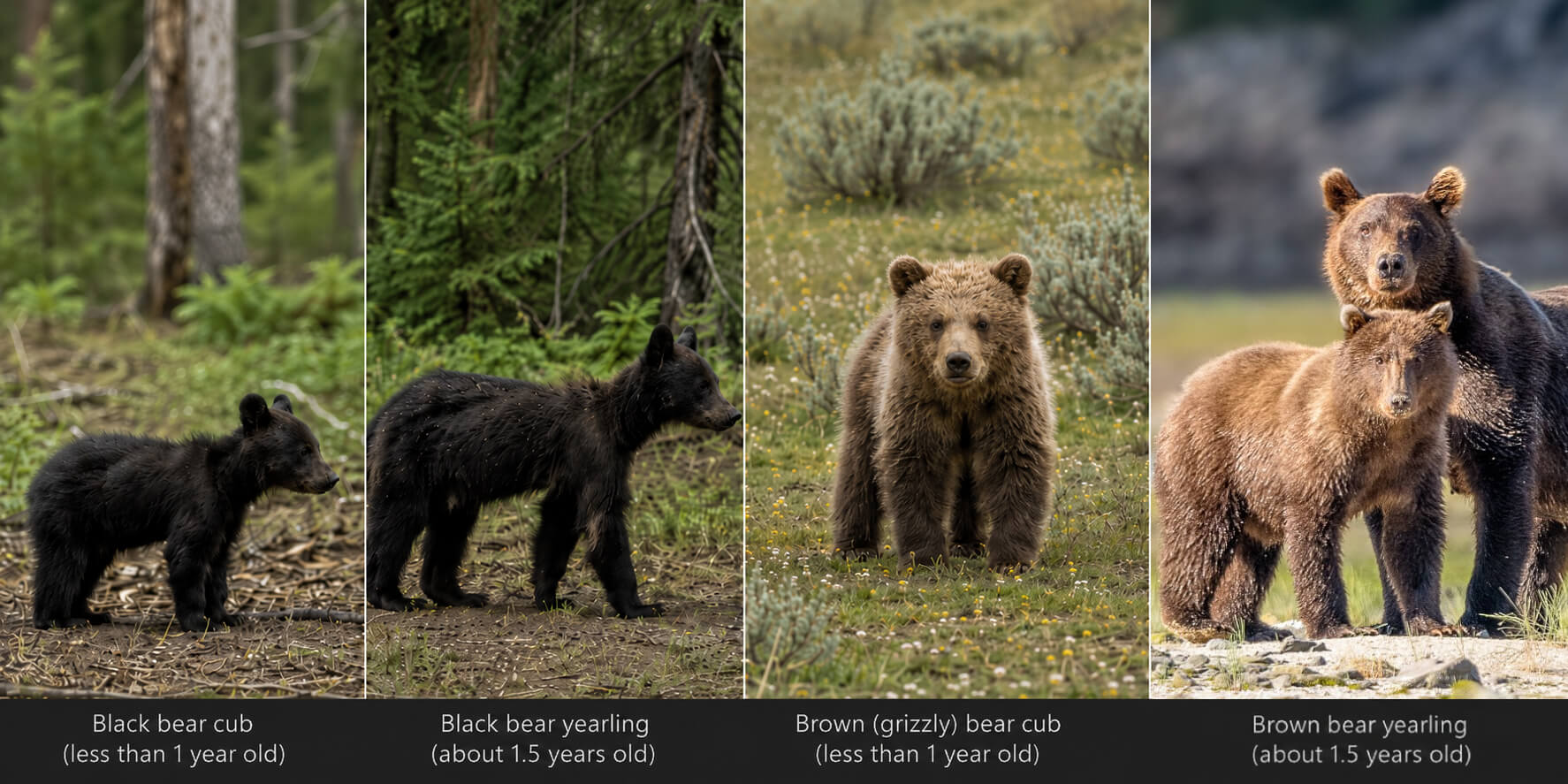
Defensive Bears and Predatory Bears Are Not the Same Thing
That difference between defensive and predatory behavior is one of the most useful things to understand. Defensive behavior usually happens because the bear feels threatened. You surprised it. You are near cubs. You are near food. You are too close. You came around a blind turn. You moved into thick cover with the wind in your face, meaning the bear could not smell you coming. Defensive encounters are often sudden, loud, and explosive.
Predatory behavior looks different. A predatory bear may follow you. It may approach quietly. It may circle. It may keep closing distance after you yell. It may come into camp. It may enter a tent. It may look too interested and too calm. That is not the time to curl up and hope the bear remembers chapter 7 of the bear safety manual. If a bear is treating you like food, you fight.
This is where the old advice can get people in trouble. People hear “if it is brown, lie down, if it is black, fight back.” There is some value buried in that saying, but it is too simple. If a grizzly makes contact in what appears to be a defensive attack, playing dead can reduce further injury because the bear may stop once it believes the threat is neutralized. If a black bear attacks, you generally fight back because many serious black bear attacks are predatory. The Interagency Grizzly Bear Committee and other bear safety groups warn that if a bear shows predatory or curious behavior, follows, slowly approaches, reaches into a tent, or the attack is prolonged, you fight back regardless of species.
Bear Spray Is a Tool, Not Magic
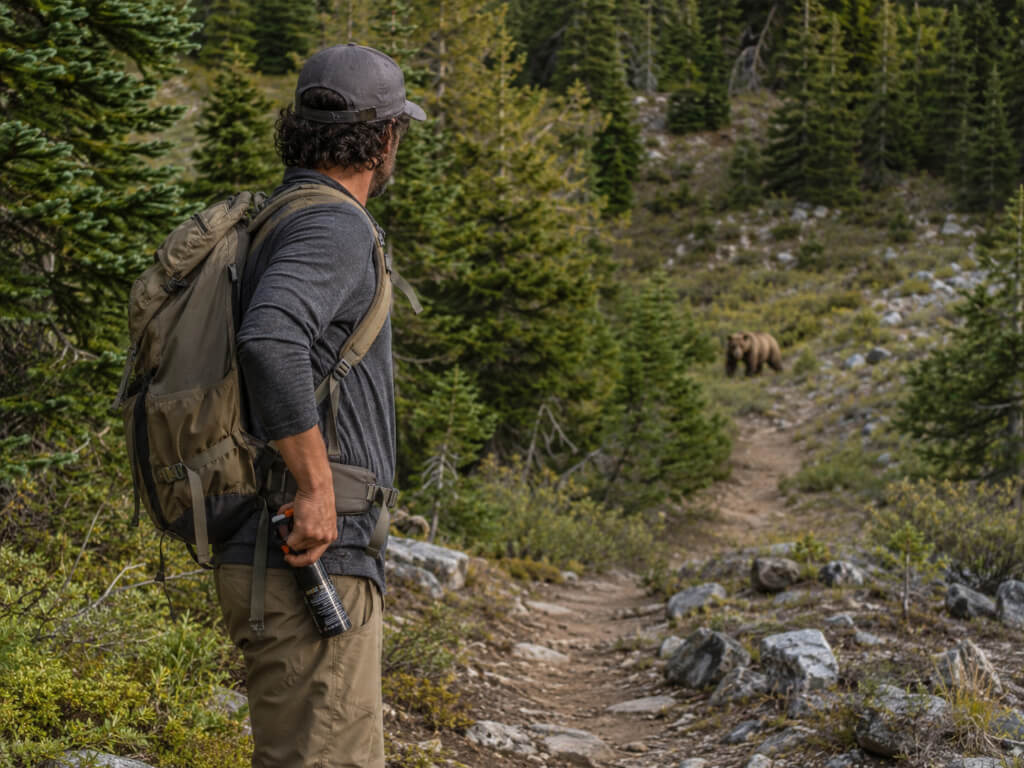
Bear spray is one of the best tools we have, but it is still a tool. It is not magic. The National Park Service describes bear spray as highly successful at stopping aggressive bear behavior, and I agree that people traveling in bear country should know how to carry it, draw it, aim it, and deploy it under stress. Bear spray does not help you if it is buried in your pack, zipped inside a pouch, strapped somewhere awkward, expired, or still confusing to you when a bear is already closing distance. You need to know how your can works before you need it.
Bear spray is also not a camp repellent. You do not spray it around your tent, on your gear, on your food storage area, or into the air hoping it keeps bears away. It is a close-range defensive tool for an aggressive or attacking bear. It works by creating a cloud between you and the animal, not by magically forming a wall around your campsite.
But we also need to be honest. Bear spray has limits. Wind can push it away from the bear or back into your face. Rain can affect the cloud. Thick brush can interfere. A bear may be too close. You may spray too early and create a cloud the bear runs around or through after it dissipates. You may spray too late and have no time for the cloud to work. You may miss. You may panic. You may dump the whole can instead of using controlled bursts. You may never get the can out. Or you may do everything right and still lose because the encounter was too close, too fast, or too violent.
That does not mean bear spray is useless. It means you need to treat it like a serious tool, not a lucky charm. Carry it where your hand can find it. Practice drawing it. Know the range of your specific can. Understand the wind. Use short, controlled bursts when you can, because you may need to spray again. And most importantly, have a plan in your head for what happens if the bear comes through the cloud and contact is made.
The Recent Fatal Bear Encounter in Glacier
That brings us to the recent fatal bear encounter in Glacier National Park. Publicly, we know that Anthony Pollio, a 33 year old man from Davie, Florida, was found dead in Glacier National Park after hiking the Mount Brown Lookout Trail. The National Park Service said his body was recovered around noon on Wednesday, May 6, 2026, about 2.5 miles up the trail and roughly 50 feet off the trail, with injuries consistent with a bear encounter. The park had not publicly confirmed the bear species at the time of the reports I reviewed.
Public reports also state that bear spray was found near the body. The Daily Inter Lake reported that Glacier officials confirmed a can of bear spray was found near where he was located, but officials were still determining whether it belonged to Pollio and the circumstances surrounding its use. Pollio’s father has said he believes Anthony may have deployed bear spray during the encounter, but park officials had not publicly confirmed that detail or the species of bear involved at the time of the reports I reviewed.
Here is the part I want to be careful with. I have heard from someone who said they were connected to the search and recovery team that found the young man from Florida that his bear spray had been deployed and the can was empty. I have also heard that there was evidence the bear had fed on him after the attack. I am not stating that as an official agency report, because that is not how it has been publicly released.
If the bear spray was empty, that raises hard questions. Did the bear ignore the effects? Did the spray fail because of wind or distance? Did he deploy it too soon? Did he deploy it too late? Did the bear run through it because the encounter was already too close and the bear was fully committed? We may never know. That is why these conversations need to be handled with respect. It is easy to sit at home and build a perfect response in your head. It is different when you are alone in thick timber, near dusk, with a bear closing distance faster than your brain can process.
Do Not Bet Everything on 1 Tool
That is also why I do not like one-tool thinking. Some people act like bear spray solves every bear problem. Others act like a handgun solves every bear problem. Both groups are usually too confident. Bear spray is a strong tool. A firearm can be a strong tool in trained hands. Awareness beats both when awareness gives you enough time to prevent the encounter in the first place.
The problem is that prevention is boring to people. They want the dramatic answer. They want the big revolver, the shotgun, the spray cloud, the heroic last stand. But the real work is paying attention before the bear is in your lap.
Wind direction is a big one. If the wind is in your face, your scent is blowing behind you. That means a bear ahead of you may not smell you coming. That is when making noise becomes far more valuable. Not screaming like an idiot the whole way down the trail, but talking, clapping at blind corners, calling out in thick brush, and being louder near water, berries, carcass areas, and low visibility spots.
Terrain is another one. Bears use drainages, saddles, creek bottoms, berry slopes, meadows, timber edges, avalanche chutes, and game trails. Humans use many of the same routes because they are also natural travel corridors. If you are moving fast through those areas, especially on a mountain bike or as a trail runner, you can close distance before a bear has time to react.
Mountain biking in grizzly country can be especially dangerous for that reason. There was a well-known case near Glacier where a mountain biker came around a bend and collided with a grizzly. That kind of encounter gives nobody time. The rider has no time to stop. The bear has no time to interpret intent. The result can be instant violence. It is not because the bear is evil. It is because 2 animals ended up in the same space at the wrong speed and distance.
Group size helps. Bears are less likely to attack groups than solo travelers. Groups make more sound, carry more scent, and look more intimidating. A solo hiker is quieter, smaller, and more vulnerable. That does not mean you cannot hike alone. People do it every day. But if you hike alone in bear country, you need to be honest about the added risk and adjust your behavior.
Food storage also changes bear behavior. A bear that has learned to associate people with food is a different animal. Coolers, trash, dirty grills, fish, game meat, gut piles, dog food, bird feeders, and food scraps all train bears. Once a bear learns that humans mean calories, the entire relationship changes. That is how you get bears walking into camps, testing tents, opening vehicles, raiding cabins, or approaching people with less fear.
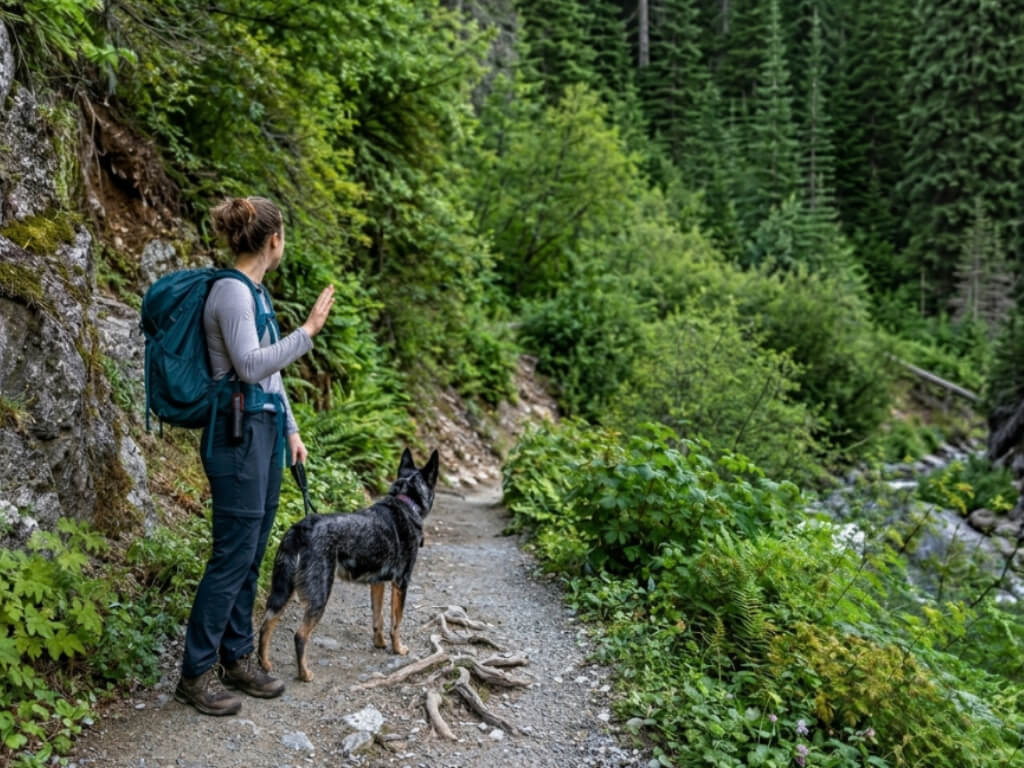
Dogs can make things worse too. A loose dog may run ahead, find a bear, provoke it, then run back to the owner with the bear behind it. People love their dogs, but in bear country a dog can become a chaos machine if it is not controlled. In most public bear safety advice, the safest answer is simple: keep your dog leashed and under control, or leave it at home. A highly trained dog in the hands of someone who knows bear behavior is a different conversation, but that is not the same thing as telling the general public that dogs help with bears.
So What Do You Actually Do?
This is where people want a clean answer, but bear encounters are not clean. The first goal is always to avoid turning a bear sighting into a bear encounter, and to avoid turning a bear encounter into physical contact. The second goal is knowing when the response changes, because what you do with a black bear is not always the same thing you do with a brown bear or grizzly.
Bear spray belongs in this conversation from the beginning. It does not do you any good buried in your pack, zipped inside a pouch, or strapped somewhere that looks cool but cannot be reached under stress. Bear spray should be carried where your hand naturally goes, usually on your belt, chest strap, or shoulder strap. You should know how to draw it, remove the safety, aim it, and fire it before you ever walk into bear country. Do not wait until a bear is charging to figure out how the can works.
If You See a Black Bear Before It Attacks
If you see a black bear and it has not attacked, stay calm. Do not run. Do not turn your back. Do not scream like a wounded rabbit and sprint through the trees, because now you may look like prey and you just turned the situation into a race you cannot win. Stand your ground, gather your group together, pick up small children, and speak in a calm, firm voice. Clapping your hands and saying something like, “Hey bear,” is appropriate when the bear is at distance and you are trying to let it know you are human without acting like a threat. The point is not to panic the bear. The point is to identify yourself and give it room to leave.
This is also when your bear spray should come out. Not fired yet, just out. Get it in your hand. Remove the safety if the bear is close enough that things could change fast. Pay attention to the wind. If the wind is blowing hard into your face, you may end up spraying yourself more than the bear. If the bear is at a distance and moving away, do not spray. Bear spray is not a long-range warning device. It is not bear repellent that you fog around camp. It is a close-range defensive tool for a bear that is approaching, charging, or close enough to become a threat.
Back away slowly if you can do it safely. Do not approach the bear for a picture. Do not block its escape route. Do not get between a sow and her cubs. If the bear is feeding, give it more space than you think it needs. If the bear is near your camp, food, cooler, trash, or hanging game meat, assume the situation is more serious because now the bear may be associating people with food.
If a Black Bear Approaches, Charges, or Attacks
If a black bear approaches you, your response should become stronger. Stand tall. Make yourself look bigger. Get loud. Yell. Clap. Bang trekking poles together. Throw rocks or sticks toward the bear if it keeps closing distance, but do not throw food or your pack. You do not want to teach that bear that approaching humans gets rewarded. Keep the bear spray in your hand, aimed low toward the bear’s path, with your finger ready.
If the bear keeps coming and is inside the effective range of your can, usually around 20 to 30 feet depending on the product, deploy the spray in a short burst aimed slightly downward in front of the bear’s face. You are trying to create a cloud the bear has to run through. Do not aim like it is a rifle. You are not trying to hit a tiny target. You are building a wall of spray between you and the bear.
This is why you do not just mash the button and panic-dump the whole can. Most bear spray cans only give you about 5 to 10 seconds of total spray time, depending on the size and brand. Some smaller cans may empty in roughly 4 to 6 seconds. Larger cans may give you closer to 8 to 10 seconds. That sounds like enough until you realize how fast a bear can close distance and how badly stress can wreck your timing. Use short 1 to 2 second bursts. If the bear keeps coming through the first cloud, spray again. Keep backing away only if you can do it without falling or turning your back.
A fatal black bear attack in northern Saskatchewan in May 2026 is a reminder that black bears are not harmless just because they are usually more likely to avoid people. Public reporting says a 27-year-old contractor was killed at a remote uranium exploration site, the black bear involved was euthanized at the scene, and wildlife officers, RCMP, and the coroner were investigating. We still do not have enough public detail to say exactly how the encounter unfolded, but the lesson stands: if a black bear attacks and makes contact, you fight back.
If a black bear charges and makes contact, do not play dead. Fight back hard. Use anything you have. Rocks, sticks, trekking poles, knife, firearm, fists, boots, whatever is available. Aim for the face, eyes, nose, and muzzle. If you still have bear spray and can use it without spraying yourself worse than the bear, use it at close range into the face. A black bear attack is often treated as predatory, or at least dangerous enough that pretending to be harmless can get you killed. You want that bear to understand that you are not easy food. The official guidance is clear on this: if a black bear attacks, fight back.
If You See a Brown Bear Before It Attacks
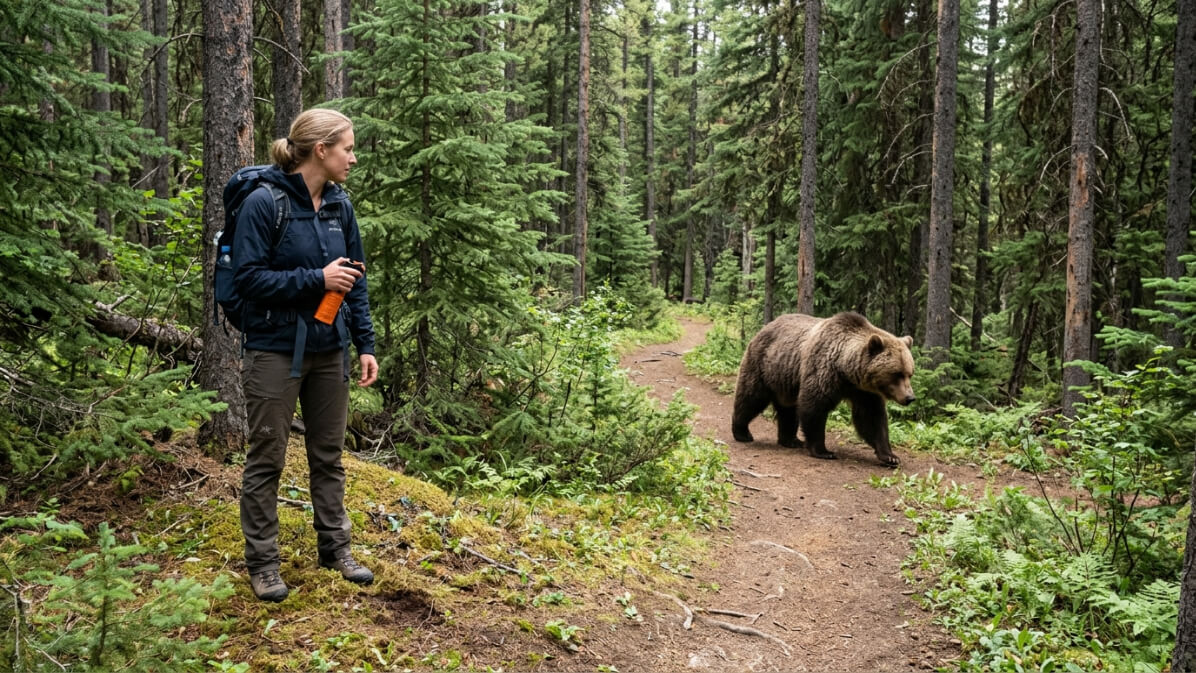
If you see a brown bear or grizzly and it has not attacked, the first question is whether the bear knows you are there. If the bear is unaware of you and you can leave without drawing attention, move away quietly and give it space. Do not stop for photos, do not move closer, and do not turn the moment into a wildlife viewing opportunity. A bear that never has to make a decision about you is usually the best outcome.
If the bear has noticed you, stay calm. Do not run. Do not make sudden movements. Do not surprise it further. Speak in a calm, steady voice so the bear can identify you as human. “Hey bear” is fine. Clapping or calling out can be useful at distance, especially when you are trying to announce yourself in poor visibility, but once a grizzly is close and focused on you, I would rather see calm talking than frantic sound. A grizzly 20 yards away does not need you acting like a maniac.
This is where a lot of people make their first mistake. They take advice that may apply to a black bear and use it on a grizzly. They get big, get loud, square up, act aggressive, and lock eyes like they are trying to dominate the animal. That is not the first move I want with a brown bear or grizzly that may already be defensive. Keep the bear in your sight, but do not stare it down. Direct, hard eye contact can be read as a challenge. Your goal is not to intimidate a defensive grizzly. Your goal is to show that you are human, you are not prey, and you are not there to threaten its cubs, food, space, or escape route.
With a grizzly, especially one that is close, surprised, guarding cubs, or on food, you often start almost the opposite way. Stay controlled. Stay upright. Speak calmly. Move slowly. Give it room. Prepare your bear spray. Do not act submissive in the sense of collapsing or turning your back, but do not act dominant either. You are trying to de-escalate a defensive animal before it decides you are a problem it needs to remove.
Get your bear spray out early. Out does not mean fired. This is where people screw up next. If the bear is standing 60 yards away and watching you, that is not the time to empty the can. Bear spray is a close-range defensive tool, not a long-range warning device. If you spray too early, the cloud may never reach the bear, may drift away with the wind, or may settle before the bear gets to it. Now you have less spray, or no spray, when you actually need it.
Have the can in your hand. Know where the safety is. Be ready to remove it if the bear is close enough or focused enough that the situation could change fast. Pay attention to the wind, brush, distance, and terrain between you and the bear. If the bear is not approaching, do not spray. If it starts closing distance and comes into effective range, then you are ready.
Back away slowly when you can do it safely. Keep your eyes on the bear without giving it a hard predatory stare. Give the bear room to move away. Do not approach. Do not block its escape route. If you are on a trail and the bear is coming your direction, remember that it may not be coming for you. It may simply be using the same trail you are using. Trails are easy travel corridors for people, but animals use them too. If you can safely step off the trail without boxing yourself in, falling, moving into thick cover, or getting between the bear and its escape route, do it slowly and give the bear room to pass.
Do not turn your back. Do not run. Do not dive into brush where you cannot see what is happening. Keep the bear in sight, keep your bear spray ready, and let the bear have the trail if that is the safest way to create space. Do not try to haze it like you might with a black bear unless the situation has clearly shifted into predatory behavior. With a grizzly, especially a sow with cubs or a bear on food, the last thing you want to do is turn a defensive situation into a worse one.
If a Brown Bear Charges or Attacks
If a grizzly charges, it may be a bluff charge. Grizzlies can run at you, huff, pop their jaws, swat the ground, stop short, or veer away at the last second. That does not mean you should act casual. It means you need to hold yourself together long enough not to trigger the wrong response. Do not run. Do not turn your back. Stand your ground if you can.
Some very experienced bear people may step slightly forward or use a more assertive posture during certain bluff charges, but I would be careful turning that into general advice. There is a big difference between a professional bear photographer reading a bear in open country and a hiker getting surprised at close range in thick timber. For most people, the safer advice is not to advance, not to challenge the bear, and not to act dominant. Hold your ground, stay upright, speak steadily, prepare your spray, and let the bear break off if it is bluffing.
This is where people often make the next mistake. They do not have the bear spray out and ready when the bear is still far enough away for them to use it well. They wait until the bear is already too close, or they are still trying to dig it out of a pack, pouch, or awkward holster when the charge is already happening. Bear spray only helps if you can get to it, aim it, and deploy it before the bear is on top of you. Brown bears are large, but they still move quickly.
Deploy bear spray when the bear is close enough that the cloud will actually reach it, often around 30 feet or less depending on the can, the wind, and the speed of the bear. Fire a short burst low and in front of the bear so it runs into the cloud. If it keeps coming, fire again. If the bear is charging fast, you may need to spray earlier in that effective range because the distance closes almost instantly. A charging grizzly covers ground so fast that “I’ll wait 1 more second” can become too late. Use controlled, short bursts rather than panic-dumping the entire can at once, because you may need to spray again if the bear keeps coming.
If the grizzly makes contact in what appears to be a defensive attack, go down and play dead. Keep your pack on because it gives your back some protection. Lie face down. Clasp your hands behind your neck. Protect your head and neck with your arms. Spread your legs so the bear has a harder time flipping you over. Stay quiet. Do not scream. Do not fight during the initial defensive attack unless you have no other choice. If the bear rolls you, try to roll back onto your stomach and keep protecting your neck and head. The goal is to convince the bear that you are no longer a threat.
The next mistake is assuming the spray will always end the encounter. Bear spray is one of the best tools we have, but it is not a force field. A bear that is close enough, fast enough, scared enough, angry enough, or committed enough may still come through the spray and be on you. That does not mean the spray was useless. It may still slow the bear down, affect its senses, change its behavior, or give you a better chance. But you need to already know what comes next if the spray does not stop it before contact.
If you still have bear spray in your hand when you go down, hang onto it if you can. Do not blindly spray while your face is in the dirt and the bear is on top of you unless you know you can direct it into the bear and not just disable yourself. At that point, your priority is protecting your head, neck, and vital areas. Try to get face down as best you can. Keep your pack on because it can give your back some protection and may take some of the damage instead of your body. Do not roll onto your back and expose your face, throat, chest, belly, or other soft tissue if you can avoid it. Clasp your hands behind your neck, tuck your elbows in around your head, and use your arms and hands to protect your skull and neck. Spread your legs out in a wide Y shape so you are more stable and less easy to roll over. A grizzly is strong enough to move you if it wants to, but your job is not to win a wrestling match. If the bear does roll you, go with the roll and keep moving until you can get back onto your stomach again.
It will be incredibly hard, but try not to scream. At this point, you are playing dead, and dead things do not scream. Stay quiet, stay protected, and do everything you can to convince the bear that you are no longer a threat. If the bear breaks contact and you have a safe chance to access the spray again while it is still close, be ready in case it returns.
Do not jump up the second the bear stops. That is where people can get hammered again. Stay still until you are confident the bear has left the area. That may mean waiting longer than your adrenaline wants you to wait. A defensive grizzly attack can be short, but the bear may remain nearby. If you pop up too soon, you may restart the whole thing.
The moment the behavior changes, your response changes. If the grizzly keeps attacking for an extended period, leaves and comes back, begins feeding, licks you, quietly works at you, follows you, enters your tent, or shows calm predatory interest rather than explosive defensive violence, then playing dead is no longer the right answer. At that point, you fight back with everything you have. Use bear spray if you still can. Use a knife, rocks, sticks, firearm, boots, hands, anything. Aim for the face, eyes, and muzzle.
The Clean Difference
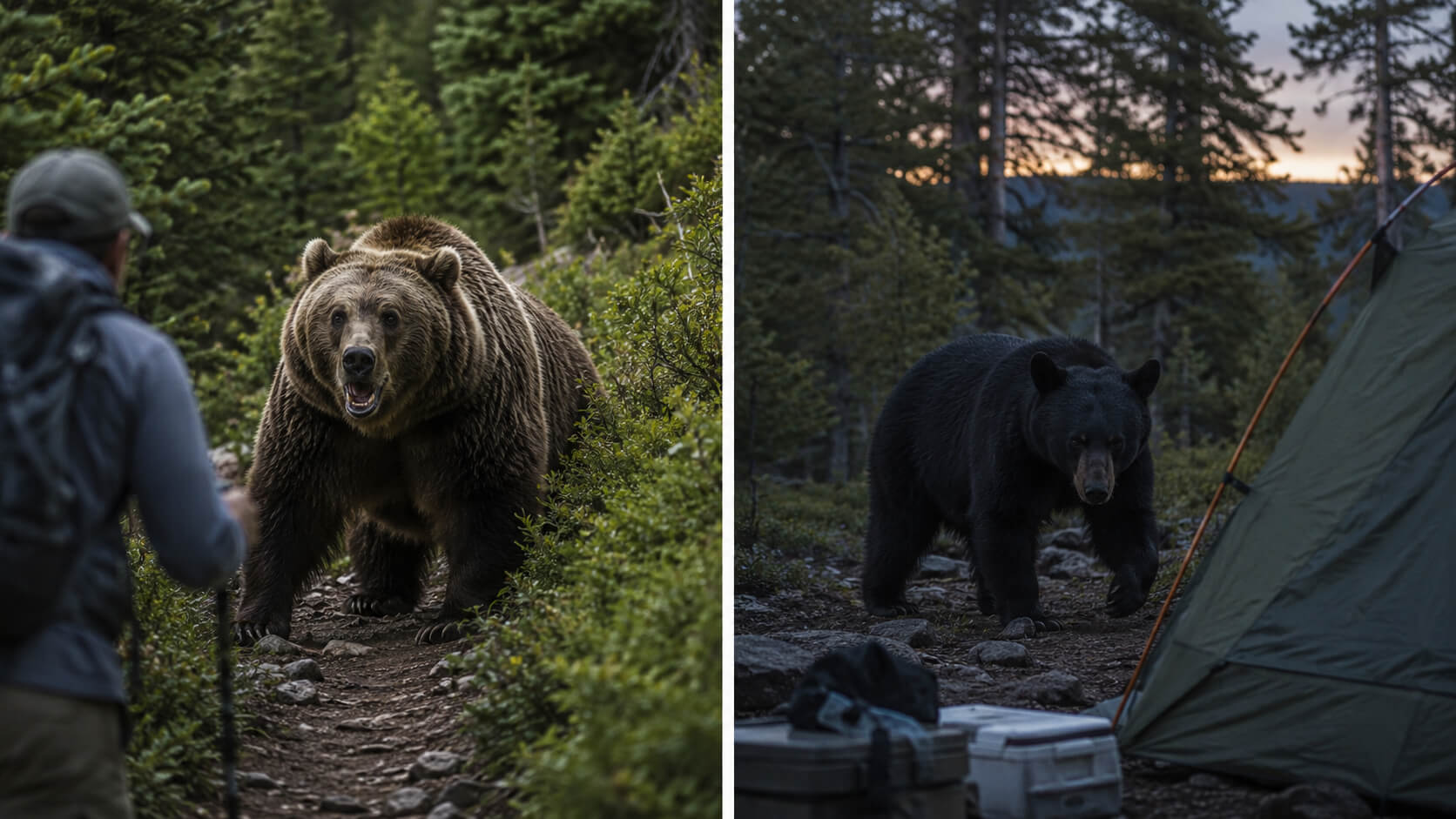
The clean difference is this: with a black bear, if it attacks, fight back. With a brown bear or grizzly, if it is a sudden defensive attack, play dead once contact happens. But if any bear is hunting you, stalking you, entering your tent, calmly continuing, feeding, or returning, the rule changes. That bear is no longer just trying to remove a threat. Now you are fighting for your life.
That is the part people need to understand. The species gives you a starting point, but the behavior tells you when the rule changes. A defensive bear and a predatory bear are not the same problem. A bear that explodes because you surprised it may stop once it believes the threat is gone. A bear that keeps working on you, follows you, comes back, or treats you like food is a different animal in that moment, and you cannot stay locked into the wrong rule just because someone taught you a catchy phrase.
What Actually Keeps You Alive in Bear Country
First, learn to identify bears correctly, but do not let identification slow your response when distance is short. If you have time, look for the shoulder hump, face profile, ears, claws, body shape, and behavior. If you do not have time, stop trying to win the wildlife biology quiz and deal with the animal in front of you.
Second, carry bear spray where you can reach it. Not in your pack. Not buried in a side pouch. Not strapped somewhere that looks cool but cannot be reached under stress. You need to practice drawing it. You need to know how the safety clip works. You need to know the effective range of your specific can. You need to understand that wind, brush, and distance all affect deployment.
Third, learn to recognize fresh bear sign. As you move through bear country, look for more than tracks and scat. Bears will flip over large rocks, roll logs, rip apart rotten wood, tear into old stumps, and disturb ant piles while searching for food. They are looking for ants, beetles, larvae, grubs, roots, and anything else that gives them calories. If you start seeing big rocks turned over, dead logs shredded, bark ripped apart, fresh digging, or ant mounds torn open, slow down and pay attention. That is bear sign. It may not mean the bear is standing there right now, but it does mean a bear has been feeding in that area.
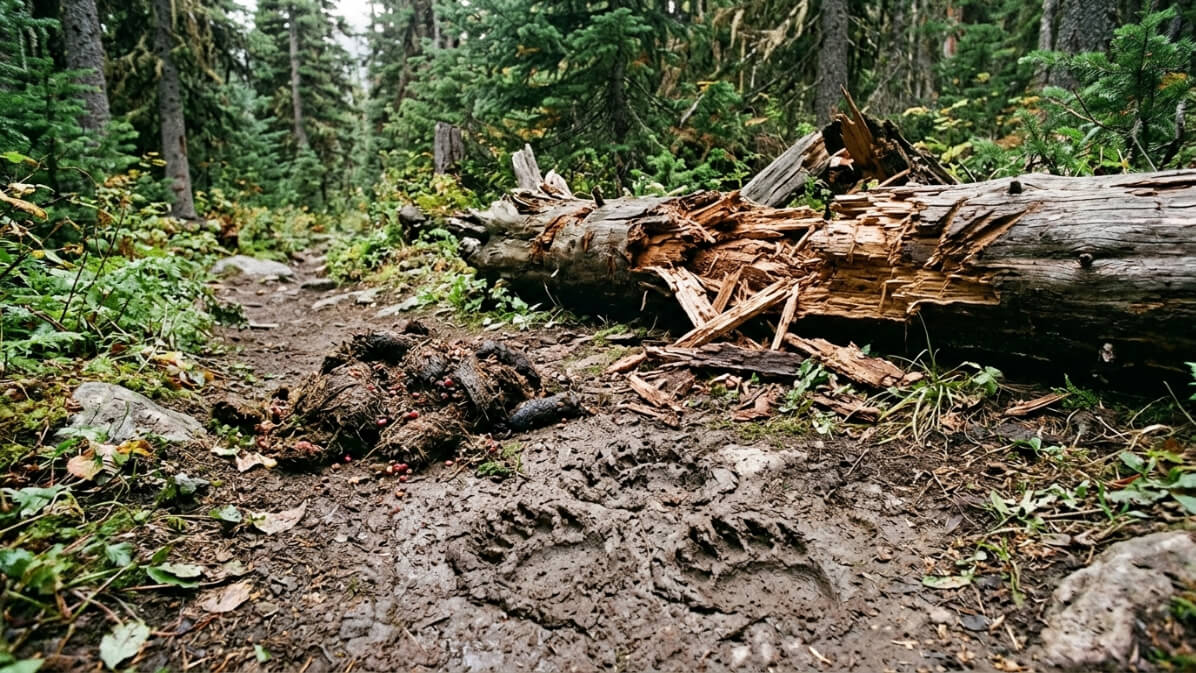
Fourth, make noise in the right places. Thick brush. Blind corners. Creek crossings. Heavy wind. Dense timber. Berry patches. Carcass areas. Places with fresh scat, tracks, digging, overturned objects, or ravens and magpies working over something dead. Those are not the places to move like a ninja. Make your presence known, watch the wind, look for fresher sign, and be ready with your bear spray.
Fifth, slow down when visibility is bad. Speed creates surprise. Surprise creates violent reactions. This is especially true for bikers and runners. If you are flying down a trail in grizzly country, you may be giving yourself almost no reaction time.
Sixth, understand defensive versus predatory behavior. A bear that explodes because you surprised it may be trying to neutralize a threat. A bear that follows, stalks, calmly closes distance, enters your tent, or keeps attacking after you are down is a different problem. That is when you fight with everything you have.
Seventh, stop thinking any single tool makes you safe. A .44 Magnum with hard cast rounds is a serious tool in the hands of someone trained and mentally prepared to use it under extreme stress. Bear spray is a serious tool when carried and deployed correctly. Neither one replaces awareness, distance, group travel, food discipline, and understanding the terrain.
The difference between black bears and brown bears is real. They are built differently, they evolved differently, and they often respond to people differently. Black bears are usually more avoidant and more likely to climb. Grizzlies are more likely to stand their ground and respond violently when surprised, especially with cubs or food nearby. But those are patterns, not promises.
That is the whole point. Patterns help us prepare. They do not give us control.
Bears do not care what the book said they were supposed to do. They did not attend the seminar. They did not take notes. They are not sitting around trying to make sure their behavior matches the pamphlet you picked up at the visitor center. They are living animals making fast decisions based on hunger, fear, cubs, food, space, surprise, past human contact, and whatever is happening in that exact moment.
So learn the differences. Carry the right tools. Practice with them. Pay attention to wind, cover, terrain, and food. Make noise when it makes sense. Travel in groups when possible. Respect the fact that a bear encounter can go from interesting to fatal in seconds.
And above all, do not let simple rules replace judgment. Simple rules are for classrooms. The backcountry is where those rules get tested.

About the Author
Jason Marsteiner is the founder and lead instructor at The Survival University, where he’s turned his obsession with staying alive into a mission to teach real-world survival skills. Forget fancy gear, Jason’s all about the know-how that gets you through the wild or a city crisis. A published author of Wilderness Survival Guide: Practical Skills for the Outdoor Adventurer, he’s distilled years of hard-earned wisdom into lessons anyone can use.
Raised in Colorado’s rugged mountains, Jason’s survival chops were forged in the wild—from Missouri forests to Arizona deserts to Costa Rican jungles. He’s navigated it all with next to nothing, earning creds like Wilderness First Responder (WFR) and SAR tracking along the way. He’s trained thousands to keep cool when 911’s out of reach, proving survival’s not just for grizzled adventurers, it’s for hikers, parents, and city slickers alike.
Jason’s mantra? Everyone should make it home safe. When he’s not running courses, he’s designing knives, mentoring newbies, or chilling in the city like the rest of us, always sharpening the skills that turn panic into power.
