Key Takeaways
- GMP and occupational safety share the same five foundational elements: premises and equipment, trained people, documented procedures, auditing, and measurable outcomes.
- Implementing GMP principles for safety requires full organizational commitment, not just an EHS department initiative.
- Documentation and audits are where most safety programs lose ground. Structured recordkeeping turns safety data into actionable intelligence.
- Continuous improvement is built into GMP thinking. The same discipline applied to product quality belongs in every safety program review cycle.
- EHS management software centralizes all five GMP safety elements in one system, replacing paper and disconnected spreadsheets.
How to Apply Good Manufacturing Practice (GMP) to Workplace Safety
Good manufacturing practice (GMP) gives manufacturers a proven framework for producing consistent, high-quality products. The same framework applies directly to workplace safety. The five core GMP elements, including premises, people, processes, procedures, and documentation, map onto occupational health and safety with almost no translation required.
What Is GMP and Why Does It Apply to Safety?
Good manufacturing practice is a system of standards, procedures, and controls that ensures products are consistently produced and meet quality requirements. The U.S. Food and Drug Administration (FDA) enforces Current Good Manufacturing Practice (cGMP) regulations that set minimum requirements for the methods, facilities, and controls used in manufacturing, processing, and packing. These requirements are designed to prevent contamination, errors, and inconsistency. FDA
Safety programs have the same goal. They exist to prevent harm through consistent, documented, and audited practices applied across people, equipment, and environments. The overlap is not coincidental. GMP thinking and occupational safety thinking are built on the same logic: define the standard, train people to meet it, document what happens, and review outcomes to improve.
How the Five GMP Elements Map to Workplace Safety
1. Premises and Equipment
In product manufacturing, GMP requires that facilities and equipment meet defined standards for cleanliness, maintenance, and fitness for purpose. Facilities in good condition and equipment that is properly maintained and calibrated are among the primary ways cGMP requirements help assure safety and efficacy. FDA
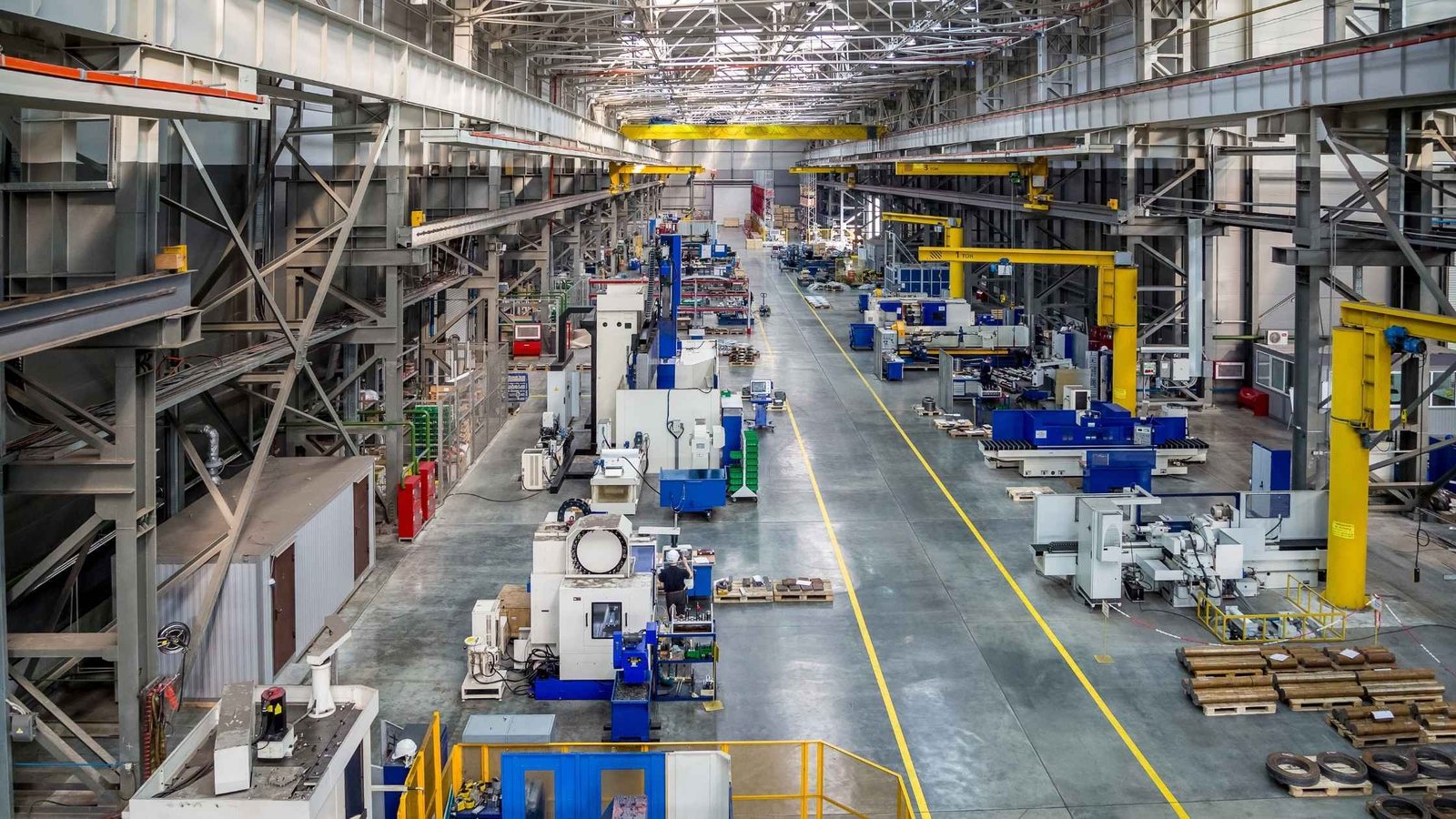
Workplace safety works the same way. A clean, organized, and well-maintained facility is not incidental to safety — it is foundational to it. Workers need the right personal protective equipment (PPE), functional machinery, and a physical environment that reduces exposure to hazards. If the equipment is substandard, the safety outcomes will be, too.
The practical question for EHS teams: Is your facility inspection program capturing equipment condition and housekeeping in the same disciplined way your quality team tracks production readiness?
2. The Right People in the Right Roles
GMP requires that personnel are trained, qualified, and assigned to roles that match their competencies. The main components of Good Manufacturing Practices, known as the 5 Ps of GMP, are People, Products, Processes, Procedures, and Premises. All personnel must be thoroughly trained and understand their specific roles. Food Docs
Safety programs carry the same requirement. Putting untrained workers in high-hazard roles is a control failure, not a training gap. The right people are those who have received role-specific safety training, demonstrated that they can apply it in the field, and are positioned where their competency matches the risk.
Employee training management systems make it possible to assign training by job role, track certification expiration, and verify completion before workers enter hazardous environments. That is not administrative overhead. It is a direct GMP-aligned control.
3. Documented Policies and Procedures
GMP is, in significant part, a documentation discipline. Every process is written down, reviewed, and controlled. Deviations are recorded and investigated.
Safety programs that operate from memory, verbal instruction, or tribal knowledge do not scale and do not hold up to audit scrutiny. Safety policies, lockout/tagout procedures, permit-to-work processes, and emergency response plans all need to be written, version-controlled, accessible to workers in the field, and updated when conditions change.
This is where EHS Insight’s audit and inspection management tools directly support the GMP model: procedures live in the platform, checklists are standardized, and every completed inspection creates a timestamped record.
4. Documentation, Audits, and Inspections
If a safety activity is not documented, it did not happen in any defensible sense. GMP makes this explicit for product manufacturing. The same standard applies to safety.
Training records, incident reports, inspection findings, corrective actions, and audit results should all exist in a single, searchable system. This does three things. First, it creates the evidence trail needed for OSHA compliance and internal accountability. Second, it surfaces trends that individual managers would not otherwise see across shifts, sites, or departments. Third, it supports continuous improvement by making past performance reviewable.
Regular audits also function as a leading indicator. A well-run inspection program finds hazards before they become incidents. That is the GMP discipline applied to safety: review the process before the product fails, not after.
EHS Insight’s manufacturing safety management platform gives safety teams real-time visibility into audit completion, open corrective actions, and inspection trends across every facility.
5. Measuring the End Result
GMP ultimately judges itself by product outcomes. Are products meeting quality standards? Are defect rates declining? Is the process under control?
Safety programs need the same outcome discipline. The questions are parallel: Is the organization reducing incident rates? Are leading indicators improving? Are corrective actions closing on time? Are workers reporting near misses, which means the reporting culture is healthy, or is incident data artificially low because of underreporting?
Most safety programs still measure lagging indicators exclusively: injury rates, days away from work, workers’ compensation costs. GMP thinking pushes toward the leading measures, the inputs and conditions that predict outcomes before they occur.
What Full Commitment to GMP-Based Safety Actually Requires
Applying GMP principles to safety is not a project. It is a management commitment that runs through the organization. It requires leadership to establish standards for training and education, evaluate safety controls on a continuous basis, enforce the procedures that make controls effective, and maintain the facility conditions that prevent hazards from forming in the first place.
Many organizations treat GMP compliance as an EHS department responsibility. In practice, GMP-based safety programs require operations managers, supervisors, and frontline workers to own the discipline. The EHS team defines the standards and monitors adherence. Production leadership makes it happen on the floor.
This is also where GMP thinking demands that safety be treated as a work in progress rather than a completed state. Standards that were adequate two years ago may not account for new equipment, new chemicals, new regulatory requirements, or new workforce composition. The review cycle that GMP builds into product quality belongs in every safety program.
Applying GMP Principles to Safety: A Practical Framework
| GMP Element | Product Quality Application | Safety Application |
|---|---|---|
| Premises and Equipment | Clean, maintained facilities; calibrated equipment | Hazard-free environment; functional PPE and machinery |
| People | Trained, qualified, role-matched personnel | Safety-trained workers assigned to appropriate risk levels |
| Processes | Validated, consistent production workflows | Documented, enforced safe work procedures |
| Procedures | Written SOPs with version control | Safety policies, permits, LOTO procedures in a controlled system |
| Documentation and Audits | Batch records, deviation reports, quality audits | Inspection records, incident reports, corrective action logs |
| End Result | Defect rate, product quality metrics | Incident rate, near-miss rate, leading indicator trends |
How EHS Software Supports the GMP Safety Model
The GMP framework works in manufacturing because it puts every element, people, processes, equipment, documentation, and outcomes, into one integrated system. Safety programs often fail to achieve the same integration. Training lives in an LMS. Incidents go into a spreadsheet. Inspections are paper forms that sit in a filing cabinet.
EHS Insight centralizes all five GMP safety elements in one platform. Safety managers can run mobile-ready inspections on the shop floor, log incidents with root cause analysis built in, track training compliance by role and location, and generate OSHA-ready reports without pulling data from multiple systems.
The platform’s AI Copilot accelerates the documentation and analysis work that GMP demands. Safety managers can surface trends in inspection findings, identify recurring corrective actions, and generate investigation summaries without manually cross-referencing records. That is the GMP discipline applied at the speed production environments require.
FAQ
Q: What is good manufacturing practice (GMP) in the context of workplace safety?
A: Good manufacturing practice is a system of documented standards, trained personnel, controlled processes, and audited outcomes designed to ensure consistent quality. Applied to workplace safety, GMP principles provide a structured framework for preventing injuries through the same discipline manufacturers use to prevent product defects: define the standard, train workers to meet it, document what happens, and review results to improve.
Q: How do GMP principles apply to occupational health and safety programs?
A: The five core GMP elements, premises and equipment, qualified people, validated processes, written procedures, and documented audits, each correspond directly to a workplace safety control. GMP-based safety programs use the same logic as product quality: standardize the inputs, document the process, and measure the outputs. Organizations that apply GMP thinking to safety reduce reliance on individual judgment and build controls that work at scale.
Q: What does GMP require from management to be effective in a safety program?
A: GMP requires full organizational commitment, not just an EHS department effort. Management must establish training standards, evaluate and enforce safety procedures, maintain facility conditions, and conduct regular reviews to keep pace with changing equipment, regulations, and workforce composition. Safety programs that treat GMP principles as a completed project rather than an ongoing management discipline will fail to sustain the outcomes GMP is designed to produce.
Q: Why is documentation so important in a GMP-based safety program?
A: GMP is, in large part, a documentation discipline. In product manufacturing, every process is written, reviewed, and controlled. In safety, the same standard applies to training records, inspection findings, incident reports, and corrective actions. Documented safety activities create the evidence trail required for regulatory compliance, surface trends that would otherwise go unnoticed, and provide the historical data needed to improve over time.
Q: What software features support a GMP approach to workplace safety?
A: EHS management software that supports GMP-aligned safety programs should centralize training records, inspection checklists, incident reports, and corrective action tracking in one platform. Mobile and offline capability matters because safety activities happen in the field. Integration across modules ensures that audit findings connect to corrective actions, that training records connect to role assignments, and that incident data feeds into the leading indicators that predict future risk.
Q: How does GMP thinking shift a safety program from reactive to proactive?
A: GMP is built on the premise that quality problems are prevented before production rather than detected after. Applied to safety, this means using inspection programs, leading indicators, and systematic audits to find hazards before they cause incidents. Organizations that adopt GMP discipline in their safety programs move from measuring injury rates after the fact to monitoring the conditions and controls that prevent injuries in the first place.