At a Glance: Top Survival Water Filters for 2026
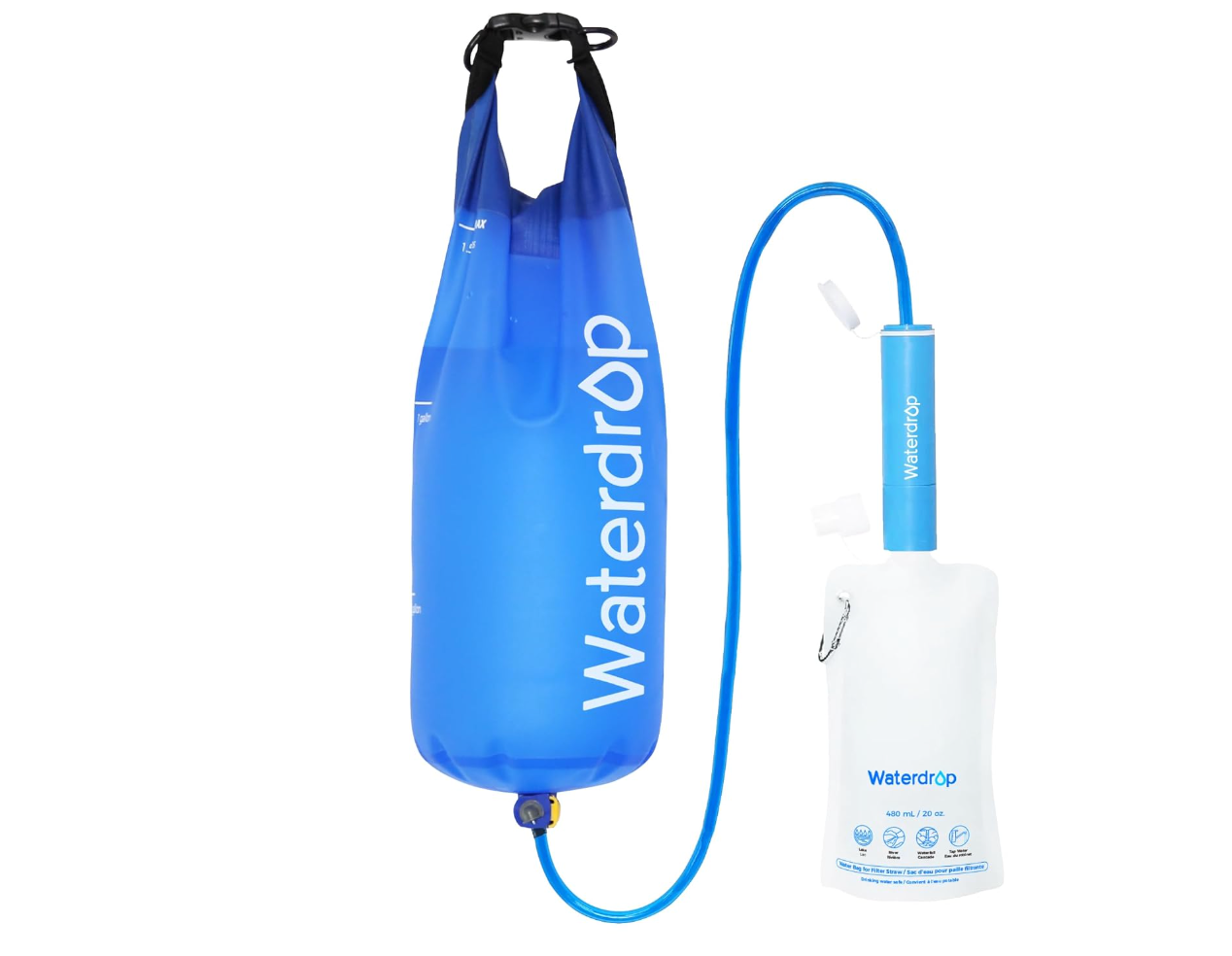
- Best water filter for Bugging In (Home Use): Waterdrop Gravity Water Filter System
- Best water filter for Bugging Out (Fast & Light): Sawyer Squeeze
- Best water filter for Urban Disasters (Chemicals/Viruses): Survivor Filter Pro
- Best water filter for Hiking & Camping: Katadyn Hiker Pro
- Best water filter Budget Alternative: LifeStraw Personal Water Filter
Water kills faster than starvation, yet most people build their survival hydration around a $15 plastic straw they bought on a whim. That’s not a strategy. You’re gambling your family’s health and safety.
In this guide, we strip away the marketing gimmicks to show the top water filtration systems for specific survival scenarios, including what actually works when the tap runs dry and the grid goes dark.
Water Filters: How Do They Work? (And Why Most Will Kill)
When the power goes out, people instinctively look at the water pitcher sitting in the fridge. That’s actually a fatal error.
Standard commercial water filter jugs work using simple activated carbon. Water drips slowly through charcoal granules, which bind to chlorine and make municipally treated tap water taste better. What they do NOT do is filter out biological threats. They can’t prevent giardia, E. coli, or cholera contamination. During a grid-down scenario, treating a puddle with a kitchen pitcher will cause serious illness.
If you find yourself in survival situations where you’ll need a clean drinking source, actual micro-filtration (using microscopic hollow tubes to physically block bacteria) or full purification (which adds carbon and sub-micron layers to strip out viruses and industrial chemicals) is required.
The Best Water Filters of 2026
Here are the top-rated water filters with their benefits and limits.
1. Best Water Filter for Bug In (Tap Water & Power Outage)
Waterdrop Gravity Water Filter System

During a prolonged grid-down event or severe weather emergency where municipal taps fail, survival requires harvesting water from rain barrels or neighborhood ponds. The primary fear in this scenario is running out of clean water for a family or burning massive calories manually pumping water all day. A gravity system eliminates the risk of physical exhaustion by passively pushing dirty water through dense carbon and micro-membrane elements into a lower reservoir. This provides a constant, zero-labor off-grid water source right on the kitchen counter, easily meeting a family’s daily volume requirements.
Pros:
- Zero physical labor to operate.
- High volume capacity for families.
- Excellent at stripping heavy metals and bad tastes.
Cons:
- Extremely bulky; it cannot be used for bugging out.
- High upfront cost.
Check Price on Amazon →
2. Best Water Filter for Bug Out/ Best Budget Filter (Fast & Light)
Sawyer Squeeze Mini

Evacuating on foot through a wilderness environment requires filtering moving water from natural sources like creeks and rivers on the move. High-mobility evasion demands ultra-lightweight, modular filtration to avoid the dual threats of dehydration and being weighed down by clunky gear. The Sawyer Squeeze mini uses hollow-fiber tubes to rapidly block bacteria and protozoa, screwing directly onto standard water bottles for instant hydration. However, keep this filter close to body heat during winter movement, as microscopic internal fibers might shatter in freezing temperature.
Pros:
- Ultra-lightweight and packable.
- Fast flow rate (1.7 Liters/Min).
- Modular (screws onto standard water bottles).
Cons:
- Ruined instantly if frozen.
- Requires frequent backflushing to prevent clogs.
Check Price on Amazon →
3. Best Water Filter for Disasters (Urban Chemical & Virus Threats)
Survivor Filter Pro

Following a severe urban disaster like a hurricane, earthquake, or infrastructure failure, individuals are often forced to rely on compromised tap water under boil advisories, rainwater collected from city roofs, or standing floodwater. The primary danger in a city environment is invisible threats, as urban runoff is frequently loaded with raw sewage viruses, heavy metals, and industrial chemicals. Standard camping filters give a false sense of security here because they only stop basic wilderness bacteria, leaving urban preppers highly vulnerable. The Survivor Filter Pro can handle these hazards aggressively, using ultra-fine 0.01-micron filtration combined with carbon stages to strip both viruses and toxic urban chemicals from the supply.
Pros:
- 0.01-micron rating blocks viruses.
- Carbon stages remove heavy metals and chemicals.
- Independent lab tested for extreme contamination.
Cons:
- Slower flow rate (0.5 Liters/Min).
- Requires manual pump action.
Check Price on Amazon →
4. Best Water Filter for Trekking and Camping
Katadyn Hiker Pro

Routine wilderness movement often requires sourcing hydration from shallow, stagnant puddles, muddy trail runoff, or sediment-heavy lakes. The biggest fear when pulling water from a muddy source is instantly clogging a primary filter with pure dirt, rendering it useless for the rest of the trip. The Katadyn Hiker Pro features a pump-action design with a pre-filter screen on the intake hose to block thick sediment from reaching the main element. This allows a hose to be dropped directly into a muddy stream, quickly filling multiple canteens for a group without destroying the filter’s core.
Pros:
- Intake hose allows pumping from shallow puddles.
- Pre-filter protects the main element from mud.
- Field-maintainable design.
Cons:
- Bulkier than a squeeze filter.
- Moving parts (pump handle) can break over time.
Check Price on Amazon →
5. Best Alternative Budget Backup
LifeStraw Personal Water Filter

For scenarios where an individual is caught completely off guard with zero tactical gear, survival requires a tool that functions immediately with zero learning curve. The LifeStraw’s true advantage lies in being completely easy to handle during high-stress moments, requiring no moving parts, backflush syringes, or bottle threads to operate. At roughly $15, it serves as the ultimate set-and-forget contingency item to stash in a glovebox or seal inside a long-term cache tube. It’s also highly effective as a cheap handout to unprepared neighbors during a crisis, ensuring they do not cross-contaminate a household’s primary clean water supply.
Pros:
- no moving parts or attachments needed.
- Very cheap (easy to buy in bulk).
- Excellent shelf life for cache storage.
Cons:
- Forces the user to get face-down in the dirt to drink.
- Cannot be used to easily filter water into a secondary container.
Check Price on Amazon →
Water Filter Showdown: LifeStraw vs. Sawyer Mini
Sawyer Mini and LifeStraw are always pitted against each other because they’re often the first choice for anyone building a kit on a budget. While the LifeStraw is famous for being an affordable tube, it forces a user to get face-down in the mud to drink, which makes it harder fill secondary containers. Ultimately, Sawyer Mini wins for active survival because its threaded base allows it to process water into clean vessels for cooking and transport, offering crucial flexibility when moving off the grid.
Survival Water Filter Comparison Table
To truly weigh the top 5 best water filters above, we compared specs in terms of pore size (microns), flow velocity, and biological protection levels.
Last update on 2026-04-30 / Affiliate links / Images from Amazon Product Advertising API
Final Verdict: Overall Which Water Filter Removes Contamination Best?
If dealing with extreme, unpredictable contamination such as water containing human waste viruses, industrial chemicals, or standard wilderness bacteria, the Survivor Filter Pro is the definitive choice for portability. Standard hollow-fiber filters are excellent for mountain streams. But if pulling water from a compromised source during a localized grid collapse, a system is needed that attacks the water on three fronts: particulate pre-filtration, 0.01-micron virus capture, and heavy-duty carbon chemical stripping. For sheer volume in a stationary contaminated environment, high-end gravity systems with black carbon/fluoride elements dominate.
5 Basic FAQs About Best Water Filters
Does boiling water filter out contamination?
No. Boiling water purifies it by killing 100% of the biological threats (bacteria, viruses, parasites). However, it does not filter anything out. If there is dirt, lead, or chemical runoff in the water, boiling it just creates hot toxic water. Filtering must happen first, followed by boiling if a virus-rated filtration system is unavailable.
How long do survival water filters last?
It depends entirely on maintenance and water turbidity (muddiness). A Sawyer Squeeze is rated for up to 100,000 gallons, but only if rigorously backflushed with clean water to clear the microscopic pores. Pumping thick mud through it and letting it dry will permanently ruin it in a week.
Do standard survival water filters remove viruses?
No. Most standard backpacking filters (like Sawyer or LifeStraw) operate at 0.1 to 0.2 microns. This stops bacteria (like E. coli) and protozoa (like Giardia). Viruses are much smaller. To stop viruses, a 0.01-micron purifier or a chemical treatment like chlorine dioxide drops is required.
What happens if a water filter freezes?
If a hollow-fiber filter has been used, water is trapped inside the element. If it freezes, the water expands and snaps the internal fibers. The filter will look totally normal on the outside, but it will now let bacteria pass straight through. If it freezes solid even once, throw it in the trash.
Can ocean salt water be filtered with these?
Absolutely not. None of the filters on this list will remove salt from seawater. Drinking filtered salt water will rapidly accelerate dehydration and lead to organ failure. Removing salt requires a specialized, highly pressurized process called Reverse Osmosis (RO) or distillation.
QUICK POLL
Let’s say you’re down to two urban water sources during SHTF: Neighborhood pool and rainwater off your gutters. Which one do you filter for drinking water?
Which one did you pick? Defend why below.