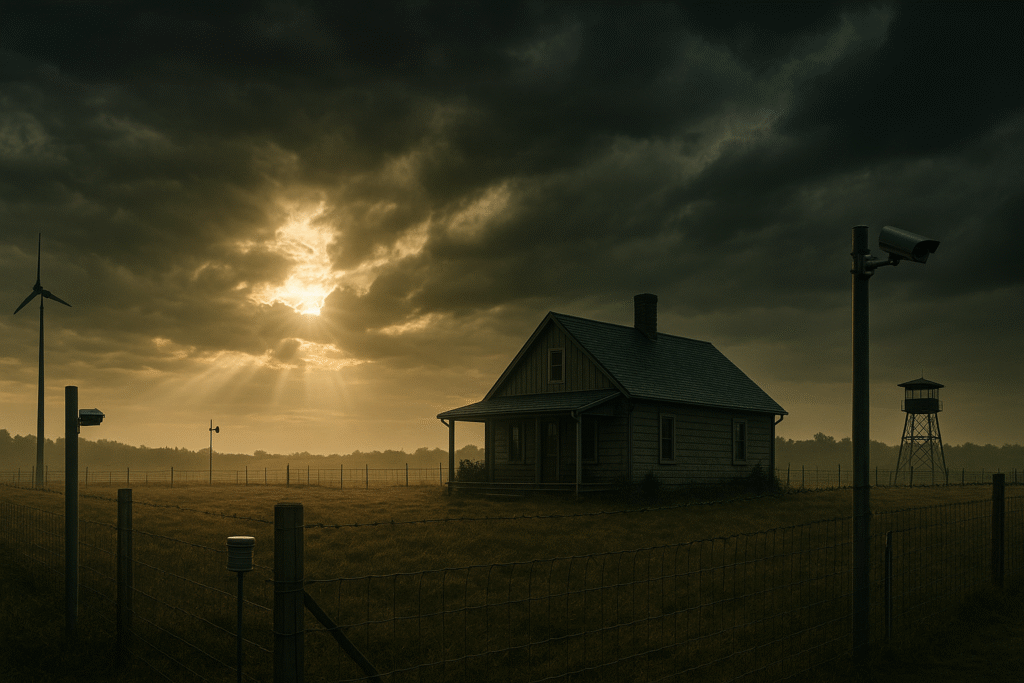
In the heartland, help is often miles away. When you live on land worth defending, your security plan can’t depend on a dispatcher’s ETA: it has to start at home. Homestead defense isn’t about paranoia or building a bunker. It’s about being the first responder for your family, property, and livelihood when the rest of the world is still waking up.
Rural life runs on independence, but that distance cuts both ways. Thieves know how long it takes for deputies to reach a county road. Storms, power outages, and supply disruptions can isolate you overnight. Livestock raids, trespassers, and opportunists don’t always wait for daylight. That’s why your defense plan must be layered, local, and fully under your control.
Homestead defense means building a system that sees trouble before it hits your porch:
- Perimeter security that starts at the fence line and gate.
- Detection systems: cameras, motion sensors, and alarms that run off-grid.
- Biological deterrents: trained dogs and people who know their ground.
- Command and communication: radios, call codes, and drills that keep everyone synced.
- Mindset and readiness: the calm discipline to act decisively when it counts.
This guide walks through every layer, from fence post to radio frequency, combining tactical principles with rural practicality. You’ll learn how to build deterrence, detect threats early, and coordinate response without losing the peace that drew you to homestead life in the first place.
What Is Homestead Defense and Why Does It Matter?

Homestead defense is simple at its core: protect your people, your land, and your livelihood with the resources you control. When you live in rural areas, you are the response team. Every minute of delay between a 911 call and arrival can cost you livestock, property, or worse.
Unlike suburban security, rural defense has to cover bigger ground with fewer hands. You’re defending hundreds of yards, not a fenced backyard. Power might not be guaranteed. Cell coverage can drop at the wrong moment. Your systems must run off-grid, endure weather, and integrate man, machine, and mindset into one plan.
Homestead defense matters because it restores control in a world built on convenience. It turns your property into a self-contained fortress that deters trespassers and gives your family peace of mind.
In the sections ahead, we’ll break down what modern threats look like, how rural security differs from urban systems, and the five pillars of effective homestead defense that turn your home into a hardened, sustainable stronghold.
Understanding Modern Rural Threats
Rural living offers freedom, but that space and solitude come with their own brand of risk. When you’re miles from town, distance becomes both an asset and a vulnerability. Most threats to homesteads aren’t Hollywood-style raids; they’re slow, opportunistic, and often happen when you’re distracted, asleep, or away at market.
Common Rural Threats to Watch For:
- Theft and Trespassing: Tools, fuel, and livestock are high-value, low-risk targets for thieves who know help is far away.
- Vandalism and Property Damage: Idle hands and backroad wanderers can do serious damage to gates, outbuildings, and water systems.
- Livestock Raids and Predation: Coyotes, feral dogs, and sometimes even humans see unattended animals as easy prey.
- Natural Disasters: Tornadoes, floods, and wildfires can isolate your property and expose it to looters in the aftermath.
- Grid or Supply Instability: Power failures, comms blackouts, and transport disruptions mean you may face weeks without outside assistance.
- Civil Unrest or Economic Strain: In hard times, rural areas can become soft targets for desperate people looking for easy gain.
Reality Check:
The first step in defense is acknowledgment without anxiety; you’re planning for probability. Homestead defense works because it replaces panic with preparation.
Your Mission:
- Identify vulnerabilities: Long driveways, unlit gates, and open barns.
- Prioritize threats: Focus first on what’s most likely and most costly.
- Build awareness: Know your terrain, neighbors, and normal patterns so you can spot what doesn’t belong.
Homestead Defense vs. Traditional Home Security
Most home security systems are designed for neighborhoods, not acreage. They assume police are minutes away, the backyard has one gate, and the internet never drops. Homestead defense lives in a different world: distance, power independence, and personal responsibility.
Here’s the difference in mindset and mission:
- Traditional Home Security aims to alert authorities.
- Homestead Defense aims to alert you and empower you to respond.
You’re not just protecting a front door; you’re securing fields, barns, tool sheds, and livestock pens. That means thinking beyond Wi-Fi cameras and door sensors. Your system must function when the grid doesn’t, when there’s no cell service, and when the nearest help is 30 minutes away.
Key Differences at a Glance:
| Aspect | Traditional Home Security | Homestead Defense |
| Coverage Area | House & yard (under 1 acre) | Multi-acre perimeter (fence lines, drives, outbuildings) |
| Power Dependence | Grid-tied systems | Solar, battery, generator-backed |
| Response Model | Outsourced (police, monitoring) | Self-reliant (family/team) |
| Communication | Wi-Fi, cellular | Radio networks, local alerts |
| Objective | Deter & document | Detect early & defend effectively |
Tactical Takeaway:
Homestead defense starts outside the house. The goal is to detect and deter threats before they reach your living space. That means building a perimeter mindset: layered detection, smart deterrents, and a communication plan that keeps your people moving as one.
The Five Pillars of Homestead Defense
Every strong defense plan, whether military or rural, follows the same logic: see early, act fast, and stay coordinated. On a homestead, that means building layers that deter, detect, and respond long before a threat reaches your home or livestock. These layers form the Five Pillars of Homestead Defense: a practical framework for any rural property, no matter the size or setup.
1. Awareness: Know Before You Act
Awareness is your first and most important weapon. Know your terrain, your neighbors, and your routines so you can spot what’s out of place.
- Track patterns: vehicles on your road, animal behavior, gate positions.
- Map sight lines and blind spots.
- Keep a log of “baseline normal” so you recognize deviations instantly.
2. Deterrence: Make Them Think Twice
The best fight is the one that never starts.
- Use signage, lighting, and fencing to broadcast that your property is monitored and secured.
- Keep entry points clean, organized, and obviously managed. Chaos invites curiosity.
- Dogs, cameras, and visible barriers send a clear message: This place isn’t worth the risk.
3. Detection: Catch Trouble Before It Reaches You
Once deterrence fails, detection buys you time.
- Install motion sensors, driveway alarms, and perimeter cameras for early warning.
- Use multiple detection types (infrared, magnetic, visual) to reduce false alarms.
- Integrate alerts through radio or siren systems so you never miss a cue, even off-grid.
4. Response: Act Decisively, Not Emotionally
When a threat crosses the line, your goal is to control the situation, not escalate it blindly.
- Have clear roles for every household member.
- Test your alarms, radios, and defensive tools regularly.
- Establish code words and procedures for family regrouping and cover.
- Always stay within the law; defense should be solely for protection.
5. Community Coordination: You’re Not Alone
Rural defense is stronger when neighbors talk.
- Join or form a local watch or radio network to share alerts and patrol patterns.
- Train together; communicate often.
- Build trust before crisis hits; you don’t want introductions during an emergency.
Together, these five pillars create what every rural protector needs: a layered, living defense system that sees danger early, responds fast, and stands strong even when the grid or the world goes dark.
Perimeter Defense: Your First Line of Security

Every fight starts, or ends, at the fence line. In rural environments, that line can stretch hundreds of yards across uneven ground, multiple gates, and tree lines. That means your perimeter must delay and define who belongs on your land and who doesn’t.
In this section, we’ll break down the core perimeter systems that hold your defense together:
- Fencing that stops or slows intrusion and guides movement.
- Gates that combine access control with visible deterrence.
- Driveway and trip-wire alarms that give you early notice when something crosses the line.
Each piece reinforces the others, forming a seamless barrier around your home and supplies.
Fence Construction: Building the Backbone of Your Perimeter
A solid fence is your first physical line of defense. The right build can stop vehicles, contain livestock, and discourage trespassers long before they become a problem. The wrong one? It’s an open invitation.
Your mission: build a fence that fits your terrain, your livestock, and your security goals. Then, maintain it like your life depends on it. Because out here, it just might.
Best Fencing Materials for Rural Properties
Every type of fence has trade-offs in cost, strength, and visibility.
| Material | Best For | Pros | Cons |
| Barbed Wire | Large pastures, livestock | Affordable, fast to install | Not a true deterrent for humans; easy to cut |
| Woven Wire (Field Fence) | Livestock, general perimeter | Strong, resists sagging | Harder to install; costly for large acreage |
| Electric Fence (Hot Wire) | Livestock control, layered deterrence | Excellent deterrent for animals and people | Needs power source & monitoring |
| Hybrid Systems (Wire + Electric + Natural) | Security perimeter | Combines height, strength, and shock deterrence | Higher initial setup time & cost |
Pro Tip: Use hybrid fencing; a 5-foot woven wire base with one or two electric strands at the top and bottom. It keeps livestock in, and trespassers out.
Height, Strength, and Legal Limits
- Height: Minimum 5 feet for livestock; 6–8 feet for security fences.
- Post Spacing: 8–12 feet apart for woven wire; 10–15 feet for barbed.
- Corner Posts: Anchor with concrete or cross bracing; they bear the most tension.
- Local Codes: Check county or state regulations before adding electric fencing. Some require signage or limit voltage.
Tactical Insight:
In high-risk zones (road frontage, access roads), combine fencing with natural barriers like hawthorn, black locust, or dense cedar rows. They add privacy, visual cover, and cut paths of approach.
Maintenance Checklist (Monthly)
☐ Walk perimeter after storms or high winds.
☐ Tighten sagging lines and replace broken insulators.
☐ Check grounding rods and voltage on electric fences.
☐ Clear brush to maintain sight lines for cameras and patrols.
☐ Inspect for cut wire or tampering near gates and access points.
A good fence is never “done.” It’s a living system that earns its keep through routine inspection and fast repair.
Gate Security: Controlling the Front Door to Your Land
Your fence is only as strong as its gate. Every vehicle, visitor, and potential intruder passes through that point, so it’s where your defense needs to be strongest and most deliberate. A secure gate not only blocks access but also signals that your property is organized, watched, and not worth testing.
Choose the Right Gate for Your Terrain and Traffic
Your gate design depends on how you use your property.
| Gate Type | Best Use | Security Benefit |
| Tubular Steel Gate | Driveways, livestock pens | Strong, visible, long-lasting |
| Welded Wire or Mesh Gate | Garden and side access | Stops small animals and limits visibility |
| Double Swing Gate | Wide driveways | Allows large vehicles while maintaining full closure |
| Slide or Cantilever Gate | Narrow or sloped drives | No outward swing for vehicles to exploit |
Pro Tip: Avoid wooden gates for primary access. They warp, sag, and are easy to break. Go steel, go welded, and go heavy.
Locking & Access Systems
Your lock setup should balance convenience, strength, and off-grid reliability.
- Padlocks: Use weather-rated, shrouded locks that resist bolt cutters.
- Keypads: Install solar-powered keypads with manual override.
- Remote Openers: Choose models with battery or generator backup for power outages.
- Vehicle Barriers: Drop poles, chains, or removable bollards can block unauthorized entry when gates are open for chores.
Visual Deterrents That Work
Criminals prefer easy targets. Your goal is to make them doubt they’ve found one.
- Lighting: Motion-activated LED floods on both sides of the gate.
- Cameras: Visible placement with signage (“Property Under Surveillance”).
- Signage: “Private Property,” “No Trespassing,” or “Livestock Guard Dogs on Duty.”
- Landscaping: Trim trees and brush near gates.
Psychology of the Gate:
A clean, well-maintained gate projects control. A rusted, sagging gate says “nobody’s watching.” The difference can stop a thief before they ever test your fence.
Driveway Alarms: Early Warning from the Edge
Your driveway is a tactical choke point. Every visitor, delivery, or intruder crosses that path, which makes it the perfect place to get your first alert that something’s moving on your land. A good driveway alarm gives you time to observe, prepare, or respond before anyone’s within shouting distance.
Two Main Types of Driveway Alarms
Understanding the technology behind your alert system helps you choose the right fit for your terrain and budget.
| Type | How It Works | Best Use | Notes |
| Infrared (PIR) Sensors | Detect heat and motion | People, vehicles, animals | Can false-trigger in wind or sun; ideal for short-range zones |
| Magnetic Probe Sensors | Detect metal mass movement | Vehicles only | Immune to animals, weatherproof, longer range (up to 400 ft buried) |
Pro Tip: Use a layered approach; magnetic probe at the main drive, PIR at footpaths or secondary access points.
Key Features to Look For
- Range: At least ½ mile for large properties; long-range radios extend this further.
- Power Source: Solar-powered sensors with lithium battery backup for off-grid use.
- Alert Options: Choose between audible chimes, radio alerts, or phone notifications.
- Integration: Some systems tie directly into cameras or lights, creating an automatic spotlight on motion.
Top Picks (2025 Ready):
| Brand | Power Source | Range | Unique Feature |
| Dakota Alert BBA-4000 | Solar | ½ mile | Weatherproof, vehicle/foot motion detection |
| Guardline Long Range | AC/AA | ¼–½ mile | Expandable sensors, customizable zones |
| Mighty Mule FM231 | Wired/Battery | 400 ft | Detects vehicles only (magnetic probe) |
| HTZSAFE Solar Driveway Alarm | Solar | ¼ mile | Easy daisy-chain setup for multiple zones |
Placement & Setup Strategy
- Primary Line: Just off the road or gate entrance.
- Secondary Line: 30–50 yards closer to the house or barn.
- Elevation: Mount 3–4 feet high to balance vehicle and human detection.
- Avoid False Triggers: Keep away from waving branches, direct sunlight, or reflective water.
A well-positioned driveway alarm gives you 60–90 seconds of notice. That’s enough time to verify on camera, lock gates, or alert the household.
Trip Wire Alarms: Low-Tech Alerts That Still Work
When the power’s out and your sensors go silent, trip wire alarms keep watch the old-fashioned way. Simple, cheap, and effective, these devices rely on tensioned wire or cord connected to a small trigger.
When tripped, they snap, pop, or flash, alerting you that someone or something has crossed your perimeter. In a full grid-down scenario, these are your last line of early warning and your first cue to move.
How Trip Wire Alarms Work
A trip line stretches across a trail, gate, or blind zone. When someone disturbs the line, it activates one of several alert types:
- Audible Alerts: Snap caps, blanks, or spring-loaded poppers that create a sharp noise.
- Visual Alerts: Pull-pin flare alarms that signal movement from a distance.
- Mechanical Indicators: Bells, cans, or metal rattles for low-profile notification.
They’re non-electronic, lightweight, and field-repairable; perfect for backup security or remote areas without signal coverage.
DIY vs. Commercial Options
| Option | Cost | Setup Time | Advantages |
| DIY Trip Line (fishing line + bells/caps) | <$10 | 10 min | Cheap, customizable |
| Commercial Alarms (12-gauge or pull-pin) | $25–$60 | 5–10 min | Reliable, reusable, louder or brighter alerts |
Pro Tip: Use fluorescent zip ties or glow paint to mark setup points. Nothing’s worse than tripping your own alarm in the dark.
Where to Use Trip Wires Effectively
- Remote Gate Lines: Backup alert when power systems fail.
- Barns or Supply Yards: Between entry points or tool sheds.
- Blind Spots: Tree lines, ravines, or paths where cameras can’t see.
- Livestock Pens: Audible alerts for predator activity at night.
Trip wires work best as part of a layered defense system, not as your only alert. When tied into radios, lights, or canine patrol zones, they create redundancy that keeps your system alive even when everything else fails.
Detection and Early Warning Systems

The difference between being ready and being surprised is information; the sooner you get it, the better your odds. Once your perimeter is solid, your next mission is detection: knowing exactly when and where something moves on your land.
Rural security is all about time advantage. Every second of early warning gives you a chance to observe, plan, and respond before a situation turns into a confrontation. In the city, you might depend on a door sensor or an app notification. Out here, your detection systems need to work in the dark, in the rain, and without Wi-Fi.
Modern homestead detection blends old-school vigilance with rugged tech:
- Cameras that see in low light and transmit without grid power.
- Motion sensors tuned for acreage, not apartments.
- Alarms that trigger locally or through radios. No monthly fees, no cloud dependency.
- Radio alerts that tell you who’s moving where, even when cell towers fail.
This is where awareness turns into intelligence. A strong early warning system transforms your defense plan from static to proactive.
Security Cameras: Eyes That Never Blink
When you can’t be everywhere, your cameras can. On a modern homestead, security cameras are your silent sentries that watch blind spots day and night, rain or shine. But unlike city systems, rural setups must run off-grid, long-range, and low-maintenance.
Camera Types and When to Use Them
| Type | Best Use | Power Source | Pros | Cons |
| Fixed Cameras | Entry points, gates | Solar / AC | Reliable coverage, simple setup | Narrow field of view |
| PTZ (Pan-Tilt-Zoom) | Large yards, barns | Solar + battery | Tracks movement, remote control | Higher cost & power use |
| Wireless Wi-Fi Cameras | Small homesteads with internet | AC / solar | Easy install, mobile access | Dependent on network |
| LTE / Cellular Cameras | Remote areas with cell signal | Solar / battery | No Wi-Fi needed, remote viewing | Data cost, limited providers |
Pro Tip: For off-grid setups, go with solar-powered PTZ cameras paired with local NVR (network video recorder) storage. No cloud fees, no internet dependency.
Placement Strategy for Acreage
Think in zones, not random mounts.
- Outer Zone: Gates, driveways, and access roads.
- Middle Zone: Barns, water sources, and livestock pens.
- Inner Zone: Home perimeter, doors, and garages.
- Blind Spots: Corners and elevation changes where intruders can hide.
Mount cameras 8–10 feet high, angled downward for facial ID without blind gaps. Overlap fields of view for continuous coverage; one camera’s edge should always meet another’s start.
Lighting & Power Resilience
- Use infrared (IR) night-vision cameras for low-light areas.
- Add motion-activated LED floods to deter trespassers and boost image clarity.
- Power each camera with a dedicated solar panel + lithium battery, and protect wiring in metal conduit from rodents or tampering.
Local Storage & Bandwidth Tips
- Local NVR (4TB or higher): Keeps footage private and off-cloud.
- SD Cards (128GB+): Great for remote or standalone units.
- Low-bandwidth setup: Use sub-streams (lower resolution feeds) for live viewing and main streams for recorded clarity.
Motion Sensors: The Silent Perimeter Watchdogs
While cameras show you what’s happening, motion sensors tell you it’s happening right now. They’re the nerve endings of your defense system, detecting movement across your property and triggering alarms, lights, or radio alerts instantly. In a rural setting, a good motion sensor can cover hundreds of feet of terrain, even where cameras can’t reach.
Types of Motion Sensors (and How They Work)
| Sensor Type | Detection Method | Best Use | Pros | Cons |
| PIR (Passive Infrared) | Detects heat changes | Entryways, barns, porches | Low power, reliable | May false-trigger from heat/cold shifts |
| Microwave Sensors | Emit & read back radar waves | Large open fields | Long range, weather resistant | Can penetrate walls (less precise) |
| Dual-Tech Sensors | Combine PIR + Microwave | High-security zones | Fewer false alarms, accurate | Higher cost |
Pro Tip: Use dual-tech sensors for outer layers (driveways, gates) and PIR for inner zones (barns, porches).
Power and Connectivity Options
- Solar-Powered: Ideal for off-grid perimeters; choose units with lithium battery backup.
- Battery-Only: Fast to install but check monthly; cold weather drains life fast.
- Hardwired: Best reliability but requires trenching or conduit.
- Radio-Linked: Syncs with alarms or radios for instant alerts even when Wi-Fi fails.
False Alarm Prevention
Rural land brings challenges: wind, livestock, weather. Tune your sensors like instruments.
- Adjust sensitivity to detect human movement, not deer or dogs.
- Mount 3–4 feet above ground, angled slightly downward.
- Keep clear of trees, waving grass, or reflective water.
- Pair with cameras or alarms to confirm real threats before reacting.
Layered Detection Strategy
Build your detection in three concentric rings:
- Outer Layer: Long-range sensors along fence lines and drives.
- Middle Layer: Closer coverage near barns, gardens, and storage.
- Inner Layer: House perimeter, doorways, and windows.
Alarm Systems: Your Audible Line in the Sand
When a threat crosses into your space, your alarm system is what turns awareness into action. Cameras and sensors detect movement, but alarms broadcast it, warning your family, deterring intruders, and rallying your response. In a rural setting where power and Wi-Fi can’t be trusted, your alarm system must be independent, adaptable, and loud enough to matter
The Role of Alarms in Homestead Defense
An alarm tells everyone, from the intruder to your family, that the clock has started.
- You’re alerted. The system triggers lights, sirens, or radio pings.
- The intruder’s startled. Noise and light make them second-guess.
- Your plan activates. Everyone moves to position or cover as rehearsed.
The best homestead alarm setup is modular, working with or without connectivity, and scalable across multiple buildings.
Types of Alarm Systems
| Type | Best Use | Power Source | Key Advantage |
| Standalone Battery/Solar Alarms | Barns, gates, sheds | Solar / battery | Off-grid ready, low maintenance |
| Integrated Smart Systems | Houses with partial Wi-Fi | AC + backup | Syncs with cameras/sensors |
| Radio-Triggered Systems | Large acreage or no signal | Battery / solar | Sends alerts through handheld or base radios |
| Audible Sirens | All zones | Any | Psychological deterrent—scares off intruders fast |
Pro Tip: Mix audible alarms for deterrence with silent radio triggers for stealth alerts when you need to observe before responding.
Off-Grid Compatibility
When the grid’s down, your alarms still need to shout.
- Choose units with solar panels or 12V battery adapters.
- Keep backup sealed lead-acid batteries charged and ready.
- Store spare sirens, wiring, and triggers in a Faraday container for EMP resilience.
Integration With Radios and Sensors
Advanced setups can link directly into your GMRS/FRS radio network. When triggered, the alarm system transmits a pre-set tone or message—“ZONE 1 ALERT”—so every team member hears it instantly.
Combine:
- Motion sensors, alarm control hub, radio ping, family response.
- Optional: LED beacons or flashing floodlights for visual confirmation at night.
Audible vs. Silent Modes
Both have a place:
- Audible: Ideal for perimeter breach or deterrence.
- Silent: Perfect for observation or tracking before engagement.
Use switchable modes for flexible response; noise when you want attention, silence when you need control.
Radio Alerts: Communication When Everything Else Fails
When cell towers go down or Wi-Fi drops out, radios keep your defense alive. In a true off-grid scenario, they’re the backbone of your communication network. Radios link your alarms, sensors, and people into one fast, private alert system that works whether you’re in the house, in the barn, or out mending fence lines.
A solid radio alert setup turns your homestead into a coordinated defense zone, where everyone hears the signal and knows exactly what to do.
Why Radios Matter in Rural Security
- Instant Communication: No delays, no dependency on infrastructure.
- Scalable Coverage: One handheld can cover acres of property.
- Integration Ready: Alarms and motion sensors can trigger radio tones automatically.
- Stealth Option: Radio pings can quietly alert your team while keeping intruders unaware.
Choosing the Right Radio Type
| Radio Type | Range | License | Best Use |
| FRS (Family Radio Service) | Up to 2 miles | No | Small properties or family coordination |
| GMRS (General Mobile Radio Service) | 2–10 miles (repeaters extend further) | Yes (FCC license) | Large acreage, multi-family networks |
| HAM Radios (Amateur Bands) | 5–100+ miles (with base setup) | Yes (FCC license) | Regional comms, community coordination |
Pro Tip: For most homesteads, GMRS handhelds hit the sweet spot—strong range, easy licensing, and reliable battery life.
Integrating Radios With Alarms and Sensors
Many modern alarms can trigger radio pings or pre-recorded alerts. Example setups:
- Driveway Alarm to GMRS Base Station: Sends tone to handhelds when tripped.
- Trip Wire to Motion Sensor Hub to Radio Ping: Alerts your watch rotation silently.
- Central Hub: Combines multiple zones into a single “Zone Code” network for clarity.
Radio Discipline & Stealth
- Use brevity codes (short, pre-agreed phrases). Example: “Fox Den” = all clear, “Iron Gate” = alert.
- Maintain radio silence unless responding to a signal.
- Train all family members on basic call signs and protocols.
- Keep radios charged and stored in Faraday pouches when not in use to protect from EMP or surge damage.
Biological and Human Layers of Defense

Technology fails. Batteries die. Signals drop. But a well-trained human or animal defender doesn’t need Wi-Fi to know when something’s wrong. The biological layer of your homestead defense plan adds the one thing sensors can’t replicate: instinct.
A barking dog, a vigilant lookout, or a disciplined defender can detect what machines miss: unusual smells, faint sounds, subtle changes in behavior. This layer blends natural awareness with tactical discipline, ensuring your defense doesn’t crumble when power does.
In this section, we’ll cover how to build that human-animal synergy:
- Guard dogs that serve as both alarm and deterrent.
- Observation posts that extend your eyes and awareness.
- Defensive positions designed for protection and control, not aggression.
This is where your homestead defense plan goes from mechanical to mindful, from reaction to readiness. Because when it comes to protecting family and land, no alert system beats instinct backed by training.
Guard Dogs: Living Alarms and Loyal Defenders
A good guard dog is worth more than any camera system you’ll ever buy. They see, hear, and smell what technology can’t, and they never stop working.
For centuries, dogs have been the first line of homestead defense, warning families before a threat reaches the gate and standing ground when it does. On a modern rural property, they’re still unmatched: a walking alarm system, deterrent, and companion all in one.
Best Guard Dog Breeds for Rural Properties
Each breed brings its own strengths. Choose based on your acreage, livestock, and family setup.
| Breed | Primary Strength | Temperament | Ideal Use |
| Anatolian Shepherd | Territorial, fearless | Independent, calm | Livestock guardian, wide range patrol |
| Great Pyrenees | Constant vigilance | Gentle with family, wary of strangers | Night watch, multi-livestock properties |
| Belgian Malinois | Intelligent, highly trainable | Intense, high drive | Active homestead patrol, tactical response |
| German Shepherd | Obedient, alert | Balanced, loyal | General homestead defense and family protection |
| Kangal | Aggressive deterrent | Loyal, powerful | Large rural acreage, predator control |
Pro Tip: Match the dog to the mission, not just the breed’s reputation. A calm livestock guardian is wasted at the front gate, and a high-drive patrol dog doesn’t belong in a pen.
Training for Deterrence vs. Defense
There’s a difference between a guard dog and an attack dog. You want the former: alert, controlled, and safe around family.
- Start early with socialization and obedience.
- Reinforce bark-on-approach, not bite-on-sight.
- Train recall commands consistently under distraction.
- Use reward-based training, not aggression-based tactics.
- Expose dogs to common noises (generators, alarms, ATVs) to prevent false alerts.
A well-trained dog barks to warn, holds ground confidently, and knows when to disengage on command.
Integration With Your Defense System
Guard dogs should work with your tech, not apart from it.
- Pair their patrol zones with cameras and motion lights for visual confirmation.
- Use GPS collars or radio-linked trackers for wide-acreage monitoring.
- If you have multiple dogs, rotate shifts; one patrol, one rest.
- Never place food or water near gates or fences; it invites tampering and poisoning.
Observation Posts: Eyes on the Land
Even the best tech can’t replace a trained set of eyes. Observation posts (OPs) give you physical control over visibility: high ground where you can scan, verify alarms, or maintain watch during critical hours.
For large homesteads or multi-family compounds, an OP is both a deterrent and command advantage. It tells anyone watching that this land is monitored by people who pay attention.
Purpose and Function of an Observation Post
- Early Warning: Identify vehicles or movement before they reach your home.
- Verification: Confirm whether an alarm or sensor alert is legitimate.
- Coordination: Direct family members or neighbors during response.
- Record Keeping: Log times, routes, and potential vulnerabilities.
Building or Repurposing an Observation Post
- Use Natural Elevation: Hills, ridgelines, or barn lofts make great vantage points.
- DIY Platforms: Build small, weatherproof lookout structures with 360° sight lines.
- Temporary Setups: For drills or rotating shifts, even a truck bed or hayloft can serve as an effective post.
- Camouflage & Comfort: Use dark netting, shade cloth, and low lighting. A visible OP deters, but a hidden one detects.
Pro Tip: Install wide-angle optics (binoculars or spotting scopes) with an IR flashlight mount for night scanning.
Rotation and Schedule
If multiple adults share duties, rotate watch in 2–4 hour shifts during high-risk periods (night, storms, or unrest). Keep a watch log noting:
- Start/end times
- Weather and visibility
- Unusual noises, tracks, or lights
- Any system alerts during your shift
A consistent log builds pattern awareness. You’ll spot anomalies faster over time.
Communications and Tools
Each OP should have:
- Handheld GMRS/FRS radio
- Flashlight or headlamp (red lens for night use)
- Binoculars or scope
- Map of property zones
- First aid kit and basic defense gear
If an alarm triggers, your OP becomes the confirmation point: eyes on the target, guiding others by radio without confusion.
Defensive Positions: Holding the Line When It Counts
Every homestead needs places of protection. A defensive position is any location that offers cover, control, and communication during a threat. It’s where your preparation meets action: the spot where your family can hold safely, observe clearly, and respond decisively if danger crosses the line.
Defensive positions don’t mean bunkers or battle stations. They’re practical strongpoints, designed to slow down threats, buy time, and keep you safe without turning your home into a fortress.
Cover vs. Concealment
Understanding this difference is critical.
- Cover stops bullets or debris. Examples include brick, earth, or steel.
- Concealment hides you but doesn’t protect you, like curtains, foliage, or light structures.
Pro Tip: Reinforce natural cover points (stone walls, vehicles, sheds) to serve as fallback locations during emergencies.
Designing Strong Defensive Points
- Overlapping Fields of View: Arrange positions so each one supports the next.
- Controlled Access Points: Funnel potential intruders through predictable paths.
- Elevation Advantage: Use upper floors, balconies, or berms to watch and command.
- Lighting Control: Keep defenders in shadow and approach routes illuminated.
- Silent Signals: Use hand gestures or radio brevity codes instead of shouting.
Practical Structures and Zones
- House Interior: Reinforce door frames and install solid-core doors with locking pins.
- Garage/Barn: Create secondary cover points using stacked hay bales or sand-filled barrels.
- Perimeter Zones: Identify terrain that slows vehicles or foot travel; ditches, gravel, or fencing angles.
- Safe Room: A secure fallback inside the home with comms, first aid, and backup power.
Quick Setup Drill:
Mark two primary positions (one exterior, one interior). Practice reaching them from anywhere on the property in under 90 seconds during a simulated alert.
Integrating Tactical Training
For veteran or disciplined households, integrate tactical movement, firearm safety, and escalation control. Train quarterly:
- Practice response under low light.
- Run comms checks from all positions.
- Drill “hold” and “retreat” signals with family members.
Command, Communication, and Coordination

A defense plan is only as strong as the people executing it. When alarms sound and adrenaline spikes, clear communication is what separates organized defense from chaos. On a rural homestead, your ability to relay information instantly and accurately is the difference between control and confusion.
Command and communication form the central nervous system of homestead defense. This is where individual tools, people, and responses come together into a single coordinated network.
In this section, we’ll cover how to:
- Build a family or team radio network with call signs and alert codes.
- Keep your systems online with solar and generator backups during power loss.
- Expand awareness beyond your fence line through community watch coordination.
Whether you’re a one-family operation or part of a small rural neighborhood, mastering this layer turns your defense into a force multiplier.
Radio Networks and Alerts: The Nerve Center of Rural Defense
When something moves on your land, seconds count, and radios close that gap. They turn scattered defenders into a coordinated team and make sure no one wastes time guessing what’s happening. A tight radio network is the heartbeat of command and control on any serious homestead.
Build a Simple, Reliable Radio Network
- Choose the Right Band:
- FRS (Family Radio Service): Short range, license-free. They’re great for small homesteads or daily use.
- GMRS (General Mobile Radio Service): 2–10 miles with repeaters. Perfect for large acreage or multi-family setups.
- HAM (Amateur Radio): For regional comms and disaster use. They require training and license but have unbeatable range.
- Assign Call Signs and Roles: Every person, vehicle, and zone gets a short, unique call sign.
- Example: “Echo-1” = Main house, “Fox-2” = Barn, “Raven” = Perimeter Rover.
Keep it simple and consistent. Stress is no time for confusion.
- Example: “Echo-1” = Main house, “Fox-2” = Barn, “Raven” = Perimeter Rover.
- Establish Alert Codes:Use brevity codes for quick communication:
- Code 1 = All clear
- Code 2 = Suspicious movement
- Code 3 = Confirmed threat
- Code 4 = Contact (visual or verbal)
Setting Up Base and Field Radios
- Base Station: Fixed inside the house or safe room, powered by solar or generator backup.
- Handhelds: Carried by each adult or team member during chores, patrol, or rest.
- Vehicle Units: Mount radios in ATVs, trucks, or tractors for long-range coverage.
Pro Tip: Use GMRS repeaters or high-gain antennas to extend range over rolling terrain or timber.
Integrating Alerts and Automation
Modern radios can sync with alarms or sensors for automatic tones when a zone is triggered.
- Driveway Alarm to Radio Ping: Sends tone to all handhelds.
- Motion Sensor to Zone 2 Alert: Everyone knows where to look immediately.
- Trip Wire or Perimeter Breach to Radio Burst: Pre-recorded tone or voice alert.
This integration means no lag time. You hear it, you act.
Radio Discipline for Real Situations
- Keep transmissions short and clear.
- Confirm receipt (“Copy, Zone 2, eyes on”).
- Avoid chatter or repeating alerts once acknowledged.
- Keep spare batteries and power cords in EMP-safe storage.
Power Resilience for Security Systems: Keep Your Defense Running
If your power fails, your defense plan shouldn’t. Power resilience means every part of your security network stays online when the grid goes down. Whether it’s a short blackout or a full-scale outage, your systems must be self-sufficient, rechargeable, and protected against surges or EMP events.
Build Redundancy, Not Dependency
The golden rule of off-grid power is two sources minimum:
- Primary: Solar array or generator for day-to-day power.
- Secondary: Battery bank or manual backup for emergencies.
Your goal is continuity. Every watt should count toward keeping your detection and communication layers active.
Solar Power for Security Systems
Solar is your best off-grid option: silent, renewable, and scalable.
- Cameras & Sensors: Use dedicated 10–20W panels with lithium battery packs.
- Alarms & Radios: Run on shared solar hub with deep-cycle batteries.
- Lighting: Motion-triggered LEDs with independent solar cells extend range at night.
Pro Tip: Mount panels on poles or rooftops away from livestock and flood zones; angle 25–35° for maximum year-round efficiency.
Battery Banks and Generators
A battery bank bridges the gap between solar collection and night power use.
- Use 12V or 24V deep-cycle AGM or LiFePO₄ batteries for stability.
- Size your bank for at least 48 hours of critical load (cameras, radios, alarms).
- Pair with inverter/chargers to convert power for AC systems.
For longer outages, add a propane or diesel generator with manual start and surge protection.
Electromagnetic Pulse and Surge Protection
A solar setup won’t survive an EMP or lightning strike unprotected.
- Store critical spares (radios, motion sensors, small inverters) in a Faraday container.
- Use inline surge protectors on all solar charge controllers and battery terminals.
- Ground every major system to a copper rod sunk at least 6 feet.
Pro Tip: Keep a manual fallback (non-electric lighting, battery-free alarms, and manual locks) so your defense still functions without power.
Maintenance and Testing Schedule
- Weekly: Check charge levels and test alarms during cloudy days.
- Monthly: Clean solar panels and inspect battery terminals.
- Quarterly: Run generator for 30 minutes under load to ensure readiness.
A resilient power plan is invisible until it’s needed, then it’s everything.
Community Watch: Turning Neighbors into Force Multipliers
Even the best-prepared homestead has limits. You can’t be awake 24/7 or watch every acre at once. That’s where community coordination changes the game. A tight, organized rural network creates a living defense grid that extends beyond your property line.
When everyone watches, reports, and responds as one, rural crime and trespass drop to near zero.
Building a Rural Defense Network
Start small. Two or three nearby families can form the core of a highly effective watch group.
- Define Zones: Divide your area into simple sectors; ex., north road, creek line, pasture loop.
- Assign Roles: One for comms, one for patrol, one for log keeping.
- Establish Meeting Points: Neutral zones where everyone can gather safely if comms fail.
- Share Intel: Keep each other informed of unusual vehicles, visitors, or local alerts.
Communication Protocols and Tools
- Radios: Use GMRS or HAM bands with shared frequencies and pre-set call signs.
- Brevity Codes: Keep messages short; “Code 2 Creek” says more than a paragraph.
- Scheduled Check-Ins: Once a week or after severe weather.
- Alert Tree: If one member detects a problem, who calls who next? Create a phone or radio tree for instant relay.
Pro Tip: Keep printed comms charts so you don’t rely on memory or smartphones.
Training and Drills
You don’t need military experience to run drills, but you sure need discipline.
- Practice night patrols, radio tests, and role rotations quarterly.
- Use mock alerts to test readiness and timing.
- Evaluate: how long did it take to verify and respond?
Drills turn good neighbors into capable partners under pressure.
Legal and Ethical Boundaries
Stay within the law. Community defense is about deterrence, not confrontation.
- Know your state’s trespass and self-defense laws.
- Never brandish weapons or confront suspects unless absolutely necessary.
- Document incidents with time, description, and evidence for law enforcement.
Remember: Authority is earned through trust and consistency.
Integrating Layers Into a Complete Homestead Defense Plan

Once your fences are strong, your alarms are sharp, and your team is trained, it’s time to bring everything together. A true homestead defense system should translate into a layered strategy, built with deliberate overlap so nothing slips through.
When one layer detects, the next confirms. When one fails, the others hold. That’s the essence of resilience.
Building the “Layered Security Onion”
Every effective rural defense setup has three core layers, each one buying you time, awareness, and control.
1. Outer Layer: Perimeter and Detection
This is your first warning zone. It starts where the world meets your land.
- Fence and Gates: Define boundaries and funnel access.
- Driveway Alarms & Trip Wires: Alert you the instant something crosses in.
- Cameras & Lights: Record and illuminate without giving away your position.
Goal: detect presence early, before it becomes contact.
2. Middle Layer: Response and Control
This layer covers the heart of your homestead: barns, gardens, storage areas, and living zones.
- Motion Sensors & Alarms: Trigger both local alerts and radio pings.
- Guard Dogs & Observation Posts: Combine instinct with visibility.
- Lighting and Clear Lines of Fire: Control the night and guide your response safely.
Goal: identify intent, assess threat, and coordinate movement.
3. Inner Layer: Shelter and Survival
If all else fails, your inner layer protects what matters most—your family and your home.
- Solid Entry Points: Reinforced doors, strike plates, and window locks.
- Safe Room or Rally Point: Stocked with comms, first aid, and off-grid lighting.
- Defensive Positions: Pre-designated points with visibility and cover.
Your goal: survive contact and maintain command.
Mindset, Legalities, and Readiness
All the gear, fencing, and tech in the world won’t save you if your mindset crumbles under pressure. Or if you cross a legal line you didn’t understand. True preparedness means staying sharp, staying calm, and staying within the law when it matters most.
Know the Rules Before You Act
In most U.S. states, self-defense and property defense laws fall under Castle Doctrine or Stand Your Ground principles, but every jurisdiction is different.
- Castle Doctrine generally allows you to defend your home against unlawful entry with reasonable force.
- Stand Your Ground removes the duty to retreat if you’re threatened where you have a lawful right to be.
- Use of Force Laws vary widely by state. Always verify what’s considered “reasonable.”
Golden Rule: You’re defending life, not property. Once a threat retreats or de-escalates, so should your actions.
Maintaining Calm Under Stress
In a real threat situation, your body dumps adrenaline and narrows focus. The untrained mind panics; the prepared mind performs.
- Breathe first, act second. Slow your heart rate, think clearly, and rely on rehearsed steps.
- Use rehearsed commands. Family code words, radio alerts, and pre-planned routes eliminate confusion.
- Avoid tunnel vision. Scan, communicate, and verify.
- Debrief afterward. Every false alarm or drill is a training opportunity, not a nuisance.
Training the Body and the Mind Together
Preparedness is a physical skill as much as a mental one.
- Stay fit: Strength and endurance affect how fast you respond, carry, or repair.
- Train quarterly: Practice your drills in terms of movement, cover, and coordination.
- Sharpen accuracy under stress: If you carry tools for defense, train safely and legally with them.
- Run mental reps: Visualize threats and your response path. Repetition builds confidence.
Escalation Discipline
The goal of homestead defense is control, not conflict.
- Give verbal warnings when safe.
- Use noise, light, or dogs as first deterrents.
- Engage only when you or your family are in clear, immediate danger.
- Document every event (time, location, and response) for law enforcement.
Mindset is what makes all the hardware work. Without it, even the best system fails. With it, your land becomes secure and stable for anything.
Build Your Own Homestead Defense Plan
You’ve got the knowledge, now it’s time to put it into action. The difference between “thinking about security” and living it is a plan you can hold in your hands, walk in your boots, and teach your family by heart.
Start with what you have, reinforce weak points, and test until it works under pressure. Every improvement, be it one better lock or one more trained dog, pushes your property closer to full control. Share this guide with your local watch group and build strength through shared knowledge.
Frequently Asked Questions
How do you protect a rural property from intruders?
Start by establishing layers of defense: visibility (lighting and cameras), barriers (fences and gates), and detection (motion sensors or dogs).
What kind of training should a homesteader focus on?
Prioritize situational awareness, communication, and physical conditioning before tactical drills or equipment upgrades.
What are the legal limits of defending your property?
You can use reasonable force to protect life or stop a crime in progress. Once a threat ends, so must your use of force.
How do you protect a rural property from intruders?
Build your plan on the five pillars of homestead defense using a mix of physical barriers, tech, and teamwork to stay alert and in control.
How do I test my security system effectively?
Run drills: simulate intrusions, time your response, and adjust weak points. Record every result.
How do you start a community watch in rural areas?
Begin with 2–3 trusted neighbors, establish radio comms, divide patrol sectors, and run quarterly readiness drills.
What are effective neighborhood defense strategies?
Combine radio communication, shared surveillance, and clear protocols.
How do I keep my security system running off-grid?
Combine solar panels, battery banks, and generator backup, with manual overrides for all systems.
How do I protect electronics from an EMP or surge?
Use Faraday containers, inline surge protectors, and proper grounding for every connected device.
What is the best type of fence for a homestead?
A hybrid woven-and-electric fence offers the best balance of livestock containment and intruder deterrence.
How high should a perimeter fence be for security?
At least 6–8 feet, with top electric wire or angled extension for added resistance.
Are automatic gates good for rural properties?
Yes, especially solar or battery-backed models with manual overrides. They combine convenience and deterrence without grid dependence.
Can driveway alarms detect animals?
Infrared sensors can, but they’re sensitive. For animal-heavy areas, use magnetic-only probes to detect vehicles without false alerts.
Are trip wire alarms legal?
Yes, as long as they’re non-lethal and non-projectile. Avoid any setup that fires blanks or flares toward people; stick to noise or light only.
Where should cameras be placed on a rural property?
Cover gates, driveways, barns, and blind zones first; overlap coverage for 360° situational awareness.
How can I prevent false alarms from animals?
Mount at human height, lower sensitivity, and use dual-tech sensors that confirm both motion and heat signature before alerting.
What is the best guard dog for a farm or ranch?
The Anatolian Shepherd and Great Pyrenees are the gold standards for large rural properties and livestock protection.
What are the basics of defensive positioning?
Prioritize cover over concealment, maintain elevation and visibility, and rehearse movements between strongpoints.