In a global context where protection of civilians is being increasingly threatened and access to most-in-need populations contested, national and international actors are bound to explore new interventions to meet those challenges: How to reduce violence against civilians, prevent forced displacements and facilitate returns? How to engage with armed groups, state actors, and communities to increase acceptance and access in high-risk areas? How to prevent and decrease tensions between host and displaced communities in conflict contexts? How to facilitate inclusive dialogue processes to promote a greater participation of communities in project design, planning and implementation? How to foster accountability, promote constructive dialogue between international actors, and communities when disagreements arise?
COURSE SUMMARY:
This training is part of the work of the Consortium for Civilian Safety and Security. Together with ODI and NORCAP, and with the generous support of the Belgian Ministry of Foreign Affairs, this training will be one in a series of trainings aimed at exploring and training on strategies and interventions to reduce threats of violence to civilians in conflict settings. Learn more about the consortium here.
The aim of the Proactive Protection course is to provide humanitarian, development, and peacebuilding workers as well as diplomats and other related actors working in or on conflict contexts with knowledge of the tools and intervention that a variety of actors can undertake to promote and support civilian safety and security aimed at:
• Preventing and/or mitigating episodes of violence,
• Preventing forced displacement and facilitating voluntary returns,
• Strategically utilising the safety provided by actors presence in an area to reduce civilian harmh
• Enhancing respect for affected populations’ basic rights and International Humanitarian and Human Rights Laws,
• Creating plans and strategies for civilians to keep themselves safe in episodes of violence.
The processes presented during the training will also be useful for personnel involved in protection mainstreaming and safe programming activities such as:
• Protection as Safety and Security and Community-Based Safet and Security Analysis
• Protection by Presence
• Armed Actor Engagement, Negotiation, and Mediation for Protection
• Early Warning and Evacuation and Evaluating Proactive Protection
Participants to previous sessions of the course reported that it is also very useful in their daily management of tensions arising between colleagues at work, at home with family members, and in their overall social life.
Mode of delivery:
- The training draws on principles of adult education. It is mostly experiential and based on peer learning with a focus on the development of practical inter-personal skills and aptitudes,
- 70% of the training is practical, participative, and involves skill-based exercises and role-playing exercises,
- No PowerPoint.
Course length:
5 days (40 hours)
Follow up of the training, such as on the job coaching and mentoring and training of trainers will be available on demand.
Dates and location:
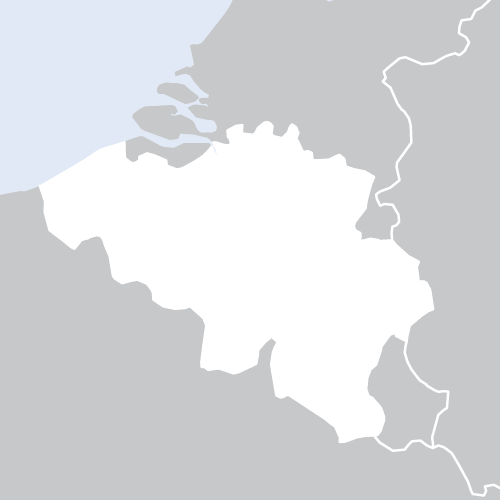
10 to 14 of November in Brussels.
Award received:
NOHA Certificate
Audience:
The course is designed for humanitarian aid workers with over 3 years of experience managing or involved in the following activities and programs:
• Humanitarian aid delivery,
• Humanitarian access / safety / security,
• Protection,
• Participatory approaches and Community development,
• Communication with beneficiaries, accountability, and AAP,
• Social cohesion, community-based protection, stabilization and peace building.
Additionally, those working in development, peacebuilding, or diplomacy around this topic are invited to apply as well.
Language of Instruction:
English
OVERVIEW:
This training aims to strengthen the capacity of humanitarian actors to engage in proactive protection—taking forward-leaning, preventive, and community-informed measures to reduce threats, mitigate harm, and ensure the safety and dignity of affected populations. It emphasizes context-specific analysis, strategic engagement, and protective presence to reduce violence, coercion, and deliberate deprivation in humanitarian crises.
1. Protection as Safety and Security – This foundational module explores protection as a concept beyond legal frameworks, focusing on its practical interpretation as the safety and security. Participants will examine what safety, security, and protection means to those affected by armed conflict and the asymmetries which currently exist in humanitarian protection work.
2. Community-Based Safety and Security Analysis – Participants will learn participatory methods for engaging crisis-affected communities to identify protection risks and coping strategies. Emphasis is placed on inclusive approaches that ensure gender, age, and diversity considerations, and on recognizing communities as active agents in their own protection.
3. Protection by Presence – This session introduces the concept of protective presence—how the physical presence of humanitarian actors can deter violence and increase civilian safety and security. Participants will explore case studies and ethical considerations in deploying presence as a protection strategy.
4. Armed Actor Engagement – Effective protection often depends on constructive engagement with state and non-state armed actors. This module focuses on how to analyze armed actors’ motivations, build dialogue, and influence behavior without compromising humanitarian principles.
5. Negotiation for Protection – Participants will develop skills to negotiate access, assistance, and protection outcomes with a range of stakeholders. Practical negotiation frameworks and real-world humanitarian case studies are used to build confidence in advocacy for safe and principled humanitarian action.
6. Mediation for Protection – In contexts of inter-group or community-level conflict, mediation can be a powerful tool for preventing violence and supporting community resilience. This module builds basic mediation skills and explores how humanitarian actors can facilitate or support protective outcomes.
7. Early Warning and Evacuation – This module focuses on how to identify early warning signs of imminent violence or displacement and design responsive, community-accepted evacuation or contingency plans. Special attention is paid to early action triggers and coordinated responses.
8. Evaluating Proactive Protection – The final module introduces tools for measuring the effectiveness, relevance, and sustainability of proactive protection strategies. Participants will explore how to collect qualitative and quantitative data on protection outcomes and community perceptions.
ORGANISERS:
The NOHA Network on Humanitarian Action is an international association of universities that aims to enhance professionalism in the humanitarian sector, by promoting humanitarian values and providing certificated high-level courses. This course is part of the work of the Consortium for Civilian Safety and Security, consisting of NOHA, ODI, and NORCAP, and made possible by the generous support of the Belgian Ministry of Foreign Affairs.
TRAINING FACILITATOR:
Jérôme Grimaud is a humanitarian worker and an accredited mediator with twenty years of field experience. He devoted his first missions to protective accompaniment in Central America and to frontline negotiations in the Middle East before becoming a delegate of the International Movement of Red Cross and Red Crescent Societies. He gradually specialized in the field of protection, conflict sensitivity, humanitarian access as well as humanitarian negotiation, mediation and dialogue facilitation, both as a practitioner and a trainer. His humanitarian negotiation and mediation experiences range from negotiating access of medical agencies and civilians at check points in the Palestine territories to facilitating humanitarian mediation processes in the Central African Republic. For the last six years he has developed and piloted third party neutral humanitarian negotiation and mediation initiatives aiming at improving protection of civilians and humanitarian access for various NGOs, the UN Office for the Coordination of Humanitarian Affairs (OCHA) and the Red Cross. He led the Norwegian Refugee Council humanitarian negotiations and mediation programme for three years and was one of the Centre of Competences on Humanitarian Negotiations (CCHN)’s facilitators. Jerome Grimaud also worked with MSF as roving negotiation advisor. He is currently Senior Protection Advisor for the NRC/OCHA Stand by Protection Capacity Project (ProCap). He is currently Emergency Coordinator for MSF in Gaza. Jerome is Senior Protection Advisor in the roster of the NRC/OCHA Stand By Protection Capacity Project (ProCap). When not on mission, Jerome provides training for various universities of the Network on Humanitarian Action, Louvain-la-Neuve as well as at the Durham University.
TRAINING CONTENT:
The module programme progresses from general to specific topics:
• Protection as Safety and Security
• Community-Based Safety and Security Analysis
• Protection by Presence
• Armed Actor Engagement
• Negotiation for Protection
• Mediation for Protection
• Early Warning and Evacuation
• Evaluating Proactive Protection
TRAINING OUTCOMES:
Participants will learn about the theoretical foundations, practical steps, and policy implications of using humanitarian protection work to proactively seek to increase civilian safety and security.
As the outcome of the training, participants will be able to:
• Understand current asymmetries between protection and civilian safety and security in practice,
• Undertake analysis of perceived threats to safety and security as defined communities affected by violence and develop strategies to address these threats,
• Understand the role that the presence of humanitarians and other actors can have in protecting civilians, both intentionally and unintentionally, and how humanitarians can more strategically use their physical presence to reduce harm and violence,
• Understand the role of armed actor engagement and CIMCOORD have to play in protection civilians,
• Understand & use interpersonal communication skills and tools in negotiation & mediation,
• Understand the importance of trust building and to develop rapport with interlocutors, including armed actors,
• Use appropriate and ethical influencing techniques, deal with difficult interlocutors, and develop options, red lines and alternatives,
• When and where choose negotiation or mediation as the most appropriate process,
• Understand how civilians protect themselves in cases of armed conflict,
• Identify different types of early warning and early response systems and how these can be utilised to protect civilians,
• Understand key overarching themes across these concepts and how proactive protection exists as a thread connecting related but separate activities through common goals and foundations.
TRAINING ASSESSMENT AND EVALUATION:
The assessment pattern reflects the training’s learning outcomes and is intended to demonstrate that participants possess the skills and knowledge required in practice.
Knowledge will be assessed through a pre-and post-training test. Participants will also receive feedback and guidance throughout the course which will enable them to make progress and develop their confidence and practical skills.
Fee information
Course fee (inclusive of all course materials): €600.00
How to register
HOW TO APPLY:
Candidates should fill in the registration form on the NOHA Website here. Upon registration candidates should also upload their CV and motivation statement indicating how the intend to use humanitarian mediation tools and skills in the future.
Maximum 24 participants.
Prospective students are responsible for their visa arrangements and all their expenses for attending the training (e.g. travel and accommodation).
Key dates:
Application until: November 7th
Selected applicants will be notified on a rolling basis
Final payment deadline: November 10th
Registrations will become effective only after payment of the course fee.
Course Fee:
Course fee (inclusive of all course materials): €600.00
Fees will cover training material including printed documents and digital documents, as well as coffee breaks and drinks. Preferential accommodation rates at the training venue will also be available once registration is complete.
Cancellations:
The fee will be fully reimbursed for valid reasons if requested before November 7th (a 50% cancellation fee will be retained from onwards).