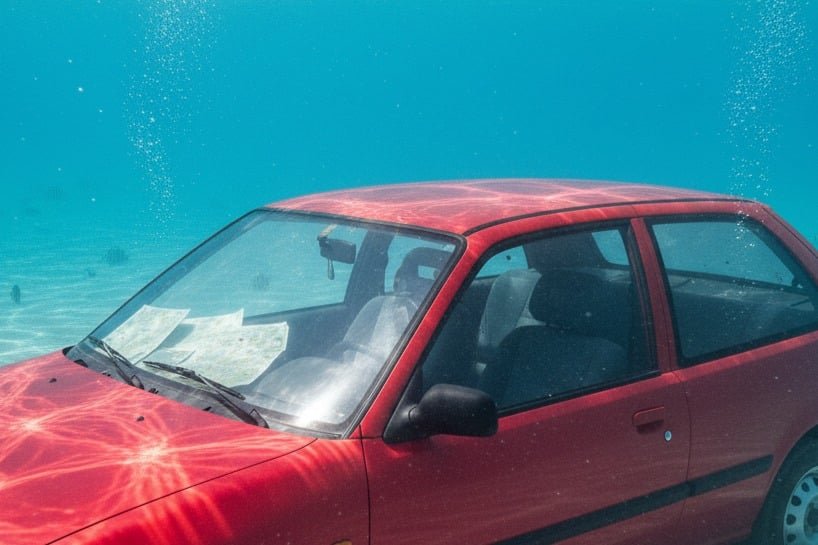
TL;DR: How to Escape a Sinking Car
- You have under one minute before the pressure seals the doors shut.
- Release your seatbelt first, then open or break a side window to escape.
- Push out headfirst and swim toward light or bubbles to reach the surface.
- Call for help only after you’re above water and breathing safely.
- Practice the Seatbelt → Window → Out → Up sequence to prepare for a real sinking car emergency.
You have under one minute to escape a sinking car. In fact, most vehicles stay afloat for only 30 to 60 seconds before water pressure locks the doors and shuts down the power. Every second counts, and every move you make determines your chances of survival.
Each year, hundreds of people die after their vehicles end up in deep water. Studies from safety agencies show that most drownings happen within a few minutes because drivers hesitate or waste time calling for help. Knowing the right actions before an accident happens can change that outcome. This guide walks you through what to do first, how to break a window, and how to emerge from the water. Once you know the sequence, you can get out of a drowning vehicle safely even under pressure.
Why Are Doors Hard to Open Underwater?
Even professional swimmers can’t force a car door open underwater. The problem isn’t the lack of strength but the strong hydropressure. When water surrounds your vehicle, it exerts a force of hundreds of pounds per square foot on the doors’ exterior. If you try to open one too soon, that force will flood the cabin and drag you down. Only when the water levels match inside and out can a door move freely. By then, it’s usually too late. It’s safe to say that the side window is your quickest way out.
How to Escape a Sinking Car: A Step-By-Step Guide

This timeline shows what to do during each stage of a sinking car. The seconds mark how fast water fills the cabin, from the first splash to the moment pressure locks everything tight.
0–5 seconds
- Remember: Don’o’t call 911 yet. Those seconds matter. By the time they answer, your car may be sinking halfway below the surface.
- Stay alert and focused. Take one steady breath out to stay calm and clear your head. Your goal right now is awareness. Find where the windows and seatbelt release are, and get ready to move.
5–15 seconds
- Unbuckle your seatbelt. Slide your thumb under the strap so it won’t snag on clothing.
- Press the driver-side window switch and lower the window all the way. If your car has a manual crank, turn it down fully.
- If power still works, lower a second window as a backup exit.
15–45 seconds
- Clear any loose items that might block your path.
- Plant one hand on the windowsill to guide your body.
- Angle your chest toward the opening, push off the headrest, and slide out of the window headfirst.
45–60 seconds
- If the water keeps rising or the window refuses to move, shift immediately to the “window stuck” plan in the next section.
How to Escape a Sinking Car If the Window Won’t Open

If the power fails or the window glass won’t break, stay calm. You still have a way out. The goal now is to create an exit using tools if you have them, or to wait for pressure to balance if you don’t.
If You Have a Tool:
- Spring-loaded glass punch. Aim for the lower rear corner of a side window, as it’s the weakest point on tempered glass. Using the spring-loaded tool, strike the area once with firm pressure. When the window shatters, brush away loose edges using your sleeve and move out quickly.
If You Don’t Have a Tool:
- Stay calm and hold your breath as the water rises.
- When the cabin fills almost to your chin, that means the pressure inside and outside the window will soon start to match.
- Plant both feet against the door for leverage and pull the door handle firmly.
- As the door opens, sweep an arm through the gap, stay low, and swim out in a smooth line toward the light or bubbles.
Up and Out: Surface and Shore
Once you’re out of the car, your next goal is reaching the surface. The water’s dark and cold, so follow these simple cues to get to safety.
- Follow the bubbles. They always rise straight toward the surface.
- Kick with short, steady strokes. Keep your chin up and eyes on the light above you.
- Roll onto your back. Float to rest and look for light, a shoreline, or solid ground.
- Reach land, then call 911. Give your location and explain what happened.
- Treat cold shock. Remove wet layers, wrap up in something dry, and warm yourself quickly. Even brief cold exposure can sap energy and slow your recovery.
Key Takeaway Box
👉 Remember this order: Seatbelt → Window → Out → Up
Gear Picks
Keep these compact, affordable tools within arm’s reach so you can act fast during a sinking car situation.
- Good: Spring-loaded glass breaker with a built-in seatbelt cutter clipped to your visor.
- Better: Two glass breaker tools (one for the driver and one for the passenger), plus a small waterproof flashlight.
- Best: Two tools, two lights, and a floating retractable tether to avoid losing gear underwater.
Placement Tip: Avoid glove boxes as they often get jammed after impact. Mount tools in open, reachable zones.
Escape a Sinking Car: Myths and Facts
False information about car-water escapes are all over the internet. These quick facts separate real survival steps from the common myths that might put your life at risk.
- “Break the windshield.” Myth. Windshields are laminated and won’t shatter like side glass.
- “Airbags trap you.” Myth. Airbags deflate within seconds. Keep moving toward your exit.
- “Call for help first.” Myth. Every second counts. Escape first, then call for help.
- “Windows never work underwater.” Myth. Power windows often still operate briefly after impact.
Final Takeaway: Readiness Over Luck
When a car sinks, survival depends on taking the correct steps in the proper order. Within about a minute, rising water can short out power, jam doors, and block exits. Knowing the sequence and practicing it helps reduce panic and gives you control over the situation. Again, to escape a sinking car, remember to Seatbelt → Window → Out → Up.
Run a short driveway drill this week and mount your escape tools in an accessible vehicle compartment. In the end, it’s the skill and knowledge that will get you safely to shore.
Quick Answers to Common Questions about How to Escape a Sinking Car:
Readers ask the same practical questions about how to get out of a submerged vehicle. Keep these facts in mind when you train or teach others.
Q: Can I open the door of a submerged vehicle?
A: Usually not at first, as water will push hard against the door’s exterior. Wait for the water level inside to rise near the outside level, or use a window exit instead. Doors can open only after the internal and external pressure of the car matches.
Q: Should I call 911 before I try to escape a sinking car?
A: No. Escape first, call second. You have a short window before the car’s power and doors fail. Get yourself out, then call for help from shore or a safe spot.
Q: What if the power windows stop working?
A: Try a manual crank if your car has one. If not, use a glass-breaking tool if you have one. If you have no tool, hold your breath and let water rise to your chin so pressure matches, then force the door.
For more training and setup ideas, read our guides on EDC Tools, Car Emergency Kits, and Flood Safety.