A ferro rod is one of those tools that looks simple until you depend on it.
by Davy Li
On paper, most ferrocerium rods seem about the same. A rod, a scraper, maybe a handle, maybe a lanyard. But once you start using them in cold weather, wet weather, low light, or with tired hands, the differences show up fast. Some throw a strong shower of sparks with little effort. Some wear down too quickly. Some are awkward to hold when your fingers are numb. Some work fine on a picnic table and feel frustrating in the field.
That is why choosing a ferro rod should go beyond price, color, or whatever happens to be trending online. If a rod is going into a real kit—whether that is for bushcraft, hunting camp, vehicle preparedness, or backcountry travel—it should be selected the same way you would choose any other important tool: by how well it works when conditions are not ideal.
Here are the things that matter most.
A lot of people focus on rod length first, but diameter is often the more important detail.
A thin ferro rod may still work, especially for occasional use, but thinner rods usually have less surface area and can wear down faster. They can also feel less forgiving when your technique is off. If your angle is not perfect, or if your scraper is not ideal, a small rod can make the whole process feel more difficult than it needs to be.
A thicker rod generally gives a little more margin for error. It often feels easier to control, easier to scrape, and better suited for repeated use. That does not mean bigger is always better, but it does mean that ultra-small rods are often best treated as compact backup tools rather than primary fire starters.
If you are building a main fire kit, choose a rod size that gives you confidence, not just portability.
Most people assume a longer rod simply lasts longer. That is true, but it is not the whole story.
A longer rod also gives you more working room. That matters when you are trying to direct sparks into a small tinder bundle or when you are using a controlled, steady scraping motion. A rod that is too short can feel cramped, especially if it is attached to a bulky handle or if the striker is awkwardly shaped.
The real question is not, “How long is this ferro rod?”
It is, “How much usable rod do I actually have?”
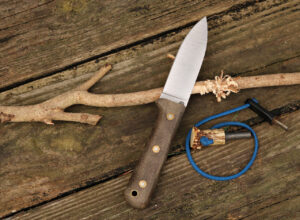
A good knife spine can be an effective scraper.
Some designs look good in product photos but leave less exposed rod than you would expect. If the handle is oversized or the rod is buried too deeply into it, your practical striking area may be reduced. In field use, that matters.
A ferro rod should give you enough exposed length to work comfortably, not just enough to look good in packaging.
Many buyers judge a ferro rod by one thing: does it throw big sparks?
That is understandable. A strong shower of sparks is easy to notice and satisfying to use. But spark volume alone does not tell you whether a rod is a good choice for serious use.
A rod also needs to be predictable. It should scrape cleanly. It should respond consistently. It should not require a strange angle, excessive pressure, or repeated repositioning to perform well. Reliability matters more than drama.
In real use, a steady rod that gives repeatable results is usually more valuable than one that looks impressive in a short demo clip but feels inconsistent when paired with natural tinder, damp conditions, or a less-than-perfect stance.
You are not choosing a ferro rod for entertainment. You are choosing one for ignition.
People often blame the rod when the real problem is the striker.
A ferro rod and striker work as a system. If the striker edge is too rounded, too soft, too thin, or uncomfortable to grip, performance suffers. Even a good rod can feel mediocre when paired with a poor scraper.
A useful striker should have a sharp, defined edge that can remove material cleanly from the rod. It should also be easy to hold, especially when your hands are cold, wet, or moving carefully around a prepared tinder bundle. Tiny multi-use strikers may save space, but not all of them are pleasant to use.
There is a difference between “technically functional” and “easy to use under pressure.”
For a real field kit, easy matters.
If you plan to use the spine of a knife instead of a dedicated striker, test it first. Not every knife spine is sharp enough for efficient scraping, and not every knife is comfortable or safe to use that way around fine tinder.
Handles are often treated like a style choice. In practice, they are a control feature.
A smooth, polished handle may look great in photos, but if it twists in your hand when wet, that is a problem. A tiny handle may save weight, but if you cannot get a secure grip while kneeling in the mud or wearing gloves, it is not helping you much.
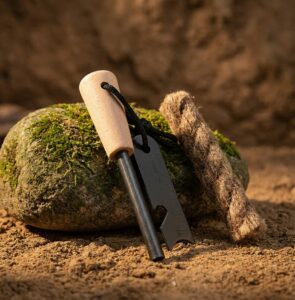
A good handle should let you stabilize the rod without strain. It should feel natural in the hand and provide enough grip in less-than-ideal conditions. This becomes especially important in winter, rain, or emergency situations where fine motor control is reduced.
Comfort is not luxury here. Comfort supports control, and control supports ignition.
Compact gear has its place. There is nothing wrong with a tiny ferro rod on a keychain, in a pocket kit, or attached to a zipper pull. But a lot of outdoors people end up trying to make their smallest tool do the job of their primary tool.
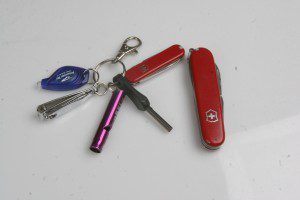
This keyring kit keeps some basic survival tools easily available. On the keyring: LED flashlight, fingernail clippers, whistle, Boy Scout Hot Spark ferro rod and Classic Swiss Army knife. The SAK rides in a pouch on my belt.
That is usually backwards.
The rod you depend on most should be the one that is easiest to use, not the one that disappears best into a pouch. Mini ferro rods are excellent backups. Full-size rods are usually better primary tools. Once you think of them that way, gear selection gets easier.
Choose according to role.
Almost any ferro rod can make sparks. That is a low bar.
The better question is this: can you use it well when things are inconvenient?
Try your ferro rod when your hands are cold. Try it with gloves. Try it with natural tinder instead of store-bought tinder tabs. Try it after light rain. Try it while crouched down instead of standing comfortably at a bench. Try it when you are tired.
Those tests reveal more than any product description ever will.
A ferro rod does not need to be perfect. It just needs to remain workable when conditions stop being friendly.
A ferro rod is only one part of your fire-starting setup.
The best rod in the world will not make up for poor tinder, poor preparation, or poor practice. Likewise, a decent rod paired with reliable tinder, a useful striker, and some repetition can serve you very well.
That is why the best approach is to build around a complete system:
- l a ferro rod you can grip well
- l a striker that bites cleanly
- l tinder you trust
- l a setup you have practiced with before you need it
When people say a ferro rod “failed,” the cause is often not the rod alone. It may be a weak scraper, poor tinder choice, rushed technique, or lack of familiarity with the tool.
A dependable fire kit comes from compatibility and practice, not from one magic piece of gear.
Before you commit a ferro rod to your hunting pack, truck kit, bushcraft bag, or emergency setup, ask a few simple questions:
Does it feel secure in my hand?
Can I use it comfortably without babying it?
Does the striker work cleanly and predictably?
Is the rod large enough for repeated real-world use?
Can I direct sparks where I want them?
Have I actually tested it with the tinder I am likely to use?
If the answer to most of those is yes, you are probably looking at a solid choice.
If not, keep looking.
A good ferro rod is not the one with the flashiest packaging or the loudest marketing. It is the one that works when the weather turns, your hands are cold, and you need fire without wasting time.
That usually comes down to a few practical things: enough diameter, enough usable length, a striker with a real edge, a handle you can control, and a setup you have actually used before.
Simple tools deserve serious testing.
And when it comes to fire, “good enough” is a decision best made before you need the flame.

Davy Li
Davy Li: I approach manufacturing with a user-first philosophy. Leading an independent R&D factory, I actively collect feedback from survival instructors and outdoor enthusiasts to drive product evolution. My expertise lies in translating these community insights into manufacturing precision—engineering out defects that plague generic market products. Whether in the factory in Asia or field-testing in the Grand Canyon, my focus remains on creating gear that users can trust with their lives.
Please subscribe to the Survival Common Sense YouTube Channel: / survivalcommonsense And to the website: https://survivalcommonsense.com/ And we would really appreciate it if you would check out my book: “Bushcraft Basics: A Common Sense Wilderness Survival Handbook.” It is available on Amazon, at Barnes and Noble and your local independent bookstore. Get your signed copy of “Bushcraft Basics” here: https://www.paypal.com/instantcommerc…

