How to Break Into a Car: Key Takeaways
- If a person or pet is in immediate danger inside a locked vehicle, don’t break into a car just yet. Calling 911 is the first step.
- If help is unavailable and life is threatened, use the least destructive method that will safely gain access: try phone-based manufacturer unlocking or roadside assistance first, then non-destructive tools such as a shoelace or long-reach.
- Only break a window as a last resort.
Legal and Ethical Checklist: When Emergency Entry is Justified
Before learning how or attempting to break into a car, refer to the checklist below to see if your emergency counts:
- Is a human or animal in immediate life-threatening danger such as heatstroke, unconsciousness, or drowning? Yes is required.
- Have you called 911 and reported the situation? Always call before breaking or entering if possible.
- Is professional help delayed or unreachable? Proceed only if delay risks death or severe harm.
- Are you documenting your actions such as call log, witnesses, photos to justify good-faith aid? Yes.
Why this matters: Good Samaritan protections exist in many jurisdictions for reasonable, good-faith rescue attempts, but laws differ by state. Document everything before you actually break into a car for whatever reason.
What to Try First: Fast, Low-risk Options
- Call 911: give location, vehicle description, and condition such as unconscious, hot, trapped. Emergency responders can force entry legally and safely.
- Use manufacturer or roadside app: If you or the owner can unlock remotely via Toyota Remote Connect, FordPass, OnStar, or Tesla app, that is the safest option.
- Roadside assistance or locksmith: AAA, insurer programs, or a locksmith can usually reach you quickly. Always call these before forcing entry.
Step-By-Step Methods on How to Break Into a Car For Life-Threatening Single-Person Rescues
Order of preference when you decide to break into a car: try remote unlock, seek professional help, apply non-destructive improvised methods, use a professional slim jim only if trained, and breaking a window as a last resort.
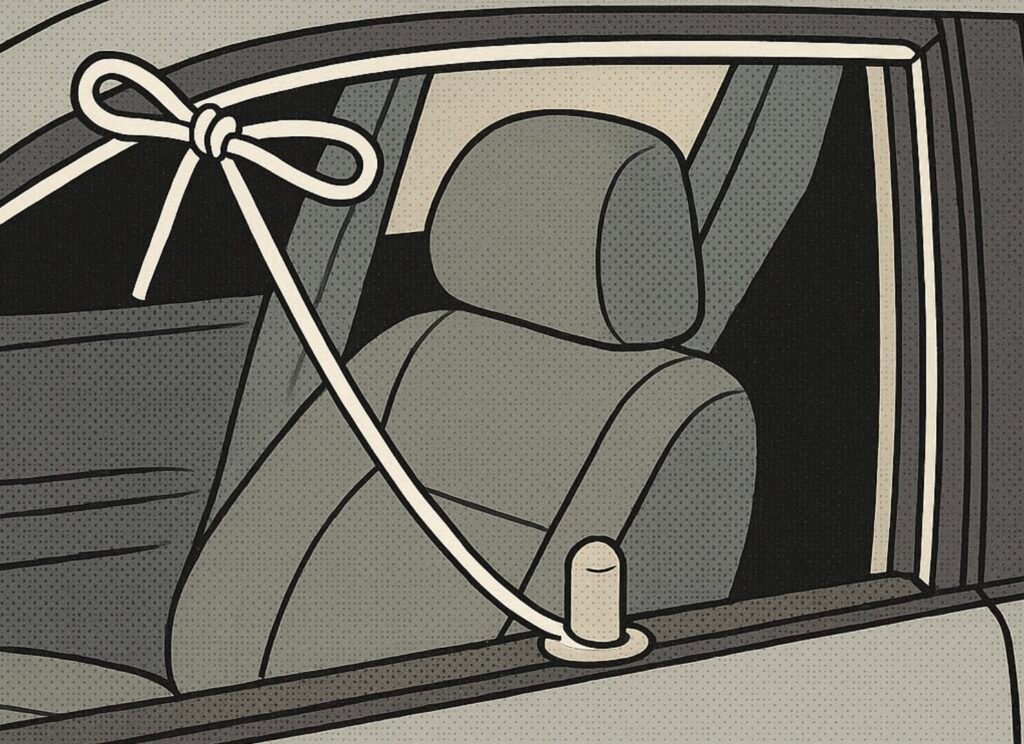
1. Shoelace (Post-Lock): Best For Breaking Into Older Cars With Visible Post Locks

When to use: Older vehicles with vertical lock posts, commonly pre-2000.
Tools: strong shoelace
Steps:
- Remove one lace and tie a slip knot.
- Work lace into the top corner between the door and frame.
- Maneuver knot around lock post and pull tight to lift.
Why: Minimal damage risk if done carefully. Stop if you encounter excessive resistance.
Damage risk: torn weather stripping. Practice how to break into your own older car first.
2. Coat-Hanger Or Improvised Long-Reach Tool: Low-Tech Reach
When to use: Older vehicles or when you can wedge a small gap.
Tools: straightened wire hanger with small hook, wedge such as inflatable or plastic to open gap.
Steps: create a small access gap, slide tool, feel for unlock button or lever, hook and pull.
Caution: modern vehicles have narrower gaps and sensors. Exercise extreme care.
Evidence: Widely used in older vehicles. Success declines with electronic locks.
3. Slim Jim Or Professional Long-Reach (Advanced, Professional Only)

Critical Professional Disclaimer: Slim jim usage requires specialized knowledge on how to break into a car. This method also carries significant risks, as improper technique can cause thousands of dollars in damage to electrical systems, airbags, window mechanisms, and door linkages. This information is provided solely for emergency preparedness education.
Understanding Slim Jim Mechanics
A slim jim is a thin, flat metal tool designed to manipulate vehicle door mechanisms through the gap between the window and door frame. According to locksmith industry standards, these tools work by accessing the internal linkage rods that connect door handles to locking mechanisms.
How Slim Jim Emergency Car Access Works:
- Slides between window glass and weather stripping
- Locates internal connecting rods or cables
- Manipulates unlock mechanism through precise movements
- Bypasses external lock cylinder entirely
Vehicle Compatibility and Limitations
When to use a slim jim to break into a car: Only when life is at immediate risk, you know exactly where the internal rods are, and you accept damage risk. ALOA and locksmith organizations advise that slim jims are professional tools, and civilian use risks severe damage.
Key steps, high level: wedge to open gap, insert slim jim at rear edge, feel for rods, hook or push the unlock rod gently, listen for engagement. If you are not trained, stop.
Damage to avoid: snagging wiring, breaking window motors, tripping airbags that can be costly and dangerous.
4. Breaking A Window: Last Resort When A Life Is Threatened

When to use: Immediate danger such as unconscious child or animal in hot car or submerged vehicle, and no other option to break into a car.
Best target: Side tempered window in the corner, not the windshield which is laminated.
Tools: dedicated emergency window breaker, spring-loaded or carbide tip, or the ceramic part of a spark plug.
Technique: Cover yourself and the child from shards, strike lower corner of the side window at an angle, push glass outward and clear debris before reaching in. Protect the person from glass. Wear gloves if possible.
Document: photograph, record 911 call time, get witnesses.
Damage Risks and How to Document for Police or Insurance
- Airbag system damage: Side airbags can be triggered or damaged. Repairs often range from $2,000 to $5,000. Avoid door panels if possible.
- Window motor and tracks: Slim jim misuse can jam motors. Replacement often costs $300 to $800.
- Weatherstrip damage: Usually inexpensive but can cause leaks and noise.
Document everything: time-stamped 911 call, photos before and after, witness contact info, notes explaining your good-faith belief of imminent peril. This supports Good Samaritan defense and insurance claims.
Tools For Your Emergency Kit: Recommended

- Emergency window breaker with seatbelt cutter such as spring-loaded and compact: primary for last-resort rescues.
- Inflatable door wedge: creates a gap without damage.
- Long-reach tool professional grade: only if you are trained.
- Spare key or fob in secure lockbox: prevention beats repair.
- Phone with roadside apps set up such as owner’s maker app, AAA app.
Prevention and Preparedness: Avoid Emergency Entry
- Leave the spare key with a trusted person or in a secure lockbox.
- Set up the vehicle remote unlock app and test it periodically.
- Keep an emergency window-breaker in the glovebox or center console.
- Create routine checks for children and pets such as the ACT method: Avoid, Create reminders, Take action.
State Law and Good Samaritan Quick Guide
Not all attempts to break into a car can end positively. If your reason to do so is not an actual emergency, stop and rethink your options. Good Samaritan protections vary by state and country, so even if you act in good faith to prevent serious harm and contact emergency services first, you may not be protected from liability. If possible, call 911 before acting and record the call. For specific guidance on how to break into a car safel and legally, check your state statutes and local police guidance.