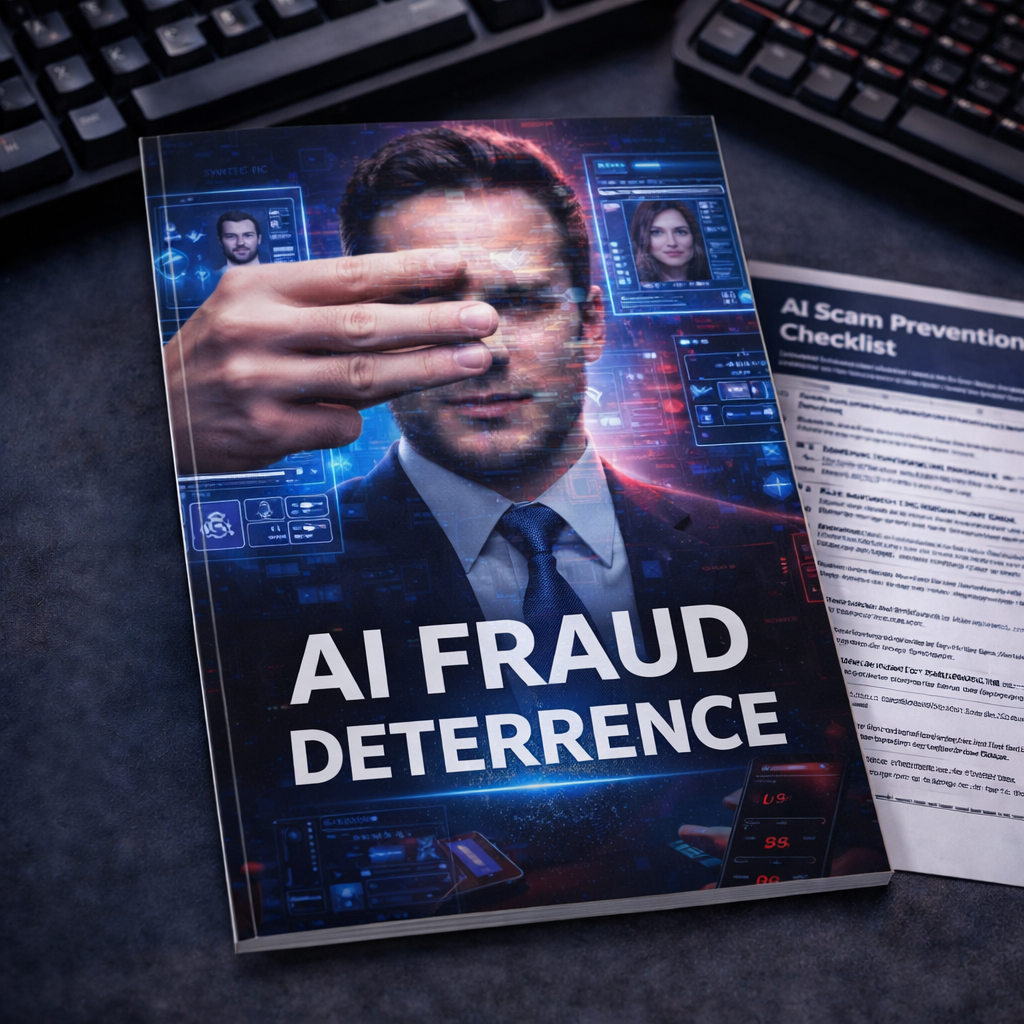
AI-Enabled Fraud, Impersonation, Scams, and Misinformation can’t be stopped but it can be deterred. Don’t be a victim.
AI FRAUD DEFINED
Noun: The use of artificial intelligence to impersonate, deceive, or manipulate individuals or organizations for financial gain, influence, or data theft.
Verb: To generate synthetic media (voice, video, text, or interactive avatars) to conduct fraud, misinformation, or social engineering campaigns.
PURPOSE OF AI FRAUD
AI scams bypass technical security by exploiting human trust at scale. Instead of hacking systems directly, attackers manipulate people into voluntarily transferring money, sharing credentials, or spreading false information. In 2026, “agentic AI” (autonomous AI agents) can handle entire scam workflows—from data scraping to real-time conversation and fund movement—making attacks faster and harder to trace.
Common AI Scam Types
Voice Cloning / Vishing – Cloned voices of family, executives, or officials demand urgent wire transfers or “help.”
Deepfake Video / Real-Time Avatars – Synthetic video calls impersonating CEOs, loved ones, or government officials; now includes interactive, adaptive responses.
AI Phishing & BEC – Personalized emails and texts that mimic writing style, tone, and context, including hijacked email threads.
Impersonation Scams – AI-generated texts, calls, or chatbots posing as friends, customer service, or authorities.
Synthetic Identity Fraud – AI-created fake identities with realistic photos, histories, and documents used to open accounts or apply for jobs or loans.
Deepfake-as-a-Service Retail/Employment Attacks – Mass refund scams, fake job candidates, or internal impersonations using AI-generated identities.
Multimodal / Hybrid Attacks – Combined use of cloned voice, deepfake video, and phishing to increase credibility.
HOW AI SCAMS WORK
-
Data Collection – Scraping social media, public videos, podcasts, breached emails, and voicemail for short samples of audio and video. Personal details are gathered for targeting.
-
AI Generation – Low-cost tools create voice and video clones with realistic speech patterns, breathing, and facial movement.
-
Delivery – Phone calls, video calls, emails, SMS, fake websites, chatbots, or social media ads.
-
Exploitation – Urgency, authority, or emotional pressure is used to force quick decisions. AI systems can adapt responses in real time.
DETECTION METHODS
VOICE DETECTION
Do not rely on recognizing the voice. Modern AI voice cloning can sound indistinguishable from a real person.
Use pre-set code words or challenge-response questions that only the real person would know.
Introduce delay by stating you will call back using a known number.
Listen for subtle inconsistencies such as unnatural pacing, but treat this as secondary.
VISUAL DETECTION (DEEPFAKES)
3 Finger Test: Ask the person on video to place three spread fingers across their face. If the image distorts, blurs, or warps around the fingers or face edges, it is likely a deepfake.
Check the eyes for unnatural blinking or a fixed stare.
Watch the mouth for mismatched lip movement and audio.
Look at edges and background for distortion, lighting inconsistencies, or artifacts.
Modern deepfakes are impr…see this full guide by downloading it here.