At a Glance: Best Portable Stations for Home Backup 2026
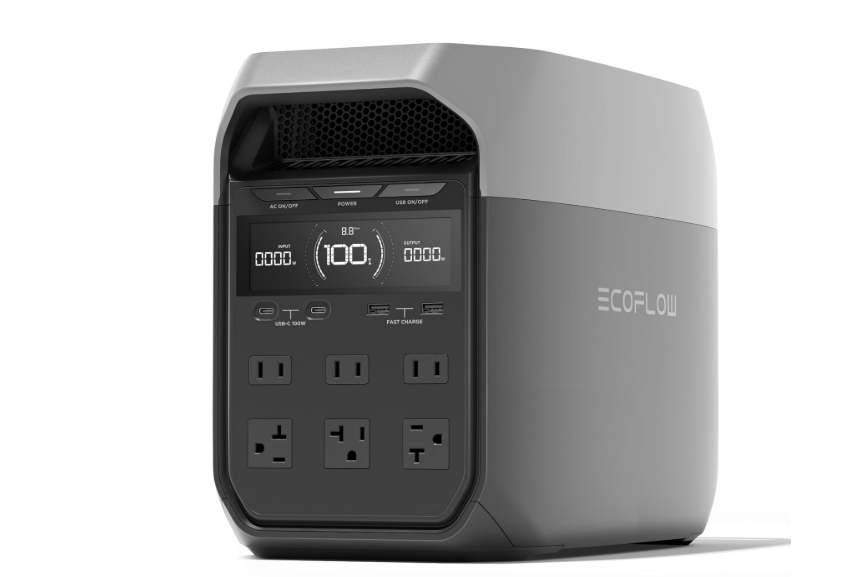
- The best overall portable power station is the EcoFlow Delta 3 because its 40-minute fast-charging and 10ms UPS protect sensitive home office electronics during sudden outages.
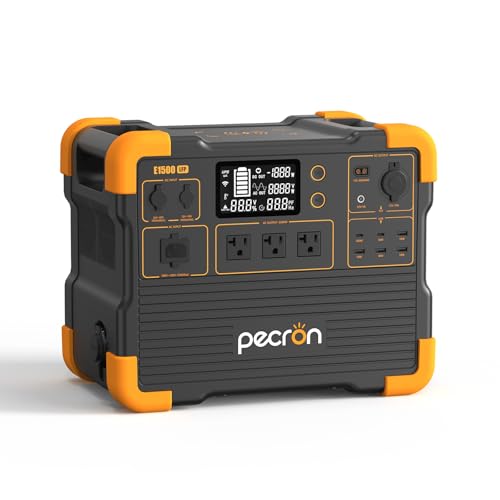
- The best budget-friendly power station is the Pecron E1500LFP since it offers a massive 1536Wh LiFePO4 capacity for preppers who want raw power without expensive app features.
- The best power station for home backup is the Bluetti AC200L for high-draw refrigerators, while the Anker SOLIX C1000 is the most reliable “set it and forget it” unit for 72-hour blackouts.
Jump to:
What to Look for When Buying Portable Power Stations for Home Backup
To find a portable power station that survives a long-term grid failure, you must look past the marketing and find a professional-grade energy asset. When buying a unit, check for the following specs:
- LiFePO4 Chemistry: a “10-year battery” that can handle over 3,000 charges and stays chemically stable (fire-safe) even if damaged.
- Pure Sine Wave Inverter: provides the “clean” electricity essential for preventing power damage to sensitive electronics like laptops, drones, or CPAP machines.
- UPS / Pass-Through: this technology offers high-speed switching in under 20ms, which automatically takes over the power load during a blackout so your router or PC never reboots.
- Expandability: refers to a physical port for “Extra Batteries” that lets you double your capacity later without buying an entirely new station.
RELATED: Blackout Preparedness For Beginners
The Top 5 Portable Power Stations for Home Backup 2026
These five professional-grade power stations are the industry leaders for home backup.
1. Best Overall & Fastest Charging: EcoFlow Delta 3 Series

- The Specs: 1024Wh capacity, expandable up to 5kWh.
- Why it wins: It charges from 0–80% in 30–40 minutes. In a survival situation, if you only have a gas generator running for an hour, you need a “tank” that fills up instantly.
- Survival Edge: Industry-leading 10ms UPS switchover. That means your PC won’t even flicker during a sudden power interruption.
2. The Reliable Workhorse: Bluetti AC200L

- The Specs: 2048Wh (Massive base capacity).
- Why it wins: Incredible build quality and a high-efficiency inverter. It’s heavy, but it can run a full-sized fridge and a Starlink dish simultaneously.
- Survival Edge: Renowned for “Pass-Through” charging, it handles solar input and AC output simultaneously better than most units.
3. Best for Long-Term Storage: Anker SOLIX C1000

- The Specs: 1056Wh, ultra-durable LiFePO4 cells.
- Why it wins: Anker’s “InfiniPower” tech is designed for longevity. It uses industrial-grade components meant to last a decade, even with daily use.
- Survival Edge: It has a very low self-discharge rate, which makes it the best candidate for the “closet preppers.”
4. The “No-Nonsense” Updated Classic: Jackery Explorer 1000 Plus

- The Pivot: Acknowledge that old Jackerys used inferior NCM batteries. The Plus series finally brings LiFePO4 to the most user-friendly interface on the market.
- Why it wins: No complex apps or confusing menus required.
- Survival Edge: Great physical durability and an excellent Solar Saga panel ecosystem.
5. Best Value for the Budget Prepper: Pecron E1500LFP

- The Specs: 1536Wh at a significantly lower price point per Watt-hour.
- Why it wins: You aren’t paying for “app features” or fancy screens. You are paying for raw LiFePO4 capacity.
- Survival Edge: Allows for high-voltage solar input, which means you can use cheaper, rigid house-style solar panels to charge it.
Power station comparison chart
Preview

Preview

Preview

Preview

Preview
Last update on 2026-03-20 / Affiliate links / Images from Amazon Product Advertising API
How long will a portable power station run?

It depends entirely on the size of its “fuel tank” versus how fast your devices are drinking from it. You can calculate your exact runtime using the formula below to account for the energy lost during conversion. Since no station is 100% efficient, we use the 85% rule to make sure you aren’t left in the dark earlier than expected. This helps you stay prepared whether you’re managing a quick power blip or a full five-day outage.
The “Energy Tax” (The 85% Rule)
No power station is 100% efficient. About 15% of your battery’s power is lost as heat when the internal inverter converts stored energy into the electricity your wall plug needs. Always calculate using 0.85 to get a real-world number rather than the “best-case scenario” printed on the box.
How to Calculate Battery Runtime Formula

Is a 1000 Wh Portable Power station enough?
A 1000Wh power station is a “Triage” unit. It’s perfect for maintaining the Four B’s Audit (Basics, Body, Bio, and Brain).
- Basics: It will run LED lights and a small fan for 48 hours.
- Body: It will run a standard efficient refrigerator for 12 to 18 hours.
- Bio: It will power a CPAP machine for 3 to 4 nights.
- Brain: It will keep your internet router and phones charged for a week.
However, a 1000W station isn’t enough for high-heat appliances. It won’t run an air conditioner, a space heater, or a coffee maker for more than a few minutes. If you need to cook or stay warm, you must jump to a 3000W system or use a propane alternative. Use the 1000W unit only to keep your communications and food supply viable.
How to Estimate Power Needed for Emergencies
Don’t guess your energy needs. If you buy a “tank” (battery) that is too small, you’ll be sitting in the dark by noon. Use this simple math to determine exactly what size station you need.
Follow this protocol for energy planning:
- List your Must-Haves: Identify the devices that must stay on.
- Check the Watts: Look at the “Input” label on your device.
- Estimate the Hours: How many hours a day will it run?
- Multiply the watts of each device by the number of hours you need it to run.
- Add all your devices together to find your Total Daily Consumption.
Example: Essential Survival Load (24 Hours)
| Device | Watts | Daily Hours | Total Wh Needed |
| Starlink / Router | 50W | 10 Hours | 500 Wh |
| LED Lighting | 20W | 5 Hours | 100 Wh |
| Standard Fridge | 150W | 8 Hours (Cycle) | 1,200 Wh |
| Phone / Laptop | 60W | 3 Hours | 180 Wh |
| Total Daily Need | 1,980 Wh |
Final Verdict on Portable Power Stations
-
If you are preparing for a fast-paced “Bug-Out” or vehicle evacuation, the EcoFlow Delta 3 is the top choice because its 45-minute recharge time ensures you can get a full “tank” of power during even a brief stop at a working outlet.
-
If you need a reliable 72-hour blackout solution for your home essentials, the Anker SOLIX C1000 is the ideal fit since its industrial-grade cells and low self-discharge rate mean it will actually be ready to go when you pull it out of the closet after months of storage.
-
If your main goal is “Food Security” and keeping a full-sized refrigerator running for days, the Bluetti AC200L is the clear winner because its massive 2048Wh base capacity provides the deep energy reserves needed to handle high-draw appliance compressors.
-
If you are heading into rugged or unpredictable outdoor conditions, the Jackery 1000 Plus is the best companion because its simple “no-nonsense” interface and physical durability make it the easiest to operate when you are stressed or in the field.
-
If you are building an emergency backup on a strict budget, the Pecron E1500LFP offers the best value because it gives you the most raw LiFePO4 battery capacity for your dollar by skipping expensive app features and fancy screens in favor of pure utility.
FAQs
1. Power Station vs. Gas Generator: Which do I actually need? Generators are for “brute force” (running AC or well pumps) but must stay outdoors. Power stations are silent, indoor-safe “scalpels” for electronics and fridges, which are ideal for apartments or silent nighttime backup.
2. How long will the battery stay charged in a closet? In 2026, LiFePO4 cells are the standard and lose very little juice over time. Just top the unit to 80% charge every 6 months to ensure it’s healthy and ready when the grid drops.
3. Can I use my Electric Vehicle (EV) to charge power stations? Yes. Most 2026 EVs feature V2L (Vehicle-to-Load), allowing you to use your car as a massive “refill tank” for your portable station during a week-long blackout.
QUICK POLL
What’s your plan when SHTF? Drop your strategy in the comments below!