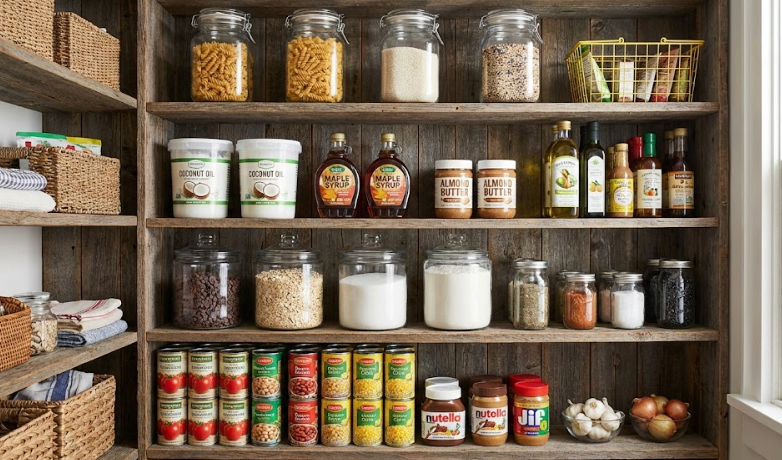
At a Glance: Winter Food Storage Guide
- Swap to PET plastic jars ($9 for 3-pack) to prevent Mason jar lid failures and shattered containers when temps drop below 32°F
- Store Mylar bags on the “Warm Wall” (interior wall, 40-55°F), fats in the “Cooler Zone” (center floor on pallets, 20-35°F), and avoid exterior walls completely
- Powdered butter, cheese, and eggs go rancid in cold garages within weeks; only solid fats like ghee, coconut oil, and canned lard survive freezing temps
- Write expiration year large (e.g., “28”) with circled quarter (1-4) below it so you can scan bins in seconds and rotate before spoilage
Your garage seems like the perfect spot for bulk winter food storage until temperatures plummet. Suddenly, glass jars crack, Mylar seals fail, and powdered fats turn rancid in the cold. To help you with cold-season preparation, we rounded up freeze-proof containers and a placement strategy, so your winter food storage can survive freezing temps and avoid spoilage.
What Happens to Food Storage in a Cold Garage?
Before you pack another box into your garage, understand what cold temperatures do to stored food:
Do Glass Jars Break in Cold Storage? Yes. Glass jars and rigid containers crack when liquids inside freeze and expand. Metal lids pop off Mason jars when temps dip below 32°F, breaking the seal and exposing contents to air and moisture.
The 20°F Fat Failure: Powdered fats (like powdered butter, cheese powder, and freeze-dried eggs) oxidize faster in fluctuating cold temperatures. Once the protective seal breaks, fats go rancid in weeks.
The Mylar Freeze: When Mylar bags stored in sub-freezing temps thaw and refreeze repeatedly, then condensation forms inside. That moisture destroys the oxygen-free environment, which causes rice, beans, and pasta to spoil faster.
What Are the Best Methods for Winter Food Storage?

Stop losing food to shattered glass. These freeze-proof food storage containers handle freezing temps without breaking seals:
- Mylar Bags with Oxygen Absorbers
Flexible material expands/contracts with temperature changes. Best for rice, beans, pasta, flour, oats, and freeze-dried foods. Safe to -20°F when stored properly. Cost: $15-25 for a 25-pack. - Food-Grade HDPE Buckets with Gamma Lids
High-density plastic stays flexible in cold, gamma lids seal without cracking. Best for bulk grains, sugar, salt (25-50 lb quantities). Safe to -30°F. Cost: $8-12 per 5-gallon bucket. - PET Plastic Jars – The Glass Jar Replacement
BPA-free plastic won’t shatter, and threaded lids maintain a seal in freezing temps. This is your $9 swap for Mason jars. Best for smaller portions of dry goods, spices, powders, and sauces. Safe to 0°F. Cost: $6-12 for a 3-pack. - Heavy-Duty Vacuum Seal Bags (8-mil thickness)
Thicker bags resist punctures from ice crystals. Best for portioned dry goods in rotation. Safe to -10°F (dry goods only). Cost: $20-30 for 100-count. - Metal #10 Cans with Double-Sealed Lids
No expansion/contraction issues, commercial-grade seal. Best for long-term winter food storage (10+ years) of dehydrated foods. Safe to -40°F. Cost: $3-5 per can.
NEVER keep these items in freezing garages: Mason jars with liquid contents, glass containers of any kind, thin (2-3 mil) vacuum bags, rigid plastic containers without flex.
Complete your winter preparedness. Fix the pantry, then secure your other cold-season gear.
Last update on 2026-02-11 / Affiliate links / Images from Amazon Product Advertising API
(As an Amazon Associate, we earn from qualifying purchases.)
Can You Store Mylar Bags in a Freezing Garage?
Yes, Mylar bags work well for bulk dry goods like rice, flour, pasta, beans, and oats in winter food storage. The bags are made from light-blocking, puncture-resistant film that creates an airtight seal when heat-sealed.
How to pack Mylar bags for winter food storage:
- Fill the bag with dry goods
- Add an oxygen absorber (removes air and prevents spoilage)
- Heat-seal the top edge
- Place sealed bags inside hard-sided bins or buckets with lids
Critical winter rule: Store Mylar bags ONLY on the “Warm Wall” or the interior wall shared with your heated house. Doing so prevents the freeze-thaw cycle that creates moisture inside bags.
The Best Cold-Resistant Containers for Winter Food Storage
Glass Mason jars crack in freezing garages when liquids expand. Here are the top 5 PET plastic jar alternatives that won’t shatter in cold storage:
1. Pride Of India PET Plastic Square Grip Jars

image from Amazon
- Size: 48 oz (approx. 1.5 quarts).
- Performance: Made of food-grade PET plastic, these serve as a shatter-proof alternative to the “Jar Trap”. The square grip design optimizes shelf space and remains easy to handle even with winter gloves on.
- Best For: Dry staples like rice, lentils, or oats.
- Temperature Rating: Safe for unheated garage zones where traditional glass typically fails.
2. DuraHome Deli Containers with Lids
image from Amazon
- Size: 40-pack variety.
- Performance: These function as high-utility tools for portion control during a 30-minute audit. Being BPA-free and leakproof, they protect smaller assets without the weight or breakage risk associated with glass jars.
- Best For: Small portions of seeds, nuts, or powdered seasonings.
- Temperature Rating: Freezer-safe, though plastic may become brittle in extreme arctic conditions; handle with care.
3. Lock & Lock Easy Essentials Twist Food Storage (5-Pack)

image from Amazon
- Size: 44 oz.
- Performance: The twist-lock seal is the gold standard for maintaining an airtight environment in fluctuating climates. Unlike snap lids that may pop if the plastic contracts, the threaded twist lid stays physically secure.
- Best For: Flour, sugar, or powdered fats susceptible to “20°F Failure”.
- Temperature Rating: Highly reliable for fluctuating garage temperatures.
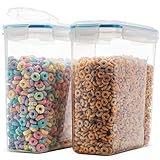
4. Komax Biokips Large Food Storage Container (Set of 3)

image from Amazon
- Size: Set of 2 (Large capacity).
- Performance: These containers feature an airtight silicone seal that creates a “Protein Shield” against moisture and rodent entry. The durable construction is a significant upgrade from standard grocery store packaging.
- Best For: Bulk pasta, cereal, or crackers.
- Temperature Rating: Engineered to withstand deep-freeze zones without cracking.
5. Prep Naturals Glass Food Storage Containers with Plastic Lids

image from Amazon
- Size: 30 oz.
- Performance: Glass remains an excellent material for indoor, climate-controlled pantries where inventory visibility is a priority.
- Best For: Indoor pantry storage or refrigerator meal prep.
- Critical Winter Rule: Only use these in a garage if the contents are 100% dry, such as rice or beans. Never store liquids or sauces in glass in an unheated space; if the contents freeze and expand, the glass will shatter and ruin the entire shelf.



Last update on 2026-02-11 / Affiliate links / Images from Amazon Product Advertising API
Which Fats Can You Store in a Cold Garage?
Here’s your winter food storage guide on cold-safe and cold-vulnerable fats:
COLD-SAFE FATS (Store in “Cooler Zone”)
Coconut Oil (Refined): Stays stable at 0-20°F. Solidifies but doesn’t go rancid. Storage: Mylar bags or HDPE containers. Shelf life: 2-3 years.
Ghee (Clarified Butter): Low moisture content prevents freeze damage. Stays shelf-stable without refrigeration. Storage: PET jars or sealed cans. Shelf life: 1-2 years.
Freeze-Dried Butter Powder (Sealed): Safe if oxygen absorbers are active. Must stay in an airtight Mylar. Check seal monthly (squeeze test). Shelf life: 1 year if seal intact.
Lard in Sealed Cans: Commercially canned lard handles cold well. Must be unopened (not home-canned Mason jars). Storage: Original can be on a pallet off the concrete. Shelf life: 2+ years.
COLD-VULNERABLE FATS (Keep Indoors)
Powdered Cheese: Oxidizes rapidly in temp swings. Goes rancid in 2-3 months if exposed to freeze-thaw. Solution: Store in a climate-controlled space (60-70°F).
Powdered Eggs: Fat content breaks down in moisture + cold. Develops off-taste after 6 months in the garage. Solution: Keep in pantry, rotate every 8 months.
Cooking Oils (Liquid): Vegetable, canola, olive oil all degrade faster in cold. Separation occurs, and flavor changes. Solution: Heated basement or kitchen pantry only.
Rule for winter food storage: If it’s a powder, it goes indoors. If it’s a solid fat in a can, it can handle the cooler zone.
How Do You Set Up Garage Food Storage Temperature Zones?
Not all garage zones are equal in winter. Here’s how to map your space for maximum protection:
THE WARM WALL (Safe Zone – 40-55°F)
The interior wall shared with your heated house stays 10-15°F warmer than exterior walls. Store Mylar bags with carbs (rice, pasta, flour), proteins (beans, freeze-dried meats), vacuum-sealed dry goods, and HDPE buckets with grains here.
How to find it: Place your hand on the wall in winter—it should feel noticeably warmer. Mark this as your “Warm Wall Zone” with tape on the floor.
THE COOLER ZONE (Fats Only – 20-35°F)
Use wooden pallets to create a 6-inch clearance from the concrete floor in the center of your garage (away from exterior walls and doors). Store coconut oil in HDPE buckets, ghee in sealed containers, freeze-dried butter (check seals monthly), and canned lard here. MUST use pallets and never place directly on concrete.
THE DANGER ZONE (Exterior Walls – Outdoor Temps)
NEVER store glass jars, liquids of any kind, or high-moisture foods within 3 feet of garage doors, exterior walls, or roof vents. These areas match outdoor temperatures (-10 to 40°F) and will destroy food storage containers.
How to Label Your Winter Food Storage for Faster Rotation
Winter temperature swings accelerate spoilage, so you need to check for faster rotation. Stop squinting at tiny “Best By” dates in a dark garage.
The Two-Number System:
Write on every container with a thick permanent marker:
Number 1 (Large): The expiration YEAR (e.g., “28” for 2028)
Number 2 (Circled): The QUARTER it expires,so write 1, 2, 3, or 4 and encircle it
Q1 = Jan-Mar
Q2 = Apr-Jun
Q3 = Jul-Sep
Q4 = Oct-Dec
Why it works: You can scan an entire bin from 6 feet away in dim light. If you see “26” with a circled “1” and today is February 2026, that item moves to your kitchen THIS WEEK.
How to Protect Your Most Expensive Winter Food Storage Items
Freeze-dried meats, canned fats, and protein powders are your highest-cost items for storage. They’re also the most vulnerable to winter damage.
Monthly Protein Shield Inspection (5 minutes):
☐ Squeeze Test for Mylar: Bags should feel like a brick, NOT a pillow
✓ Firm = seal intact
⚠ Soft = O2 absorber failed, move to fridge and use within 30 days
☐ Can Inspection: Check for bulging, rust, or dents
✓ Flat top = good seal
⚠ Bulge = spoilage, discard immediately
☐ Temperature Check: Warm Wall should read 40-55°F
⚠ Below 40°F = move bins closer to interior wall
☐ Moisture Check: Open bin lid and check for condensation
⚠ Wet = add desiccant pack or relocate bin
Download the FREE Winter Food Storage Checklist Here
FAQs About Winter Food Storage
Can you store Mylar bags in a freezing garage?
Yes, you can store Mylar bags in a freezing garage if you place them on the “Warm Wall” or the interior wall that shares heat with your house. This wall stays 10-15°F warmer and prevents freeze-thaw cycles that create damaging moisture inside bags.
Do glass jars break in cold storage?
Yes, glass jars break in cold storage when temperatures drop below 32°F. Liquids inside expand by up to 10% when frozen, which cracks glass or pops metal lids. Replace glass Mason jars with PET plastic jars that flex with temperature changes.
What temperature is too cold for food storage?
Most food storage failures occur between 0-32°F when freeze-thaw cycles repeatedly occur. The ideal winter food storage temperature is 40-55°F on an interior garage wall. Glass containers and powdered fats should never be stored below 40°F.
Which fats can you store in a cold garage?
You can safely store solid fats: coconut oil (safe to 0°F), ghee (safe to 20°F), canned lard (safe to 10°F), and freeze-dried butter powder in sealed Mylar. Never store powdered cheese, powdered eggs, or liquid cooking oils in cold garages as they go rancid within 2-3 months.
How do you winterize food storage in a garage?
Swap glass jars for PET plastic containers, move Mylar bags to the interior “Warm Wall,” and place solid fats on wooden pallets in the garage center. Label containers with year and quarter numbers for quick rotation, and complete this 30-minute process before the first freeze.