Mosquitoes are more than just a nuisance, they can make outdoor spaces uncomfortable and, in some regions, carry diseases. During warmer months, even a small number of mosquitoes can quickly turn into a persistent problem, especially around homes with standing water or shaded areas.
Homemade mosquito traps offer a simple and low-cost way to reduce their numbers without relying heavily on chemical sprays. They are easy to build using common household items and can be placed exactly where activity is highest.
While they are not a complete solution on their own, they can play an important role in controlling mosquito populations when used correctly.
Do Homemade Mosquito Traps Actually Work?

Homemade mosquito traps can be effective, but their results depend on how and where they are used. Most DIY traps work by attracting mosquitoes using carbon dioxide, scent, light, or water, then capturing or eliminating them.
They are particularly useful for reducing the number of mosquitoes in a specific area rather than eliminating them entirely. It’s important to understand that these traps are best used as part of a broader approach.
If there are active breeding sites nearby, such as standing water, mosquitoes will continue to appear. When combined with basic prevention methods, however, homemade traps can noticeably reduce mosquito activity and make outdoor or indoor spaces more comfortable.
Where to Place Mosquito Traps for Best Results
Mosquitoes are attracted to shaded, humid areas where they can rest during the day, so traps should be positioned in these locations rather than in direct sunlight. Areas near vegetation, under decks, or along the edges of buildings are often ideal.
If you know where mosquitoes are breeding or gathering, such as near standing water, drains, or damp soil, placing traps nearby will significantly improve results.
For outdoor use, positioning traps a short distance away from where people gather can help draw mosquitoes away rather than toward you. Indoors, traps work best in darker corners or near entry points like windows and doors.
5 Mosquito Traps and Methods that Work
1. Yeast and Sugar Trap (CO₂ Trap)
This is one of the most effective homemade mosquito traps because it targets how mosquitoes naturally locate humans, by detecting carbon dioxide (CO₂) from breath.
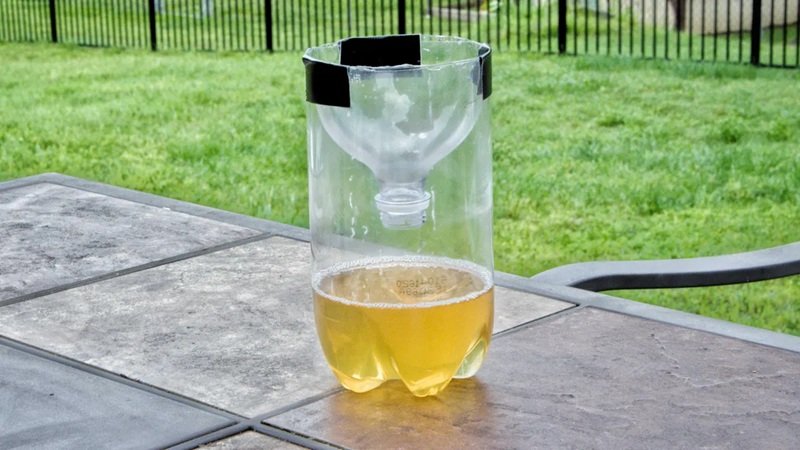
When yeast ferments sugar, it releases CO₂, which mimics a living host and attracts mosquitoes into the trap. Once inside, they have difficulty escaping and eventually die. To make this trap, you’ll need a plastic bottle, sugar, warm water, and active dry yeast.
Cut the bottle in half, mix sugar with warm water in the bottom portion, then add yeast. Invert the top half of the bottle like a funnel and place it into the bottom section. This design directs mosquitoes inside while making it hard for them to exit.
This trap works best in warm conditions and in enclosed or semi-enclosed areas where the CO₂ can concentrate. Placing it near mosquito activity zones, but not directly next to where people are sitting, improves its effectiveness.
2. Dish Soap and Light Trap
This method takes advantage of two simple factors: mosquitoes are attracted to light, and dish soap reduces the surface tension of water. When mosquitoes approach the light and land on the water’s surface, they sink instead of being able to rest or escape.
It’s a straightforward trap that works particularly well indoors. To set it up, fill a shallow bowl with water and add a few drops of dish soap. Place it under or near a light source, such as a lamp or small bulb, in a darkened room. The contrast between light and darkness helps draw mosquitoes toward the trap.
While this method is not as powerful as CO₂-based traps, it is very easy to set up and requires minimal materials. It works best in smaller, enclosed spaces where light can effectively attract insects. Using multiple bowls in different areas can improve coverage and increase results.
3. Vinegar and Sugar Trap
The vinegar and sugar trap works by using scent to attract mosquitoes and other small insects. The combination creates a mild fermentation odor that can draw certain species toward the container.
While it is generally less effective than CO₂-based traps, it can still contribute to reducing activity when used alongside other methods.
To make this trap, combine vinegar, sugar, and a small amount of water in a container. You can add a drop of dish soap to help break surface tension and prevent escape. Placing the trap in shaded, humid areas improves its chances of attracting insects.
This method is simple and low-effort, making it a useful supplemental option. It’s best used as part of a broader setup rather than relied on as the primary solution. When combined with stronger traps, it can help increase overall effectiveness.
4. Fan Trap Method
The fan trap method works differently from passive traps by actively capturing mosquitoes using airflow. Mosquitoes are weak fliers, and when they encounter steady airflow, they struggle to maintain control. A fan can pull them in and trap them against a mesh or screen, where they eventually dehydrate.
To set this up, place a fan so it blows through a mesh screen or a fine net. As mosquitoes fly toward the area, they are pulled into the airflow and held against the mesh. Over time, they weaken and die due to dehydration. This method works continuously as long as the fan is running.
One of the biggest advantages of this approach is its ability to cover a larger area compared to small passive traps. It works well on patios, near seating areas, or in rooms with noticeable mosquito activity. While it requires power, it provides consistent and reliable results when positioned correctly.
5. Bucket Trap (Standing Water Control)
The bucket trap focuses on interrupting the mosquito life cycle rather than just catching adults. Mosquitoes are naturally drawn to standing water to lay their eggs, so this method uses that behavior against them.
By creating an attractive breeding site that prevents larvae from maturing, you reduce future populations. To create this trap, fill a bucket with water and add organic material such as leaves or grass to make it more appealing.
A small amount of dish soap can be added to disrupt larvae development, or the water can be regularly emptied and refreshed to remove eggs. The key is to maintain the trap so it does not become a breeding source itself.
This method is especially effective when used in areas where standing water is unavoidable. It doesn’t provide immediate results like other traps, but over time it can significantly reduce the number of mosquitoes emerging in your environment.
How Many Traps Should You Use?
Using a single trap is rarely enough to make a noticeable difference, especially in areas with consistent mosquito activity. Mosquitoes are widespread and can come from multiple breeding sites, so relying on one trap limits your results.
A better approach is to use several traps placed in different locations to cover the entire area. For small indoor spaces, one or two well-placed traps may be sufficient. Outdoors, however, multiple traps should be positioned around the perimeter, near shaded areas, and close to known breeding zones.
Combining different types of traps, such as a CO₂ trap with a fan or light-based trap, can improve overall effectiveness by targeting mosquitoes in different ways. The goal is to create coverage rather than relying on a single solution.
How Long Before You See Results?
Results from homemade mosquito traps are usually not immediate, but you can often notice a reduction in activity within a few days. Traps that actively capture mosquitoes, like fan or CO₂ traps, may show visible results sooner, while methods targeting breeding cycles take longer to have an effect.
The speed of results depends on factors such as mosquito population size, placement, and nearby breeding conditions. If there are many active breeding sites, new mosquitoes will continue to appear.
Consistent use of traps, combined with basic control measures, leads to more noticeable and lasting improvements over time.
Reducing Mosquitoes Around Your Home
Standing water is the most common source of mosquito problems, so regularly emptying containers, cleaning gutters, and checking for water buildup is essential. Even small amounts of water can support mosquito larvae.
Maintaining your outdoor space also makes a difference. Trimming vegetation, improving airflow, and reducing damp, shaded areas can make your yard less attractive to mosquitoes.
Indoors, keeping windows screened and minimizing entry points helps prevent them from getting inside in the first place.
Wrap-Up
Homemade mosquito traps provide a practical and affordable way to reduce mosquito activity around your home. While no single method will eliminate them completely, using a combination of traps and placing them strategically can make a noticeable difference.
The most effective approach is consistent use paired with basic prevention, especially eliminating standing water and maintaining your environment. With the right setup, even simple DIY solutions can significantly improve comfort and reduce mosquito problems over time.